c.curionodeThe Nobel Archive

2015 · Chemistry

The repair crews inside our DNA

Cells preserve genetic information through several specialised maintenance systems.

DNA repairgenome stabilitymolecular mechanisms
2015Chemistry

Visual guide

The prize, pictured

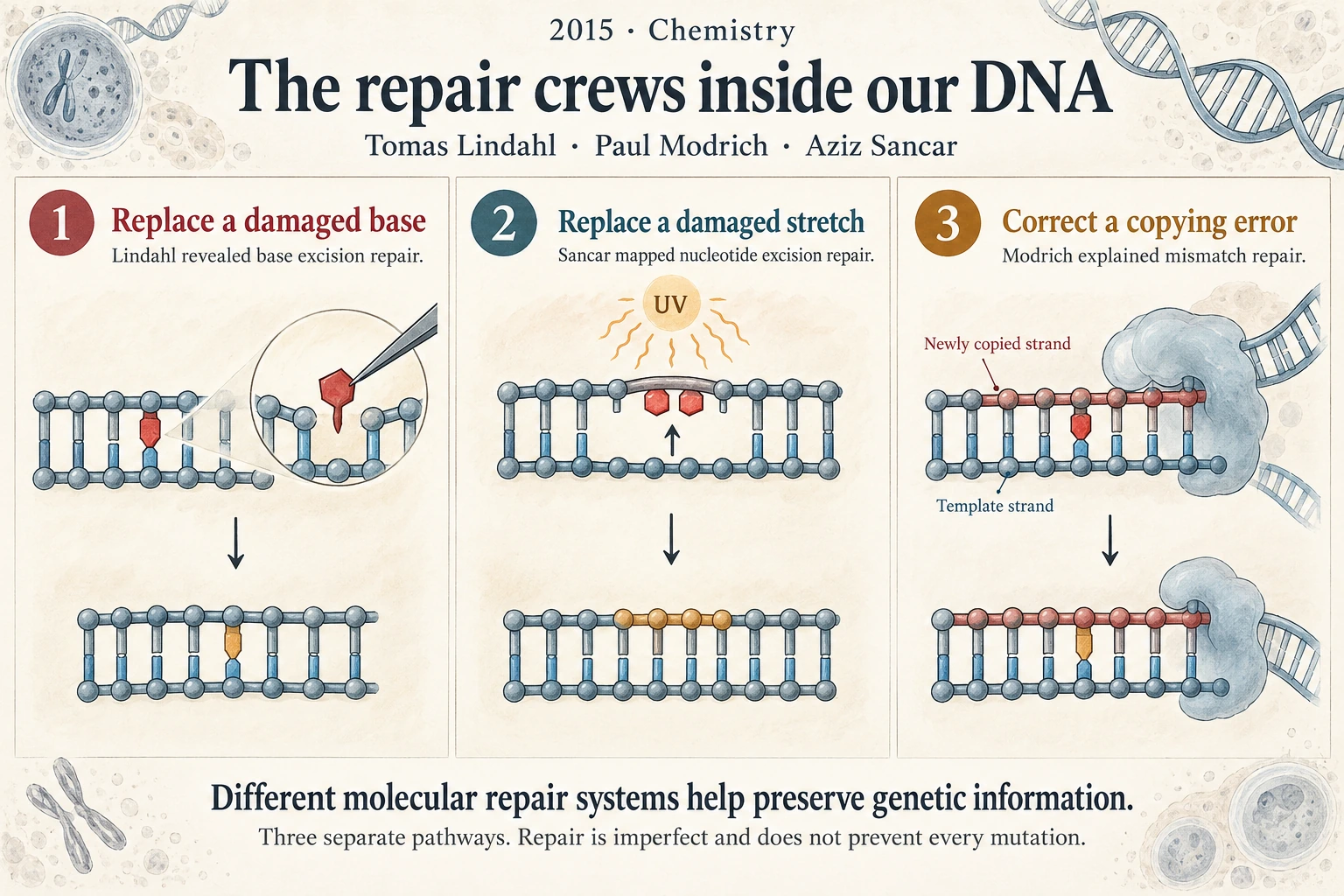
Infographic explaining The repair crews inside our DNA
Original AI-generated infographic. A conceptual overview; the explanations and sources below provide context.
Read the poster text

Different molecular repair systems help preserve genetic information.

  1. Replace a damaged base

    Lindahl revealed base excision repair.

  2. Replace a damaged stretch

    Sancar mapped nucleotide excision repair.

  3. Correct a copying error

    Modrich explained mismatch repair.

Three separate pathways. Repair is imperfect and does not prevent every mutation.

01 · The discovery

The idea, in everyday language

DNA stores information, but it is not chemically indestructible. Bases can change spontaneously, ultraviolet light can damage neighbouring bases, and copying can leave a wrong pairing. Lindahl showed why active maintenance is necessary and helped uncover base excision repair. An enzyme first removes a faulty base; other enzymes process the remaining site, replace the missing information and seal the strand.

The other laureates mapped different problems and solutions. Sancar investigated nucleotide excision repair, which cuts out a short stretch containing bulky damage and rebuilds it using the opposite strand as a guide. Modrich worked out how mismatch repair corrects copying errors. It identifies a mismatch, removes a section of the newly made strand, and makes a corrected replacement. These are distinct pathways, not three consecutive stages of one universal repair operation.

Why it matters

The work connected the chemistry of DNA with the long-term stability of genomes. It helped explain why inherited defects in particular repair systems can increase cancer risk and supplied a foundation for studying how cancer cells respond to treatments that damage DNA or interfere with repair.

02 · The people

Who brought the idea to life?

Illustrated portrait of Tomas Lindahl

Tomas Lindahl

Prize share · 1/3

He showed that DNA undergoes spontaneous chemical damage and investigated enzymes that remove damaged bases. His work helped establish base excision repair: a sequence of steps that recognises a faulty base, removes it and restores the DNA using the other strand as a guide.

Read the biography ↗
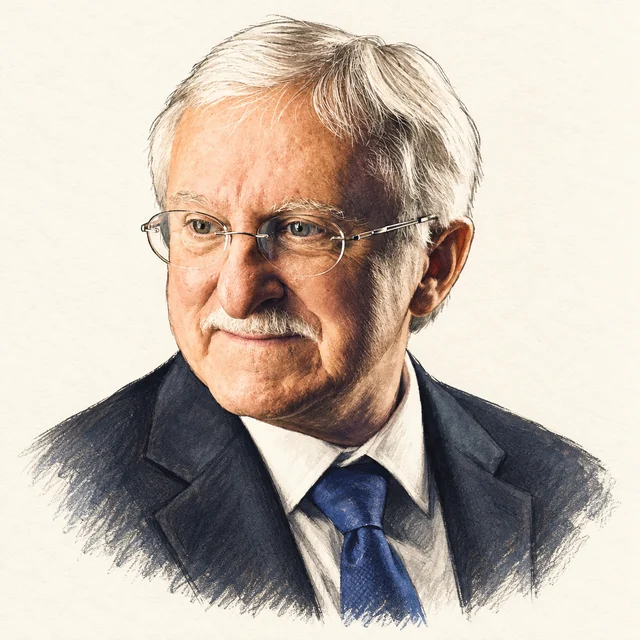
Illustrated portrait of Paul Modrich

Paul Modrich

Prize share · 1/3

He mapped the molecular steps of mismatch repair and reconstructed the bacterial system from its components. Studies with Matthew Meselson showed how methylation could help bacteria distinguish an older template strand from a new copy. He also investigated the related repair machinery in human cells.

Read the biography ↗
Illustrated portrait of Aziz Sancar

Aziz Sancar

Prize share · 1/3

He identified and characterised bacterial enzymes that locate bulky DNA damage and cut the affected strand on both sides of it. This nucleotide excision repair removes a short damaged segment so other enzymes can fill the gap and seal the strand. He also studied the corresponding human process.

Read the biography ↗

03 · Years in the making

The path here

  1. 1974

    Lindahl identifies an enzyme that removes an incorrect base from DNA.

  2. 1983

    Sancar maps key steps in bacterial nucleotide excision repair.

  3. 1989

    Modrich reconstructs bacterial mismatch repair from purified components.

04 · Read further

From the original sources

Original explanations by Curionode, based on the official records below. Biographical details and affiliations refer to the award year.

  1. Official award announcement nobelprize.org
  2. Nobel Committee’s accessible background nobelprize.org

More in Chemistry

Browse this subject ↗