A life in context
The person behind the prize
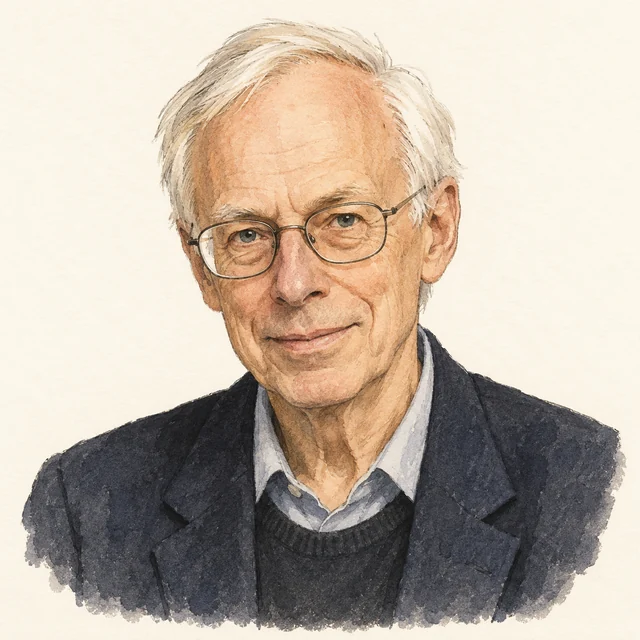
Lindahl trained at Karolinska Institutet and received his doctorate in 1967. After research in the United States and a professorship in Gothenburg, he moved to cancer research in Britain. Experiments on the instability of biological molecules led him to question a common assumption: could DNA really remain chemically intact for so long without active maintenance? Answering that question became a way to uncover the cell’s repair machinery.
The contribution
He showed that DNA undergoes spontaneous chemical damage and investigated enzymes that remove damaged bases. His work helped establish base excision repair: a sequence of steps that recognises a faulty base, removes it and restores the DNA using the other strand as a guide.
The idea in plain language
DNA stores information, but it is not chemically indestructible. Bases can change spontaneously, ultraviolet light can damage neighbouring bases, and copying can leave a wrong pairing. Lindahl showed why active maintenance is necessary and helped uncover base excision repair. An enzyme first removes a faulty base; other enzymes process the remaining site, replace the missing information and seal the strand.
Read the full award story ↗