c.curionodeThe Nobel Archive

1903 · Chemistry

Explain solutions through charged particles

Why can salt water conduct electricity, and why do some dissolved substances behave as if they supply more particles than their formulas suggest? Arrhenius linked these questions through electrolytic dissociation.

IonsSolutionsPhysical chemistry
1903Chemistry

Visual guide

The prize, pictured

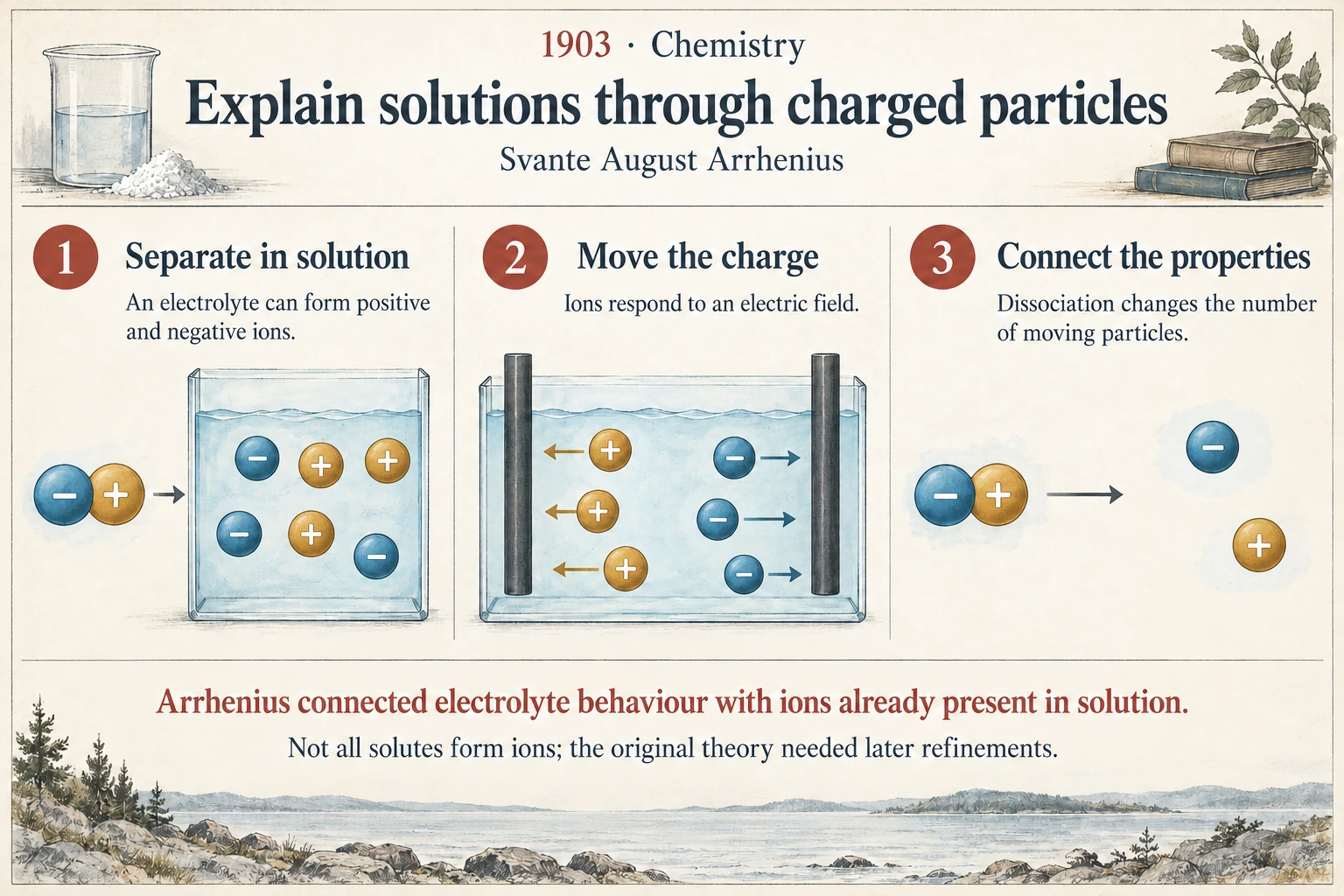
Infographic explaining Explain solutions through charged particles
Original AI-generated infographic. A conceptual overview; the explanations and sources below provide context.
Read the poster text

Arrhenius connected electrolyte behaviour with ions already present in solution.

  1. Separate in solution

    An electrolyte can form positive and negative ions.

  2. Move the charge

    Ions respond to an electric field.

  3. Connect the properties

    Dissociation changes the number of moving particles.

Not all solutes form ions; the original theory needed later refinements.

01 · The discovery

The idea, in everyday language

Arrhenius proposed that an electrolyte can separate into positively and negatively charged ions in solution. Those ions can exist before an electric current is applied. Under an electric field their movement carries charge; the current does not first have to create every carrier.

Separating a dissolved substance into ions also changes the number of independently moving particles. This connected electrical behaviour with other solution properties and helped build physical chemistry. Different substances and conditions require different treatment: weak electrolytes dissociate only partly, and interactions become important as concentration rises.

Why it matters

The theory linked previously separate observations and made ionic behaviour central to understanding solutions. It supplied a framework that later work refined for stronger interactions, concentrated systems and the detailed chemistry of acids and bases.
02 · The people

Who brought the idea to life?

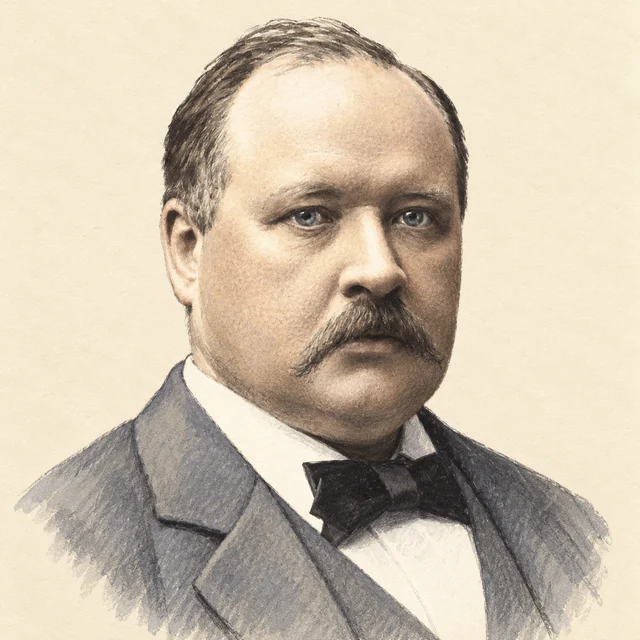
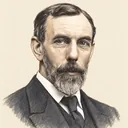
Illustrated portrait of Svante August Arrhenius

Svante August Arrhenius

Prize share · 1

Arrhenius explained electrolyte solutions through dissociation into ions, making charged particles central to conduction and solution properties. His full Chemistry Prize was for this theory, rather than his separate climate or reaction-rate work.

Read the biography ↗

03 · Years in the making

The path here

  1. 1859

    Arrhenius is born at Vik.

  2. 1876

    He enters Uppsala University.

  3. 1884

    His dissertation presents the dissociation theory.

  4. 1891

    He begins teaching at Stockholm University College.

  5. 1903

    He receives the full Chemistry Prize.

  6. 1905

    He becomes director of the Nobel Institute for Physical Chemistry.

  7. 1927

    He dies in Stockholm.

04 · Read further

From the original sources

Original explanations by Curionode, based on the official records below. Biographical details and affiliations refer to the award year.

  1. Official award summary nobelprize.org
  2. Award ceremony speech nobelprize.org
  3. Uppsala University: Arrhenius’s science and racial-hygiene advocacy uu.se

More in Chemistry

Browse this subject ↗