c.curionodeThe Nobel Archive

1905 · Peace

Turn anti-war writing into sustained public action

Suttner made the costs of war vivid in fiction and carried the argument into associations, journalism and international meetings. The 1905 prize recognised a long campaign against the horrors of war.

Anti-war literaturePeace movementArbitration
1905Peace

Visual guide

The prize, pictured

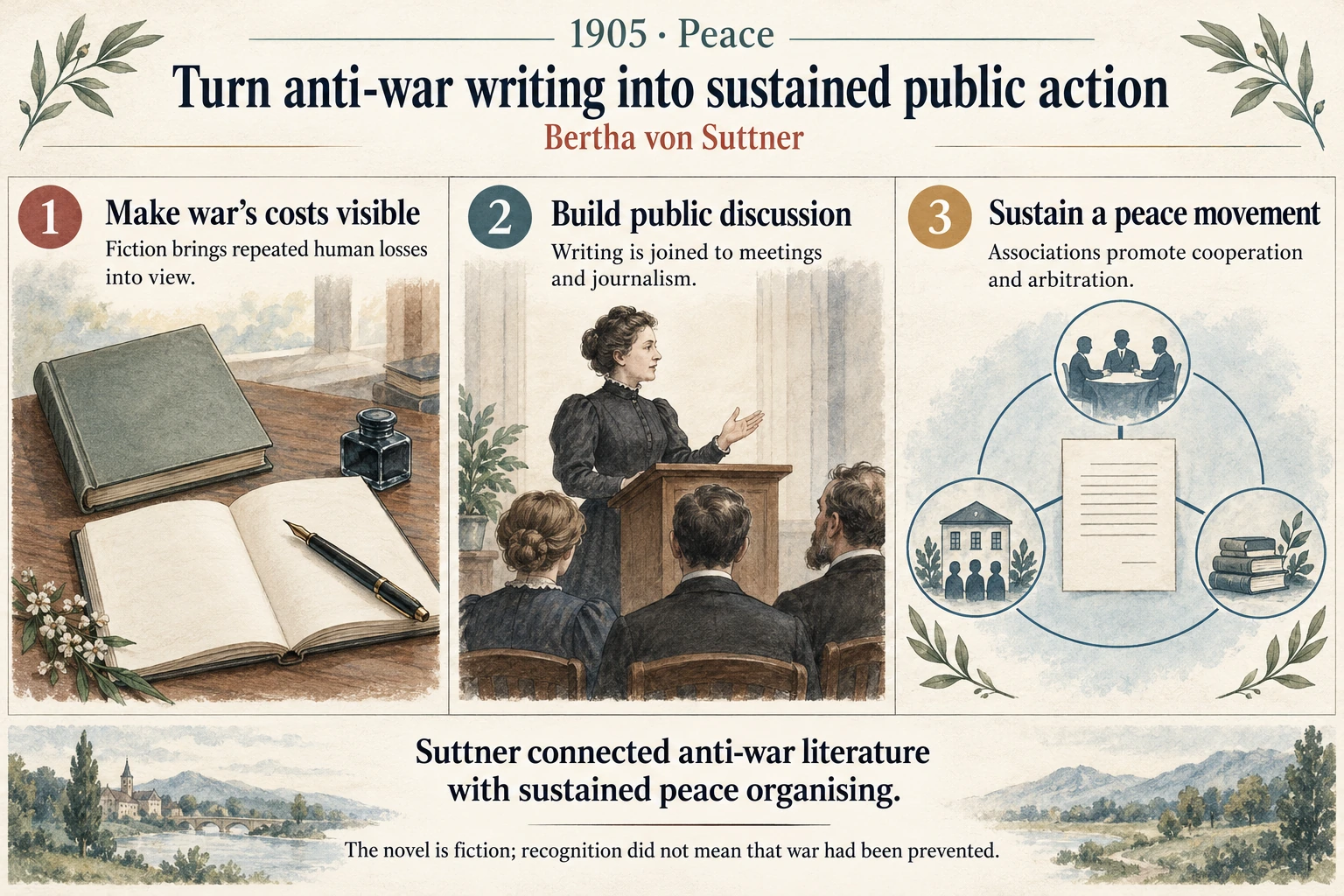
Infographic explaining Turn anti-war writing into sustained public action
Original AI-generated infographic. A conceptual overview; the explanations and sources below provide context.
Read the poster text

Suttner connected anti-war literature with sustained peace organising.

  1. Make war’s costs visible

    Fiction brings repeated human losses into view.

  2. Build public discussion

    Writing is joined to meetings and journalism.

  3. Sustain a peace movement

    Associations promote cooperation and arbitration.

The novel is fiction; recognition did not mean that war had been prevented.

01 · The contribution

The idea, in everyday language

Lay Down Your Arms, published in 1889, follows a fictional woman whose life is repeatedly altered by war. Personal loss makes public policy emotionally concrete. The novel’s influence helped Suttner reach readers who might not otherwise follow peace congresses or legal debates.

She linked writing with organisation: the Austrian Peace Society, a journal with Alfred Hermann Fried, congresses and advocacy of arbitration. Her correspondence with Nobel helped influence his peace interests. In 1905 she became the first woman to receive the Peace Prize.

Why it matters

The campaign gave international peace advocacy a prominent literary and public voice. It connected criticism of militarism with proposals for arbitration and with women’s participation in public life.

02 · The people

Who brought the idea to life?

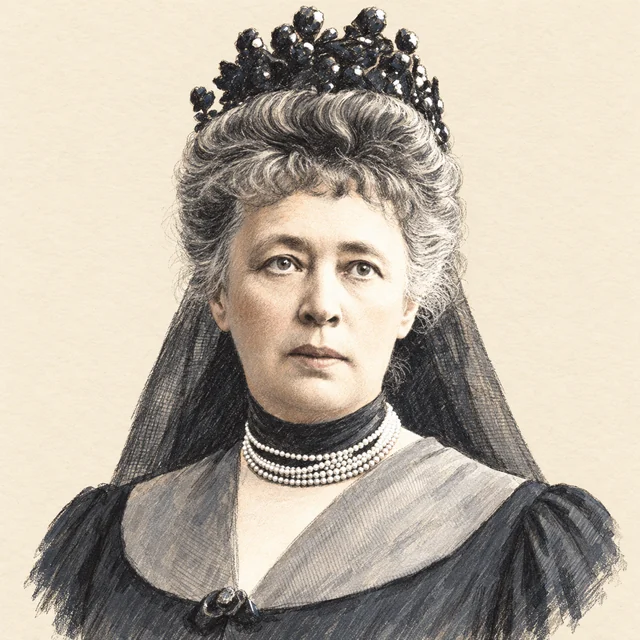
Illustrated portrait of Bertha von Suttner

Bertha von Suttner

Prize share · 1

Suttner received the full Peace Prize for her opposition to the horrors of war. Anti-war fiction, international organising, journalism and advocacy of arbitration made her a leading figure in the peace movement.

Read the biography ↗

03 · Years in the making

The path here

  1. 1843

    Suttner is born in Prague.

  2. 1876

    She briefly works for Nobel and marries Arthur von Suttner.

  3. 1889

    Lay Down Your Arms is published.

  4. 1891

    She helps establish the Austrian Peace Society.

  5. 1892

    She begins a peace journal with Alfred Hermann Fried.

  6. 1905

    She becomes the first woman to receive the Peace Prize.

  7. 1906

    She gives her Nobel address in Norway on 18 April.

  8. 1914

    She dies in Vienna shortly before the First World War.

04 · Read further

From the original sources

Original explanations by Curionode, based on the official records below. Biographical details and affiliations refer to the award year.

  1. Official award summary nobelprize.org
  2. Introduction and banquet speech (1906) nobelprize.org
  3. Austrian National Library: Suttner’s peace and women’s activism fraueninbewegung.onb.ac.at