c.curionodeThe Nobel Archive

1906 · Peace

Help adversaries reach a negotiated settlement

Roosevelt helped Russia and Japan move from war to the Portsmouth negotiations in 1905. The prize recognised mediation of a particular conflict within an international order shaped by imperial power.

MediationPortsmouth treatyDiplomacy
1906Peace

Visual guide

The prize, pictured

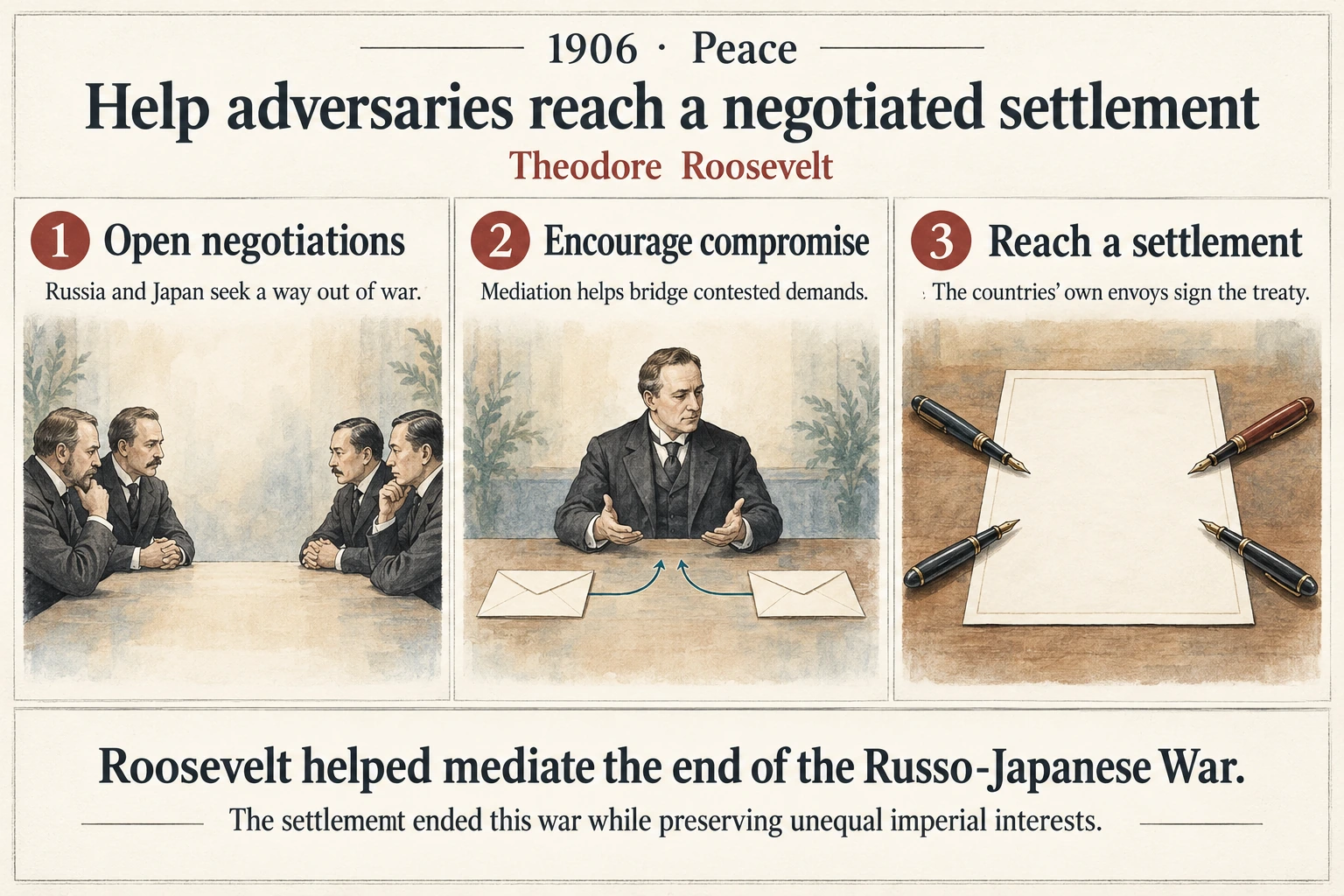
Infographic explaining Help adversaries reach a negotiated settlement
Original AI-generated infographic. A conceptual overview; the explanations and sources below provide context.
Read the poster text

Roosevelt helped mediate the end of the Russo-Japanese War.

  1. Open negotiations

    Russia and Japan seek a way out of war.

  2. Encourage compromise

    Mediation helps bridge contested demands.

  3. Reach a settlement

    The countries’ own envoys sign the treaty.

The settlement ended this war while preserving unequal imperial interests.

01 · The contribution

The idea, in everyday language

By 1905 the Russo-Japanese War had imposed heavy costs on both sides. Roosevelt encouraged negotiations and worked to bridge demands that threatened agreement. Compromise over questions including indemnities and Sakhalin helped make a settlement possible.

The treaty was negotiated and signed by Russian representatives Witte and Rosen and Japanese representatives Komura and Takahira on 5 September 1905. Roosevelt was the mediator, not a signatory. The full 1906 Peace Prize honoured his contribution; Herbert H. D. Peirce accepted because the president was absent.

Why it matters

The settlement ended the war and made presidential mediation highly visible as a diplomatic tool. It demonstrates that a leader associated with military power can also help resolve a particular crisis through negotiation.
02 · The people

Who brought the idea to life?

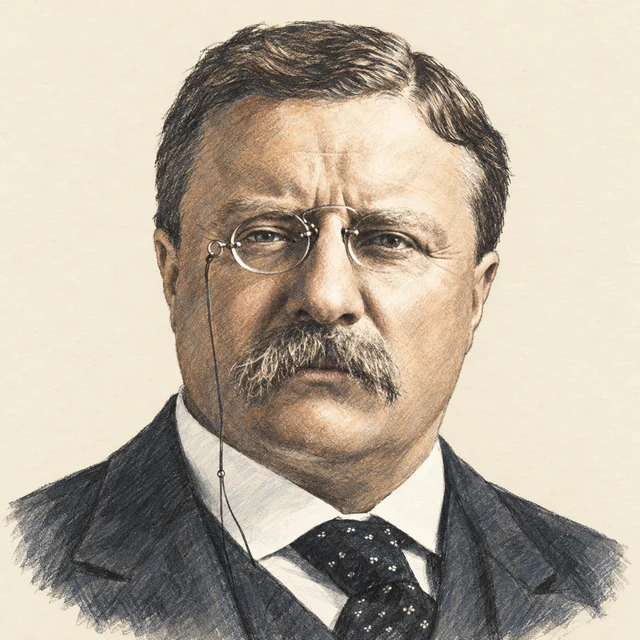
Illustrated portrait of Theodore Roosevelt

Theodore Roosevelt

Prize share · 1

Roosevelt received the full Peace Prize for mediating an end to the Russo-Japanese War. His support for the Portsmouth negotiations complemented the work of Russian and Japanese representatives.

Read the biography ↗

03 · Years in the making

The path here

  1. 1898

    Roosevelt serves in the war with Spain and becomes New York governor.

  2. 1901

    He becomes president after McKinley’s death.

  3. 1904

    He wins the presidential election in his own right.

  4. 1905

    Russian and Japanese representatives sign the Portsmouth treaty on 5 September.

  5. 1906

    The Peace Prize recognises Roosevelt’s mediation.

  6. 1909

    His presidency ends.

  7. 1910

    He visits Norway after leaving office.

04 · Read further

From the original sources

Original explanations by Curionode, based on the official records below. Biographical details and affiliations refer to the award year.

  1. Official award summary nobelprize.org
  2. Award ceremony speech nobelprize.org
  3. US Office of the Historian: the Portsmouth settlement history.state.gov
  4. US Foreign Relations: Portsmouth treaty preamble and selected articles history.state.gov
  5. National Park Service: Theodore Roosevelt’s life and presidency nps.gov