c.curionodeThe Nobel Archive

1908 · Physics

Record colour in the depth of a photograph

Early photography could preserve shapes and shades without reliably preserving their colours. Lippmann used interference to record wavelength information as fine structures inside a photographic layer.

Colour photographyInterferenceWave optics
1908Physics

Visual guide

The prize, pictured

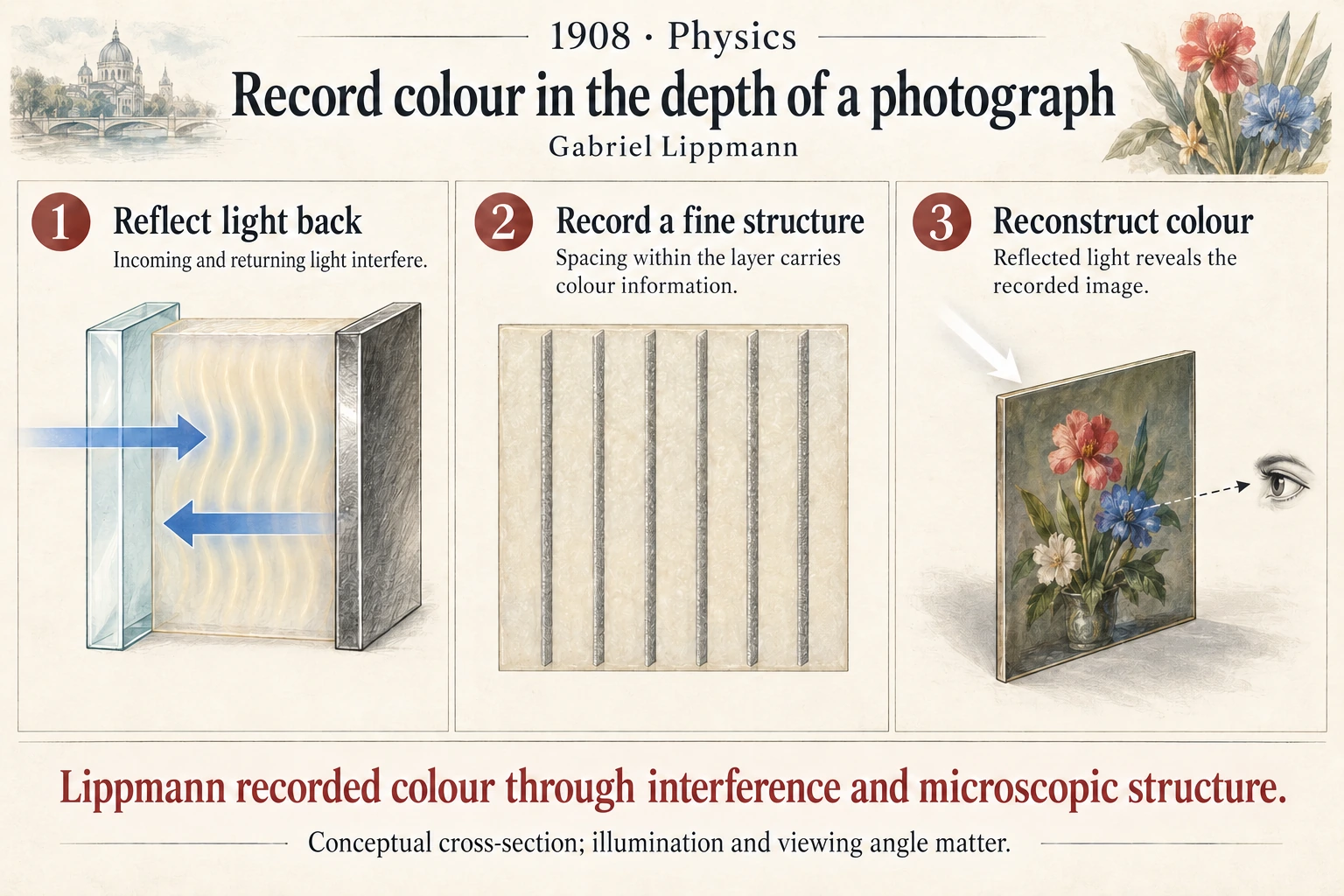
Infographic explaining Record colour in the depth of a photograph
Original AI-generated infographic. A conceptual overview; the explanations and sources below provide context.
Read the poster text

Lippmann recorded colour through interference and microscopic structure.

  1. Reflect light back

    Incoming and returning light interfere.

  2. Record a fine structure

    Spacing within the layer carries colour information.

  3. Reconstruct colour

    Reflected light reveals the recorded image.

Conceptual cross-section; illumination and viewing angle matter.

01 · The discovery

The idea, in everyday language

Light travels as waves. When incoming light meets light reflected back from a mirror behind a sensitive photographic layer, the two waves interfere. Their interaction produces a standing pattern of stronger and weaker illumination. Development leaves fine structures containing silver at different depths, with spacing related to the wavelength inside the material.

The finished plate reconstructs colour when light reflects from those structures. Certain wavelengths reinforce one another in the reflected light. Colour is therefore recorded through microscopic structure rather than by painting coloured pigments onto an ordinary black-and-white photograph. Lippmann announced the method in 1891 and received the full Physics Prize in 1908.

Why it matters

The method connected photographic recording with wave optics and demonstrated a distinctive way of preserving colour information. Its scientific significance outlasted its limited practical adoption, and modern researchers have revisited the plates to understand their recorded spectra.
02 · The people

Who brought the idea to life?

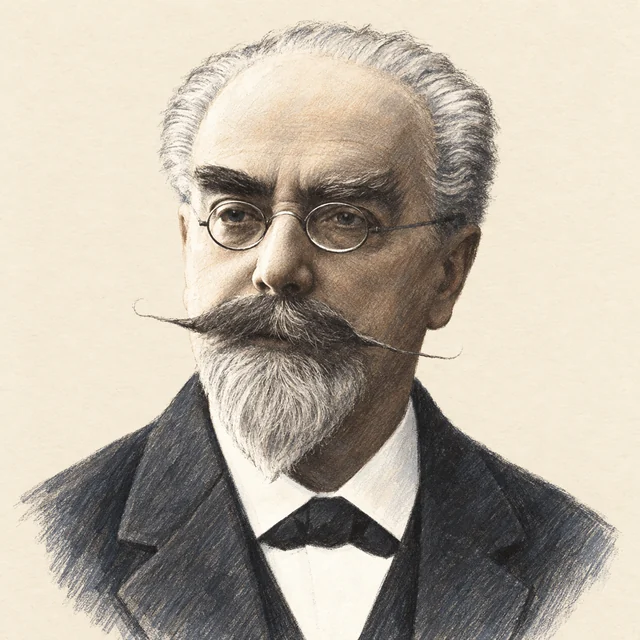
Illustrated portrait of Gabriel Lippmann

Gabriel Lippmann

Prize share · 1

Lippmann received the full Physics Prize for a photographic colour method based on interference. Fine structures inside a sensitive layer recorded wavelength information and reconstructed colour in reflected light.

Read the biography ↗

03 · Years in the making

The path here

  1. 1878

    Lippmann joins the Paris science faculty.

  2. 1886

    He takes the experimental-physics chair at the Sorbonne.

  3. 1891

    He announces interference-based colour photography.

  4. 1894

    A fuller theory of the method is presented.

  5. 1908

    He receives the full Physics Prize.

  6. 1921

    He dies at sea returning from North America.

04 · Read further

From the original sources

Original explanations by Curionode, based on the official records below. Biographical details and affiliations refer to the award year.

  1. Official award summary nobelprize.org
  2. Award ceremony speech nobelprize.org
  3. EPFL: historical colour spectra and modern analysis actu.epfl.ch
  4. EPFL and Photo Elysée: viewing Lippmann plates actu.epfl.ch