c.curionodeThe Nobel Archive

1910 · Chemistry

Identify the chemistry within fragrant mixtures

Essential oils contained mixtures of substances with confusing names and relationships. Wallach developed a systematic chemistry of terpenes and related alicyclic compounds, making their identities and transformations clearer.

TerpenesAlicyclic compoundsChemical identity
1910Chemistry

Visual guide

The prize, pictured

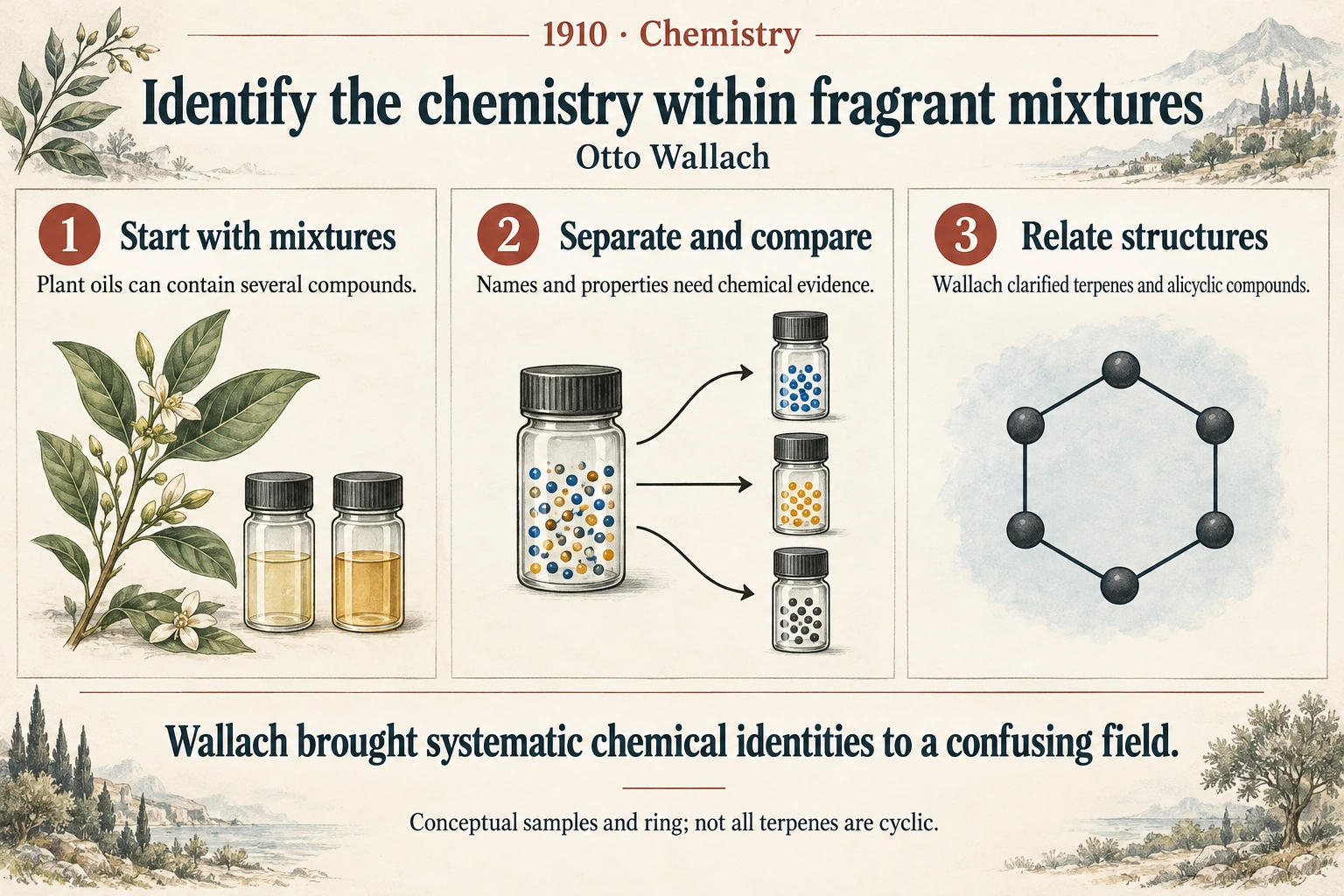
Infographic explaining Identify the chemistry within fragrant mixtures
Original AI-generated infographic. A conceptual overview; the explanations and sources below provide context.
Read the poster text

Wallach brought systematic chemical identities to a confusing field.

  1. Start with mixtures

    Plant oils can contain several compounds.

  2. Separate and compare

    Names and properties need chemical evidence.

  3. Relate structures

    Wallach clarified terpenes and alicyclic compounds.

Conceptual samples and ring; not all terpenes are cyclic.

01 · The discovery

The idea, in everyday language

A plant’s fragrance is not a single chemical substance. Different oils may share a constituent, while compounds with similar properties can have different structures. Older names often followed the plant of origin, obscuring these relationships. Wallach used separation, comparison and chemical transformations to establish more reliable identities among terpenes and related compounds.

Analysis could itself change a compound, so a product formed during a test could not simply be assumed to have been present in the original oil. By relating derivatives, structures and transformations, Wallach and his students turned a confusing collection into a more coherent field. The full 1910 Chemistry Prize recognised his pioneering work on alicyclic compounds, whose carbon rings are non-aromatic. That class is broader than one essential oil, and not every terpene has a ring.

Why it matters

The research strengthened organic chemistry and helped industries working with fragrances, flavourings and related materials. Systematic identification made it easier to compare results from different plants and laboratories and to investigate how structures are related.
02 · The people

Who brought the idea to life?

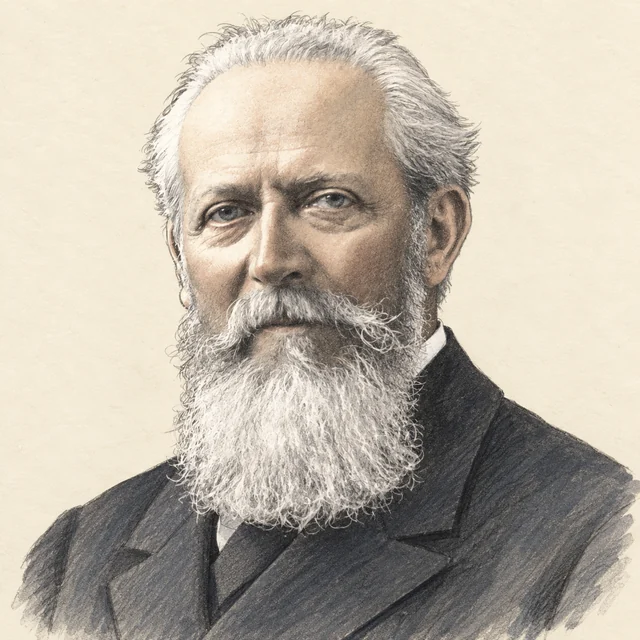
Illustrated portrait of Otto Wallach

Otto Wallach

Prize share · 1

Wallach received the full Chemistry Prize for pioneering research on alicyclic compounds. He brought order to terpene chemistry through careful identification, separation and structural relationships, helping distinguish true differences from duplicate names and mixtures.

Read the biography ↗

03 · Years in the making

The path here

  1. 1869

    Wallach completes his doctorate in Göttingen.

  2. 1872

    He returns to Bonn.

  3. 1884

    His major programme of terpene publications begins.

  4. 1889

    He takes charge of Göttingen’s Chemical Institute.

  5. 1909

    Terpene und Campher brings the research together.

  6. 1910

    He receives the full Chemistry Prize.

  7. 1915

    He retires from his professorship.

04 · Read further

From the original sources

Original explanations by Curionode, based on the official records below. Biographical details and affiliations refer to the award year.

  1. Official award summary nobelprize.org
  2. Award ceremony speech nobelprize.org
  3. Göttingen University: Wallach’s Nobel context uni-goettingen.de
  4. IUPAC Gold Book: alicyclic compounds goldbook.iupac.org

More in Chemistry

Browse this subject ↗