c.curionodeThe Nobel Archive

1911 · Peace

Build cooperation between laws and between nations

Asser developed international legal cooperation, especially for private matters across borders. Fried used journalism and peace organisations to argue that lasting peace required a more organised system of international relations. Each received half the 1911 Peace Prize.

Private international lawPeace journalismInternational cooperation
1911Peace

Visual guide

The prize, pictured

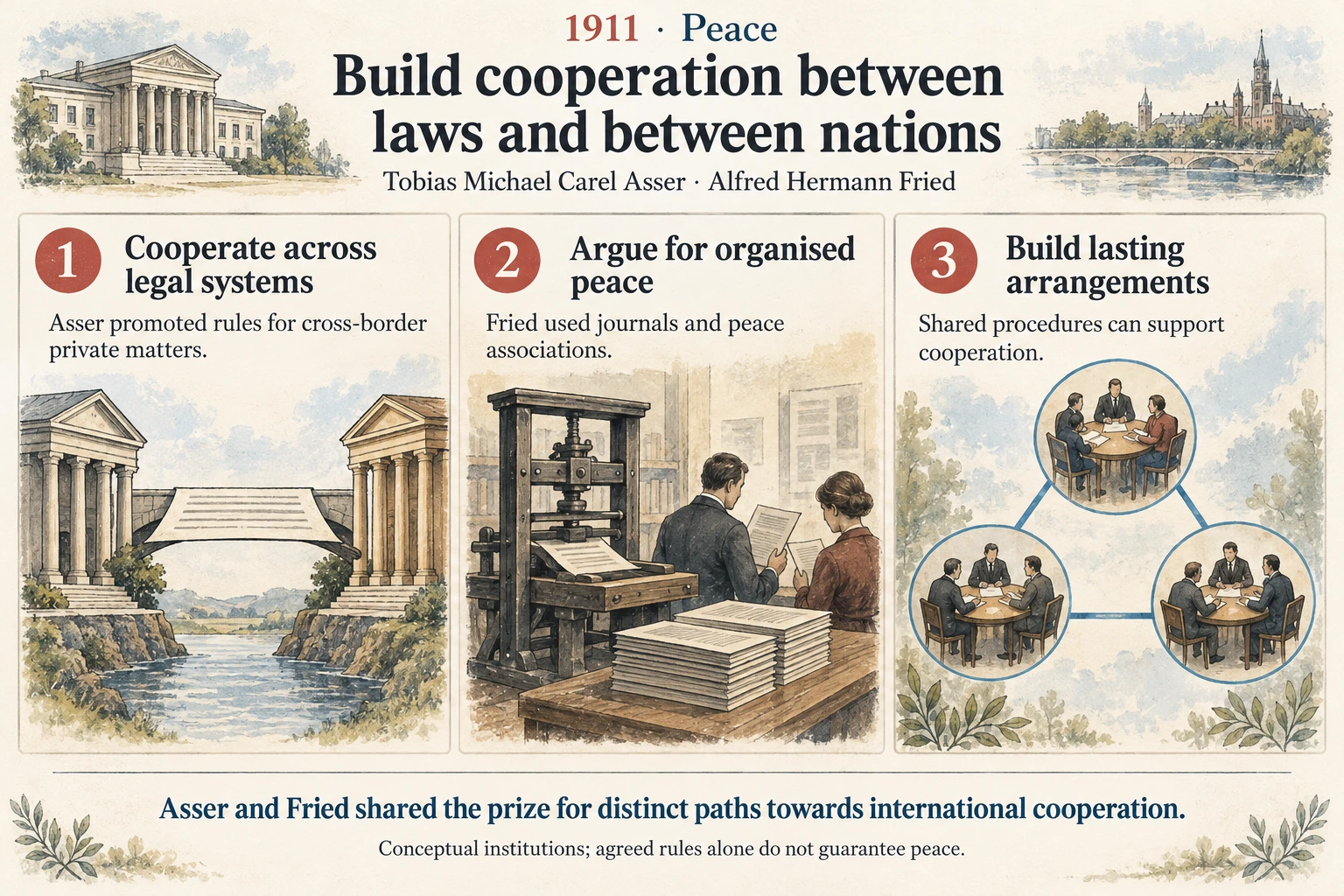
Infographic explaining Build cooperation between laws and between nations
Original AI-generated infographic. A conceptual overview; the explanations and sources below provide context.
Read the poster text

Asser and Fried shared the prize for distinct paths towards international cooperation.

  1. Cooperate across legal systems

    Asser promoted rules for cross-border private matters.

  2. Argue for organised peace

    Fried used journals and peace associations.

  3. Build lasting arrangements

    Shared procedures can support cooperation.

Conceptual institutions; agreed rules alone do not guarantee peace.

01 · The contribution

The idea, in everyday language

A family, business or civil case can cross a border even when national laws differ. Asser helped convene the Hague private international law conferences from 1893, seeking agreed rules for jurisdiction, documents, legal assistance and family matters. Countries could cooperate through conventions rather than simply imposing one domestic law everywhere. His work also extended to international arbitration and the Hague Peace Conferences, distinct from the private-law sessions.

Fried approached international cooperation through publishing and public organisation. With Bertha von Suttner he helped build the German Peace Society in 1892; his journal Die Friedenswarte began in 1899. He argued that condemning war’s suffering was insufficient without addressing the lack of effective international arrangements. Legal cooperation, international institutions and informed public discussion were parts of his proposed alternative. The recipients’ methods complemented one another, but they were not joint authors of one treaty or founders of the United Nations.

Why it matters

The award recognised practical legal institution building alongside the public argument for organised peace. Cross-border civil cooperation and international arbitration could offer routes for handling problems without relying only on power or force.
02 · The people

Who brought the idea to life?

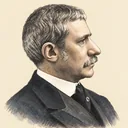
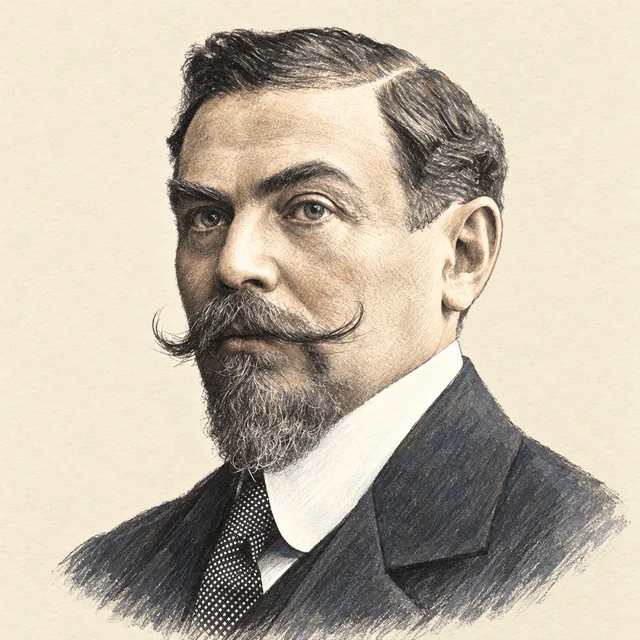
Illustrated portrait of Tobias Michael Carel Asser

Tobias Michael Carel Asser

Prize share · 1/2

Asser received half the Peace Prize for his role in the Institut de droit international and the Hague private international law conferences. He helped build practical cooperation between legal systems without assuming that every country would adopt one domestic law.

Read the biography ↗
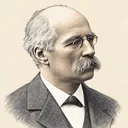
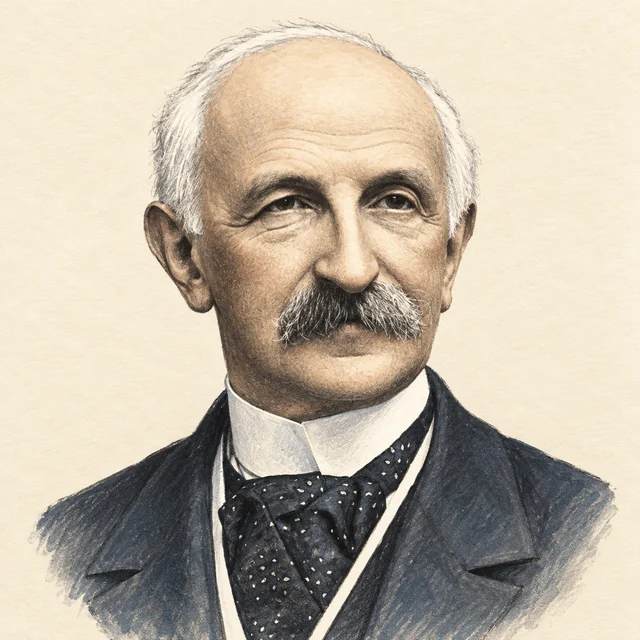
Illustrated portrait of Alfred Hermann Fried

Alfred Hermann Fried

Prize share · 1/2

Fried received half the Peace Prize for efforts to expose and oppose the disorder in international relations that he considered a main cause of war. Journalism, publishing and peace organisations were his tools for arguing for enduring international cooperation.

Read the biography ↗

03 · Years in the making

The path here

  1. 1862

    Asser begins teaching law in Amsterdam.

  2. 1873

    He co-founds the Institut de droit international.

  3. 1892

    Fried and Suttner help found the German Peace Society.

  4. 1893

    Asser presides over the first Hague private international law conference.

  5. 1899

    Fried begins Die Friedenswarte; the first Hague Peace Conference is held.

  6. 1902

    Asser arbitrates in the first Permanent Court of Arbitration case.

  7. 1911

    Asser and Fried share the Peace Prize equally.

04 · Read further

From the original sources

Original explanations by Curionode, based on the official records below. Biographical details and affiliations refer to the award year.

  1. Official award summary nobelprize.org
  2. Historical presentation account nobelprize.org
  3. HCCH: Asser and the first private international law conference hcch.net
  4. German Peace Society: Fried, Suttner and organised pacifism dfg-vk.de