01 · The discovery
The idea, in everyday language
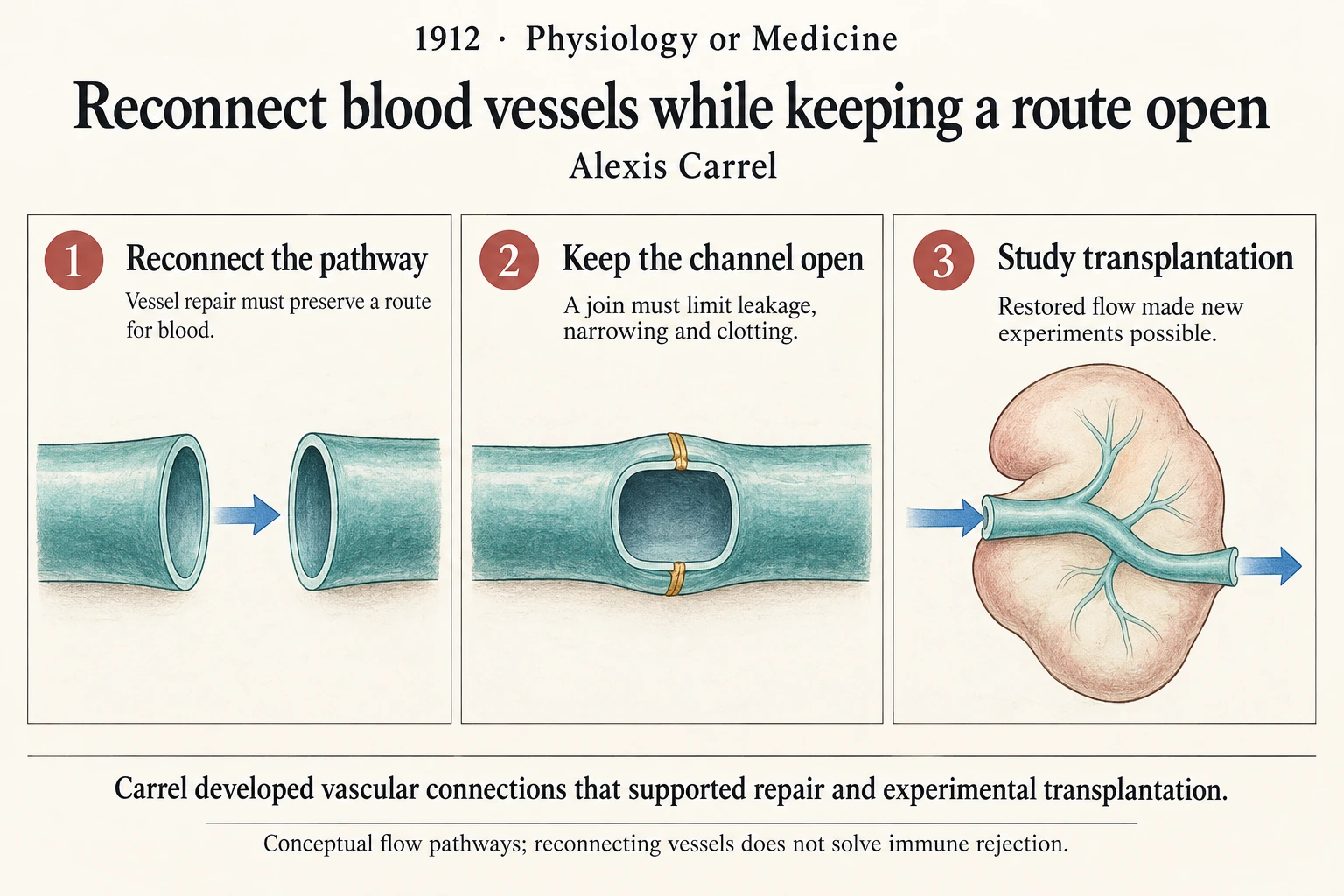
Living tissues need a continuing blood supply. Closing a damaged vessel can stop bleeding but also cut off the route that nourishes tissue beyond it. Carrel developed more effective methods of connecting vessel ends while preserving the passage through the join. Repair had to address leakage, narrowing and clotting, rather than merely bringing two pieces close together.
Restoring circulation also made it possible to investigate transplanted organs. His research included vessel replacement and preservation, and much of it was conducted in animals. An organ transferred within the same animal and one transferred to a different animal presented different problems. The technical ability to reconnect circulation did not remove the immune barrier responsible for rejection. The 1912 award recognised vascular suturing and experimental transplantation, not a completed solution to modern human organ replacement.
Why it matters
The work widened the possibilities of vascular surgery and provided tools for studying transplantation. Later clinical advances also depended on immunology, preservation, medicines and the work of many other researchers and teams.