c.curionodeThe Nobel Archive

1917 · Physics

Recognise an element through its characteristic X-rays

Barkla showed that irradiated elements emit characteristic X-rays of their own, distinct from radiation scattered from the incoming beam. The reserved 1917 prize was announced in 1918.

Characteristic X-raysAtomic spectraSecondary radiation
1917Physics

Visual guide

The prize, pictured

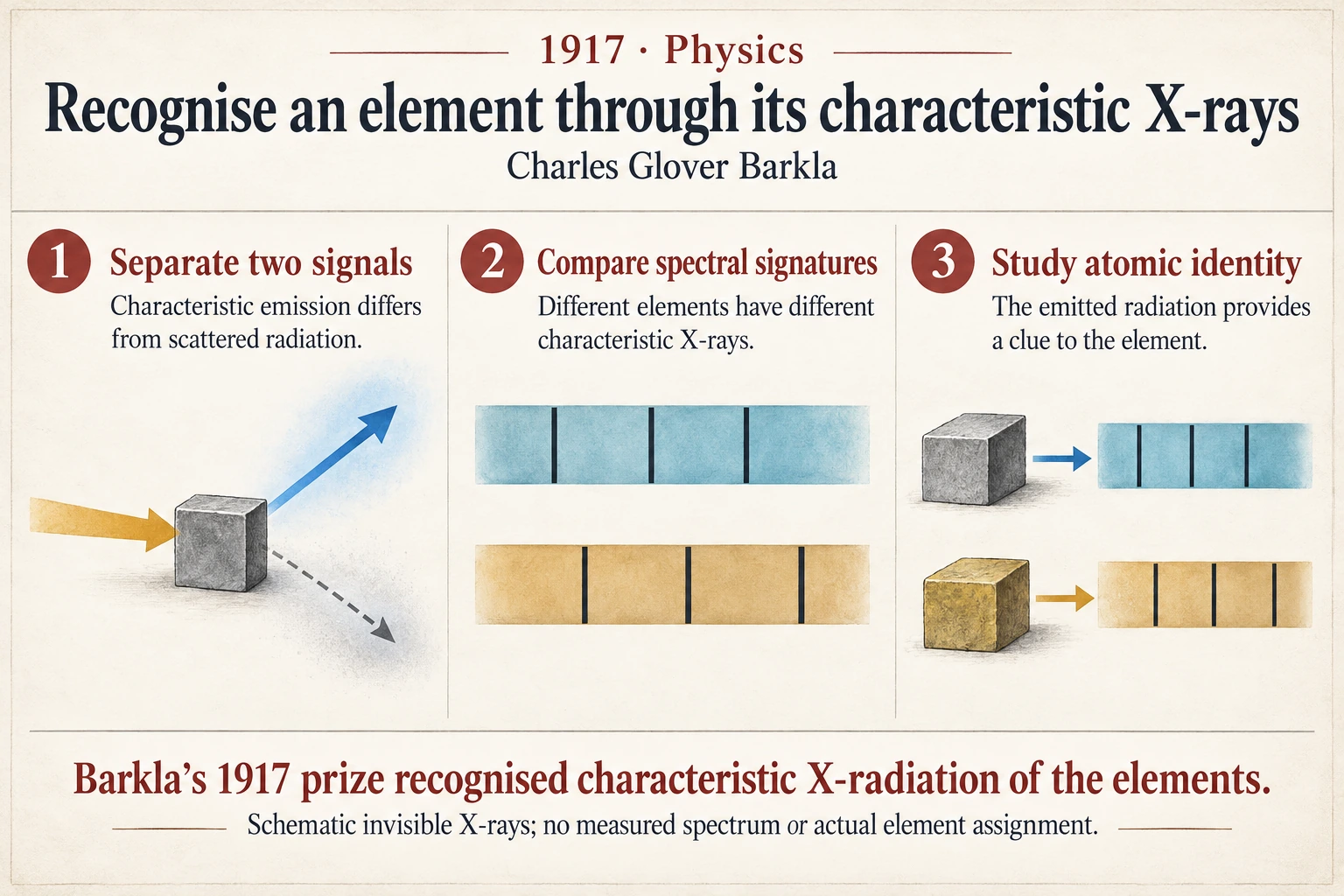
Infographic explaining Recognise an element through its characteristic X-rays
Original AI-generated infographic. A conceptual overview; the explanations and sources below provide context.
Read the poster text

Barkla’s 1917 prize recognised characteristic X-radiation of the elements.

  1. Separate two signals

    Characteristic emission differs from scattered radiation.

  2. Compare spectral signatures

    Different elements have different characteristic X-rays.

  3. Study atomic identity

    The emitted radiation provides a clue to the element.

Schematic invisible X-rays; no measured spectrum or actual element assignment.

01 · The discovery

The idea, in everyday language

Shining X-rays onto matter produces more than a redirected incoming beam. Barkla separated scattered radiation from another component whose properties depended on the element being irradiated. Different chemical elements could be recognised through this characteristic radiation. In his investigations, absorption and penetrating power were important tools; the discovery was not simply a photograph of an atom.

He identified different families of characteristic radiation, known as the K and L series. The finding gave researchers a new connection between an element and its internal atomic structure. In modern language, characteristic X-ray emission can follow ionisation of an inner electron shell and the atom’s subsequent relaxation. That explanation developed beyond the original measurements. The 1917 prize was reserved and announced for Barkla on 12 November 1918; he attended the Nobel banquet in June 1920.

Why it matters

Characteristic X-ray spectra became tools for investigating atoms and identifying elements. Later wavelength measurements and atomic theory developed the implications further. Barkla’s contribution should be distinguished from Röntgen’s discovery of X-rays, crystal diffraction and later explanations of atomic spectra.
02 · The people

Who brought the idea to life?

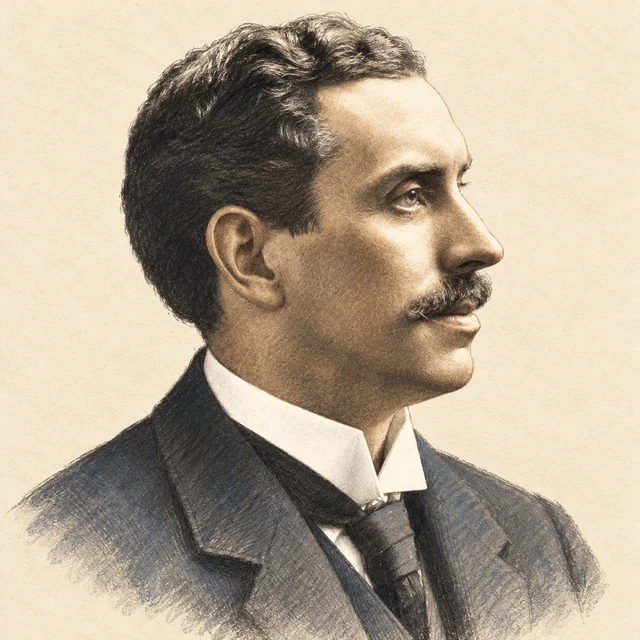
Illustrated portrait of Charles Glover Barkla

Charles Glover Barkla

Prize share · 1

Barkla received the full Physics Prize for discovering the characteristic X-radiation of the elements. He distinguished this element-dependent emission from scattered incident radiation and investigated its absorption and families of penetrating power.

Read the biography ↗

03 · Years in the making

The path here

  1. 1898

    Barkla graduates in physics at Liverpool.

  2. 1902

    He returns to Liverpool and develops his X-ray investigations.

  3. 1906

    By around this time, characteristic secondary radiation is establishing a link with the emitting element.

  4. 1913

    He takes the Edinburgh chair of natural philosophy.

  5. 1918

    The reserved 1917 Physics Prize is announced on 12 November.

  6. 1920

    His Nobel banquet is held on 1 June and his lecture on 3 June.

04 · Read further

From the original sources

Original explanations by Curionode, based on the official records below. Biographical details and affiliations refer to the award year.

  1. Official award summary nobelprize.org
  2. Historical presentation account nobelprize.org
  3. University of Edinburgh Archives: Barkla’s Nobel dates blogs.ed.ac.uk
  4. NIST: characteristic X-rays nist.gov