01 · The contribution
The idea, in everyday language
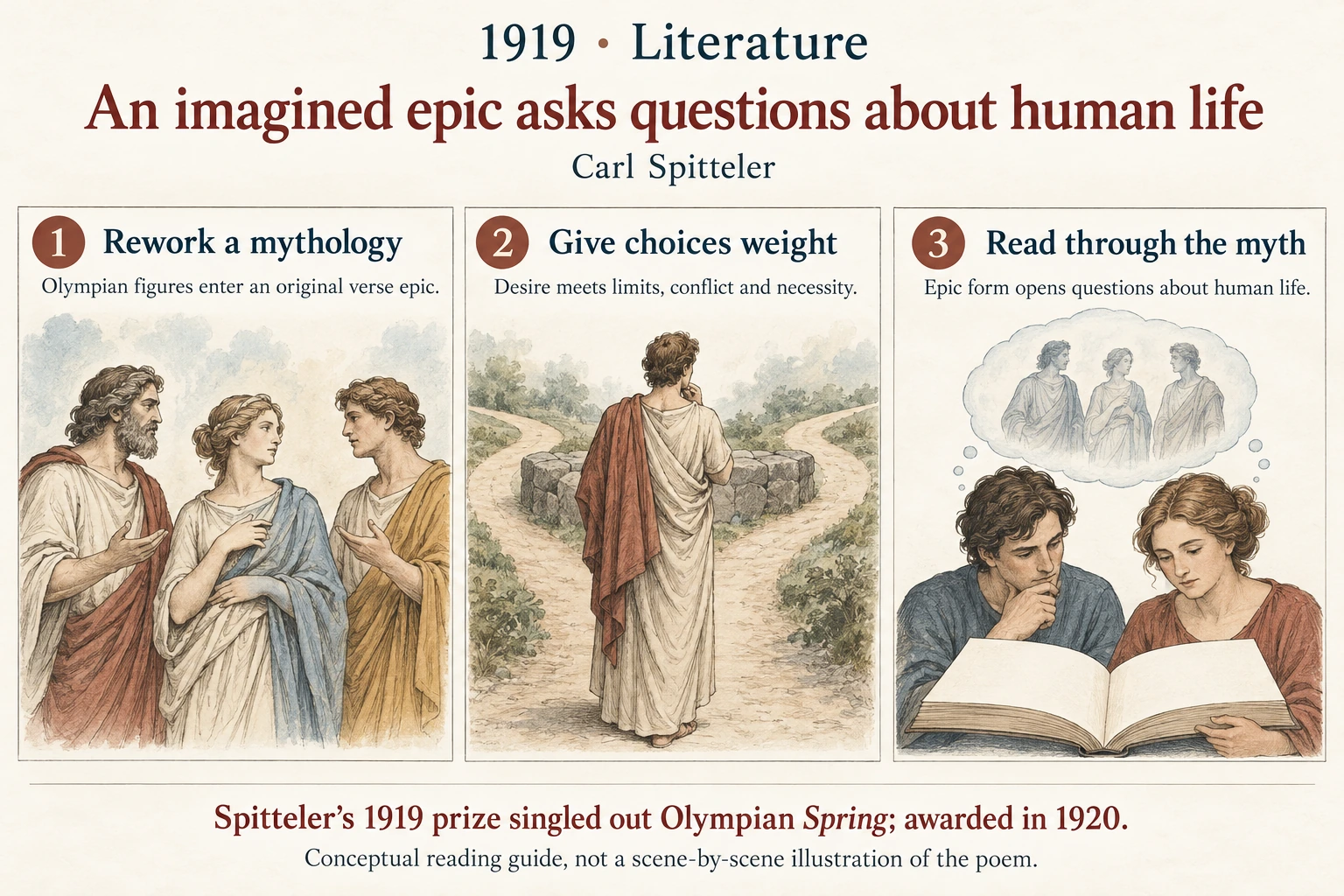
A familiar mythology can supply names and expectations, yet a poet can remake it into a different imaginative world. In Olympian Spring, Spitteler drew on Olympian gods while combining fantastic events, naturalistic detail and questions about individual desire and the constraints of existence. The result is a literary creation rather than a handbook to ancient Greek religion.
The first version appeared in parts between 1900 and 1905. Large-scale narrative and poetic form gave the work a scope different from his later novel Imago. The Nobel citation singled out the epic, rather than treating every work in his career as the same achievement. The 1919 prize was reserved and announced on 11 November 1920; illness prevented him from attending the December presentation.
Why it matters
The epic makes myth a vehicle for sustained poetic reflection on ambition, conflict and human experience. Its scale, imaginative freedom and treatment of inherited material explain the kind of literary achievement the prize recognised. A short guide can identify those features without pretending to replace the poem or settle its interpretation.