c.curionodeThe Nobel Archive

1920 · Physics

A steadier material makes a steadier measure

Guillaume found nickel–iron alloys with unusual responses to temperature. Invar’s very small expansion helped reduce errors in precision instruments and length measurements.

InvarThermal expansionPrecision measurement
1920Physics

Visual guide

The prize, pictured

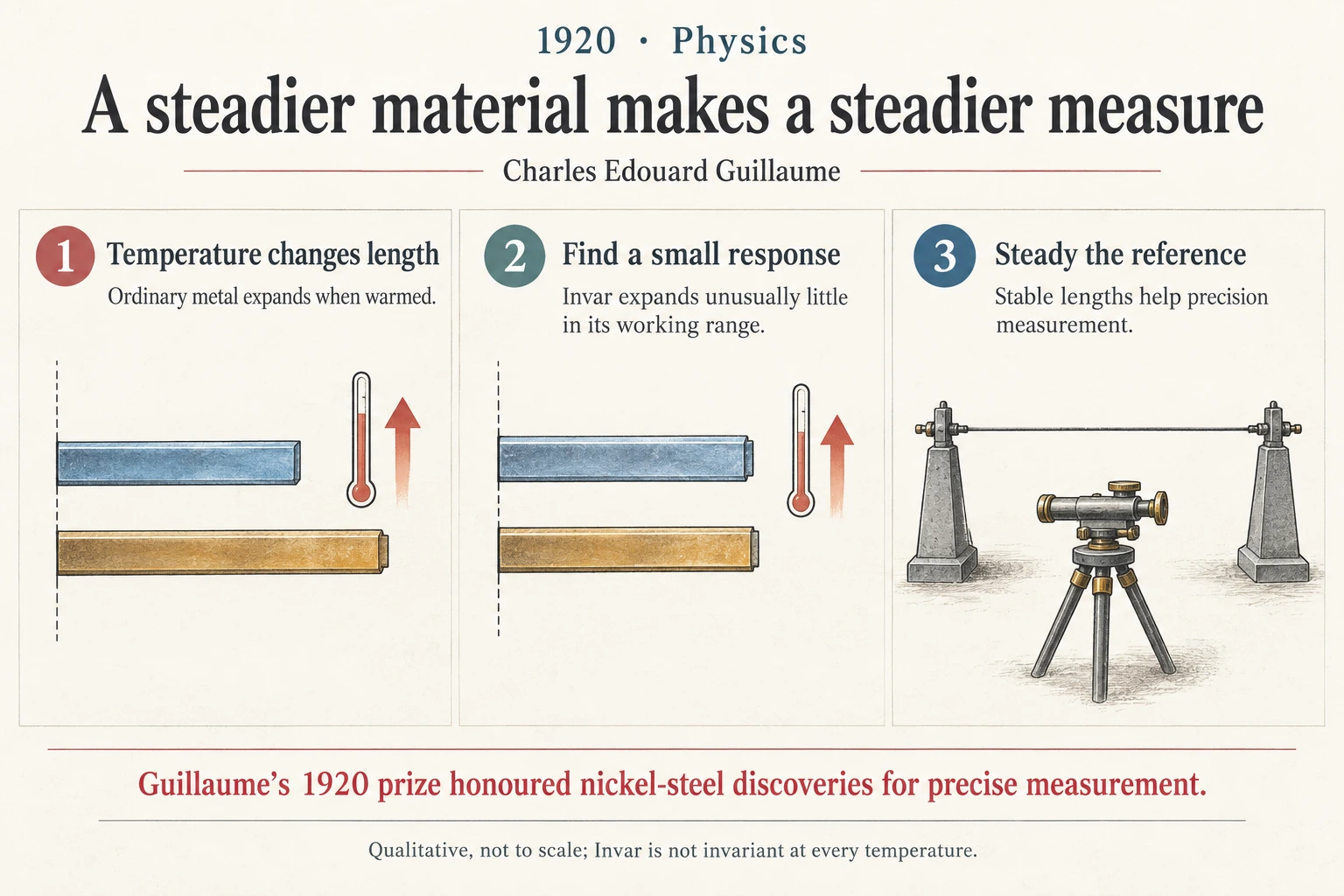
Infographic explaining A steadier material makes a steadier measure
Original AI-generated infographic. A conceptual overview; the explanations and sources below provide context.
Read the poster text

Guillaume’s 1920 prize honoured nickel-steel discoveries for precise measurement.

  1. Temperature changes length

    Ordinary metal expands when warmed.

  2. Find a small response

    Invar expands unusually little in its working range.

  3. Steady the reference

    Stable lengths help precision measurement.

Qualitative, not to scale; Invar is not invariant at every temperature.

01 · The discovery

The idea, in everyday language

A metal ruler can change length when its temperature changes. In careful measurement, that small change becomes part of the result rather than a harmless detail. Guillaume’s work at the International Bureau of Weights and Measures connected thermometry, material properties and the reliability of length references.

Systematic comparison of nickel–iron compositions led to Invar in 1896. Over a useful temperature range it expands much less than ordinary metals, making it valuable for measuring wires, instruments and precision clocks. Related investigations produced Elinvar, with a different advantage: elastic stiffness that changes little with temperature. The 1920 award recognised these discoveries in nickel steels as a service to precision measurement.

Why it matters

Materials with unusually stable properties made careful measurements easier to maintain and compare. Invar was important in surveying baselines and precision instruments, while related alloy work improved timekeeping. Better references support many sciences by reducing errors that could otherwise be mistaken for changes in the object being measured.

02 · The people

Who brought the idea to life?

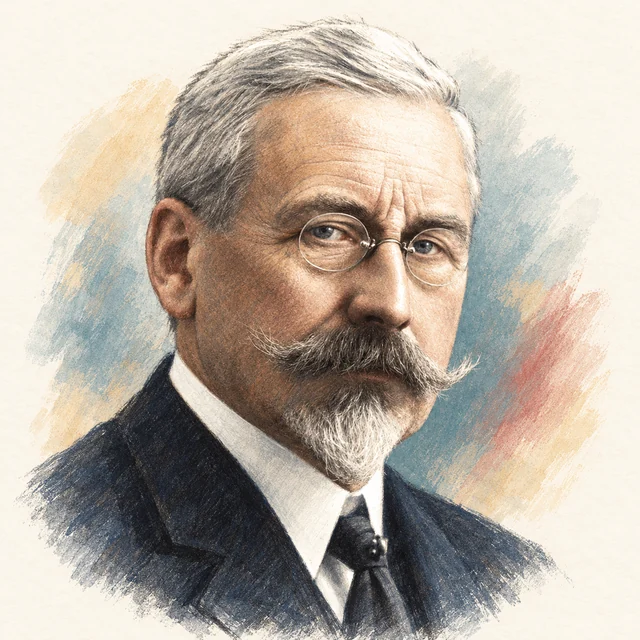
Illustrated portrait of Charles Edouard Guillaume

Charles Edouard Guillaume

Prize share · 1

Guillaume received the full Physics Prize for discoveries about nickel-steel alloys that improved precision measurement. Invar’s unusually small thermal expansion and related investigations made more stable measuring instruments and length references possible.

Read the biography ↗

03 · Years in the making

The path here

  1. 1883

    Guillaume joins the International Bureau of Weights and Measures.

  2. 1896

    He identifies the unusually low-expansion alloy Invar.

  3. 1902

    He becomes associate director of the Bureau.

  4. 1915

    He becomes its director.

  5. 1920

    The Physics Prize recognises nickel-steel discoveries for precision measurement.

04 · Read further

From the original sources

Original explanations by Curionode, based on the official records below. Biographical details and affiliations refer to the award year.

  1. Official award summary nobelprize.org
  2. Award ceremony speech nobelprize.org