c.curionodeThe Nobel Archive

1921 · Literature

Clear prose lets humane doubt question authority

Anatole France joined graceful literary style with sympathy and skeptical irony. The 1921 prize recognised an extensive body of writing, including fiction and criticism.

Humane ironyFrench fictionStyle and sympathy
1921Literature

Visual guide

The prize, pictured

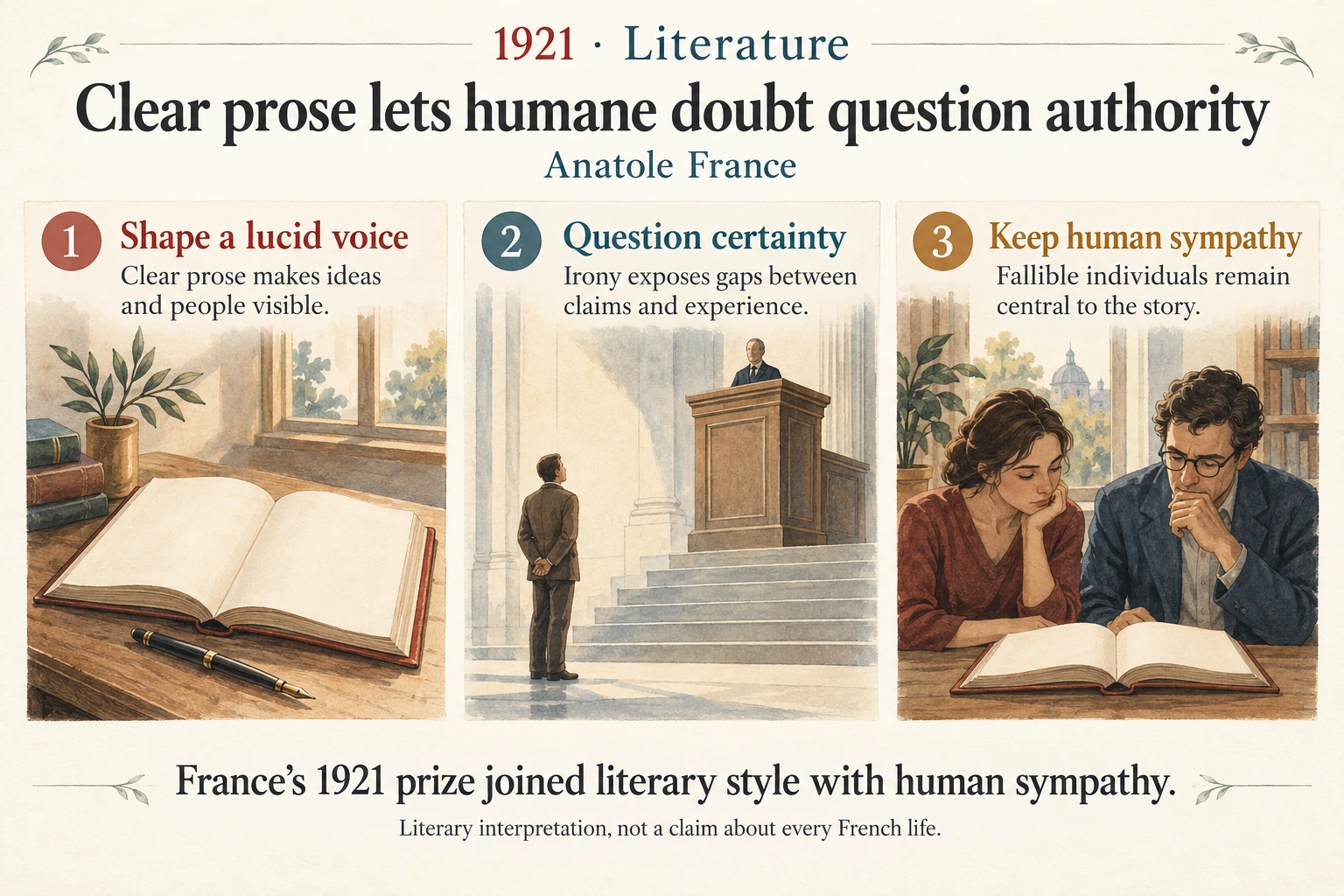
Infographic explaining Clear prose lets humane doubt question authority
Original AI-generated infographic. A conceptual overview; the explanations and sources below provide context.
Read the poster text

France’s 1921 prize joined literary style with human sympathy.

  1. Shape a lucid voice

    Clear prose makes ideas and people visible.

  2. Question certainty

    Irony exposes gaps between claims and experience.

  3. Keep human sympathy

    Fallible individuals remain central to the story.

Literary interpretation, not a claim about every French life.

01 · The contribution

The idea, in everyday language

What happens when a confident doctrine meets the untidy needs of an individual? France’s fiction repeatedly places ideas, institutions and claims to moral certainty beside people who are fallible or vulnerable. A lucid narrative voice and controlled irony invite readers to notice the gap.

His range includes the sympathetic scholar of Le Crime de Sylvestre Bonnard, historical fiction such as Les Dieux ont soif, criticism, and the childhood recollections of Le Petit Pierre. Social concern became especially prominent after 1900. The Academy recognised a wider literary achievement in 1921, not a scientific claim or a single book with one agreed political lesson.

Why it matters

France made polished prose a means of sympathetic criticism. His work invites readers to examine certainty, power and human limitations while attending to individual experience. The award brings together style and human sympathy rather than treating literary elegance as ornament alone.

02 · The people

Who brought the idea to life?

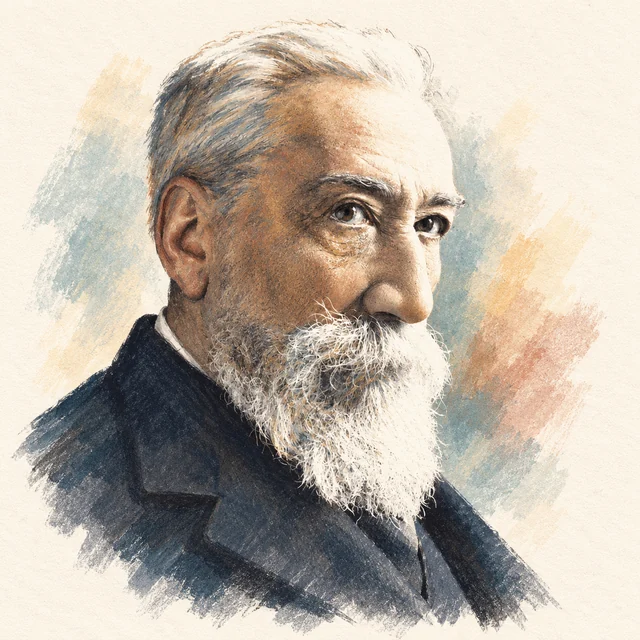
Illustrated portrait of Anatole France

Anatole France

Prize share · 1

France received the full Literature Prize for literary achievement marked by style and deep human sympathy. Fiction, criticism and irony brought vulnerable individuals into tension with dogma, institutions and the certainty of those who exercise power.

Read the biography ↗

03 · Years in the making

The path here

  1. 1881

    Le Crime de Sylvestre Bonnard brings a major literary success.

  2. 1896

    France enters the Académie française.

  3. 1912

    Les Dieux ont soif examines the French Revolution through fiction.

  4. 1918

    Le Petit Pierre returns to childhood memories.

  5. 1921

    The Literature Prize recognises his literary achievement.

04 · Read further

From the original sources

Original explanations by Curionode, based on the official records below. Biographical details and affiliations refer to the award year.

  1. Official award summary nobelprize.org
  2. Award ceremony speech nobelprize.org

More in Literature

Browse this subject ↗