c.curionodeThe Nobel Archive

1930 · Chemistry

Taking apart and rebuilding a blood pigment

Fischer used breakdown products and chemical synthesis to establish haemin’s structure. His work on chlorophyll exposed related patterns in pigments with very different roles.

HaeminPorphyrinsChemical structureNatural pigments
1930Chemistry

Visual guide

The prize, pictured

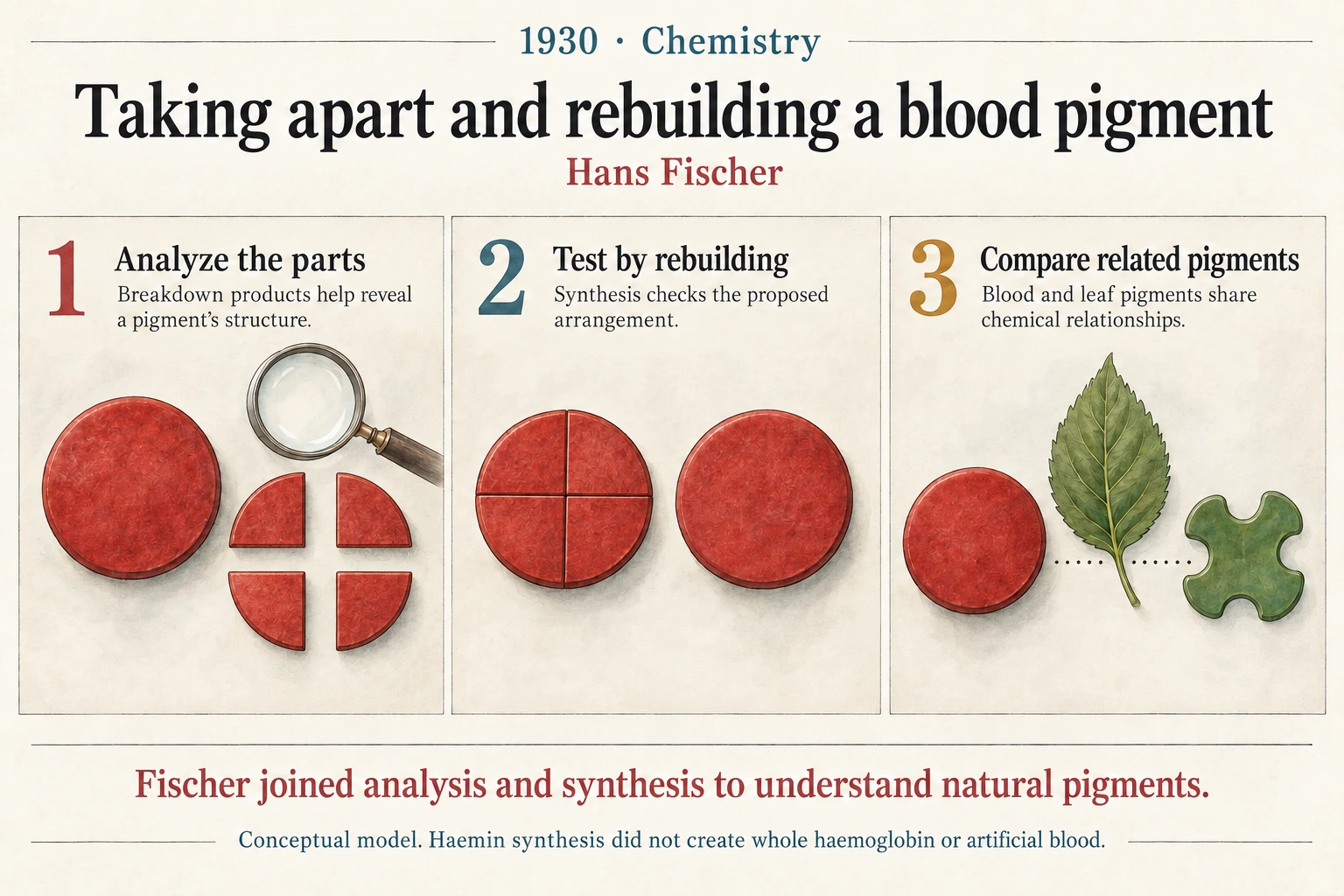
Infographic explaining Taking apart and rebuilding a blood pigment
Original AI-generated infographic. A conceptual overview; the explanations and sources below provide context.
Read the poster text

Fischer joined analysis and synthesis to understand natural pigments.

  1. Analyze the parts

    Breakdown products help reveal a pigment’s structure.

  2. Test by rebuilding

    Synthesis checks the proposed arrangement.

  3. Compare related pigments

    Blood and leaf pigments share chemical relationships.

Conceptual model. Haemin synthesis did not create whole haemoglobin or artificial blood.

01 · The discovery

The idea, in everyday language

Haemoglobin contains globin protein and iron-containing haem groups. Haemin is a related compound used in investigating the pigment framework. Its complicated structure could not be established simply from its red color. Fischer examined smaller products obtained by breaking the pigment down and investigated the chemistry of pyrroles and porphyrins, connecting many separate observations.

Chemical synthesis supplied a demanding check: could a proposed arrangement be built from simpler components and shown to match the natural compound? Fischer’s 1929 synthesis of haemin brought analysis and reconstruction together. His investigations also revealed relationships with pigments in bile and green leaves. Related chemical frameworks do not make those substances identical or give them the same biological function.

Why it matters

The work advanced the structural chemistry of natural pigments and connected biologically important substances through their chemistry. The 1930 prize included research on haemin and chlorophyll, with special emphasis on the haemin synthesis.
02 · The people

Who brought the idea to life?

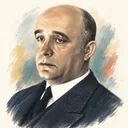
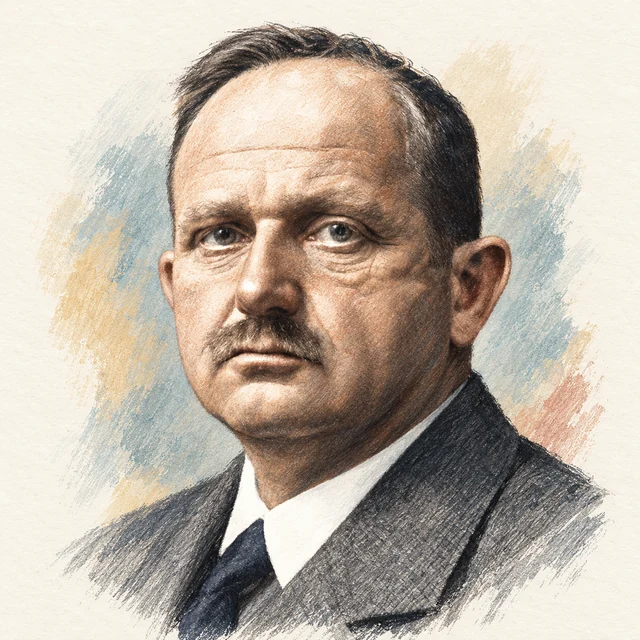
Illustrated portrait of Hans Fischer

Hans Fischer

Prize share · 1

Fischer received the full Chemistry Prize for structural research on haemin and chlorophyll, especially the synthesis of haemin. Analytical breakdown and chemical reconstruction tested the proposed architecture of natural pigments.

Read the biography ↗

03 · Years in the making

The path here

  1. 1921

    Fischer becomes professor of organic chemistry in Munich.

  2. 1929

    He synthesizes haemin, testing its proposed structure.

  3. 1930

    The Chemistry Prize recognizes his pigment research, especially the haemin synthesis.

04 · Read further

From the original sources

Original explanations by Curionode, based on the official records below. Biographical details and affiliations refer to the award year.

  1. Official award summary nobelprize.org
  2. Award ceremony speech nobelprize.org

More in Chemistry

Browse this subject ↗