01 · The contribution
The idea, in everyday language
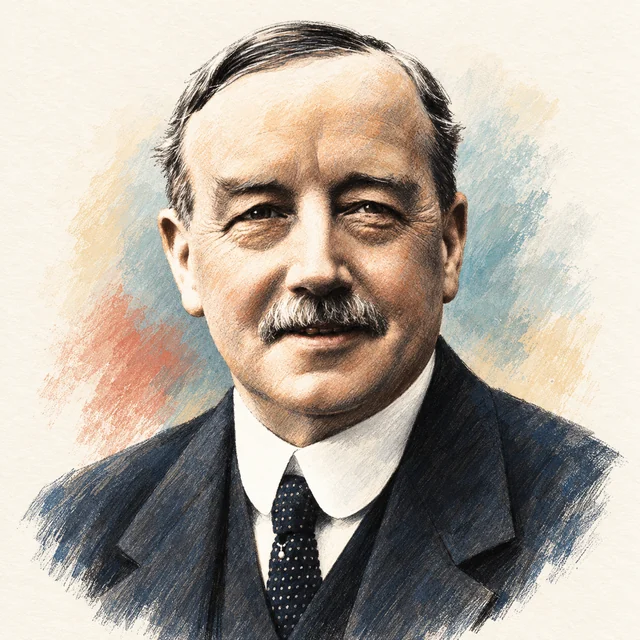
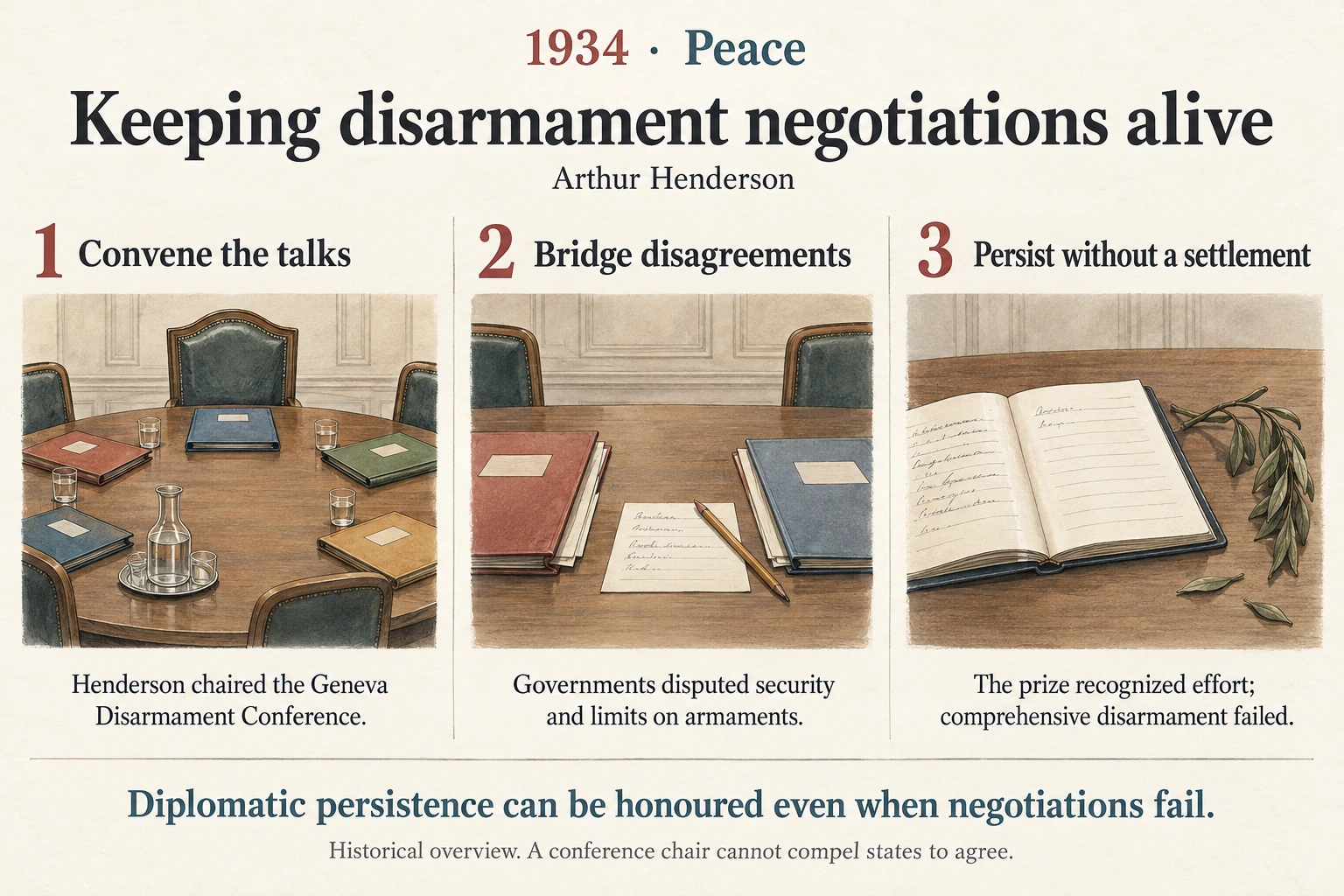
After the First World War, governments faced a linked problem: each sought security, yet one state’s armaments could increase another’s fear. Henderson supported international negotiation through the League of Nations. Selected as conference president in 1931, he opened the Geneva meeting in February 1932. Although no longer Britain’s Foreign Secretary, he remained chair rather than acting simply as the leader of a British negotiating delegation.
The conference struggled over security guarantees, equality of status and the limits to be placed on weapons. Henderson maintained contacts between sessions and tried to prevent divisions from ending negotiations. Germany withdrew in October 1933, and the broader disarmament effort failed. At the December 1934 Nobel ceremony, Henderson still expressed hope. Recognizing his perseverance records what the committee valued under those conditions; it does not retrospectively turn that hope into an achieved agreement.
Why it matters
Henderson’s recognition drew attention to sustained international negotiation and the effort required to chair it. His career connected trade-union organization, elected politics and the League’s search for security through arms limitation. The episode also illustrates the limits of individual diplomatic persistence when governments refuse a workable settlement.