01 · The contribution
The idea, in everyday language
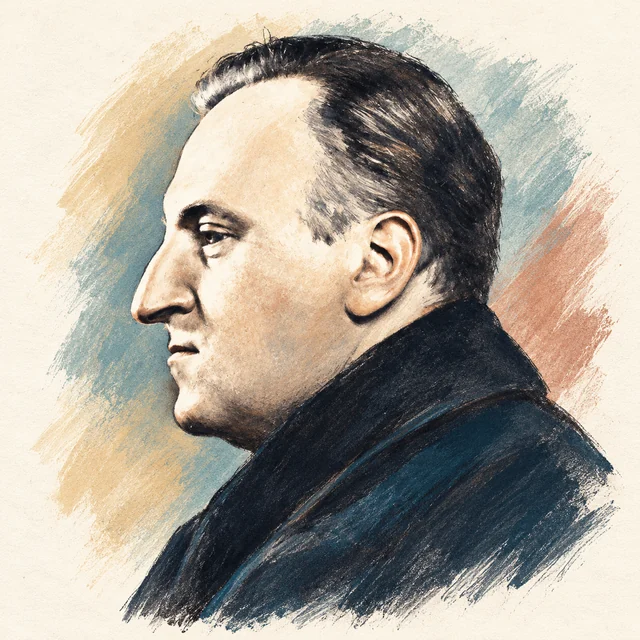
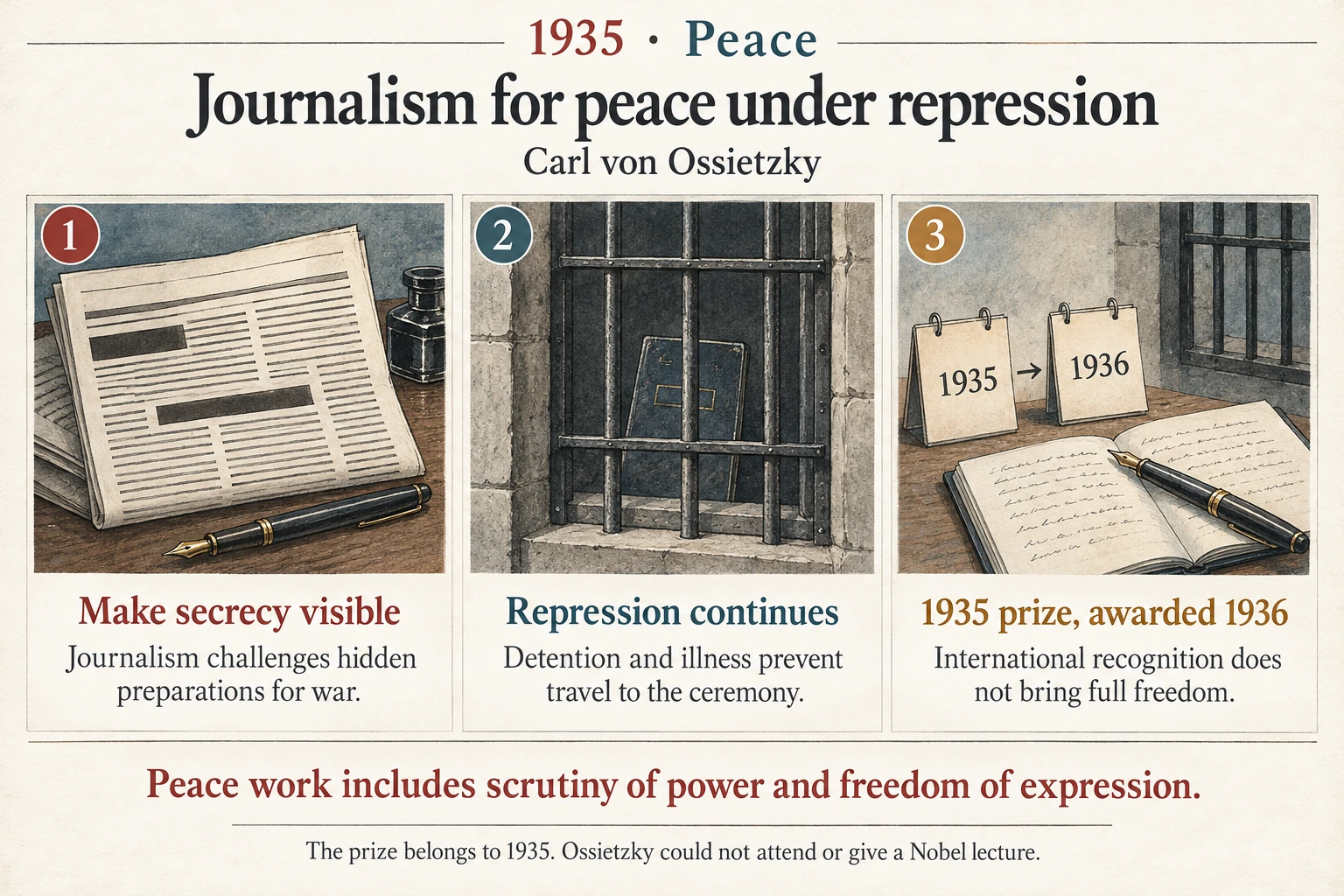
Peace work can involve exposing preparations for war and defending the freedom to scrutinise power. As editor of Die Weltbühne, Ossietzky published reporting on secret German rearmament. A 1929 article by Walter Kreiser became the basis of a prosecution for revealing military secrets. Ossietzky was convicted in 1931 and served part of his sentence in 1932 before an amnesty. This prosecution preceded Nazi rule; the later arrest and concentration-camp detention followed the Nazi seizure of power in 1933.
An international campaign supported his nomination for the Peace Prize. The committee reserved the 1935 prize, then awarded it to Ossietzky in 1936. Its recognition concerned his work for peace and for freedom of thought and expression. He was seriously ill and could not travel to Norway; he neither received the prize on an Oslo stage nor delivered a Nobel lecture. The award made his treatment internationally visible, but did not free him from police control. The historical record therefore combines public recognition with continued repression.
Why it matters
The award highlighted a connection between peace, public accountability and the ability to challenge official secrecy. It also demonstrated the Norwegian Nobel Committee’s independence: its choice should not be described as an award made by the Norwegian government or as endorsement of every political opinion the recipient held.