c.curionodeThe Nobel Archive

1936 · Peace

Making room for negotiation in the Chaco conflict

Saavedra Lamas combined anti-war legal principles with a group of mediating states. The 1935 halt to the fighting between Bolivia and Paraguay was a crucial step before the later peace treaty.

Chaco WarConciliationAnti-War TreatySaavedra Lamas
1936Peace

Visual guide

The prize, pictured

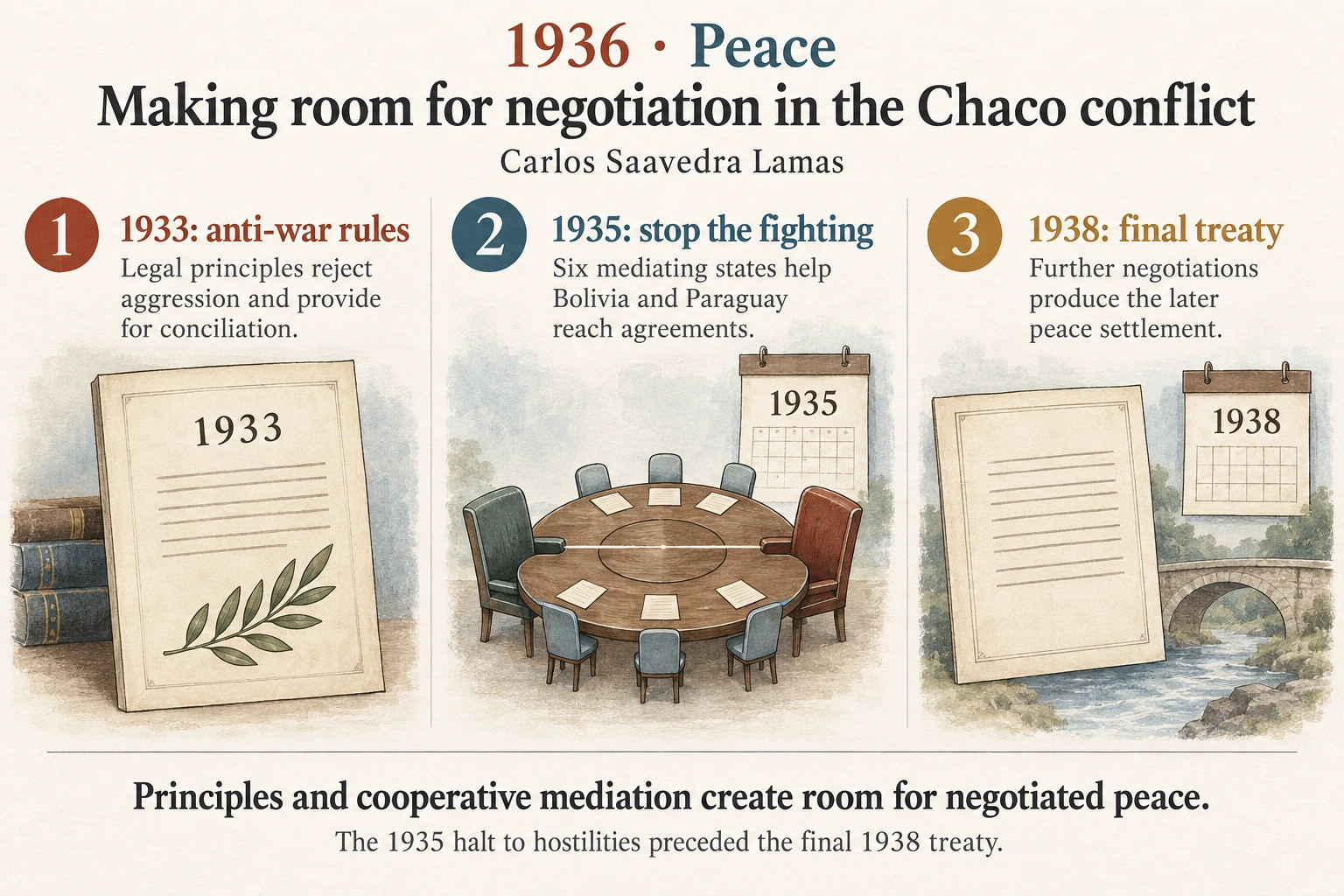
Infographic explaining Making room for negotiation in the Chaco conflict
Original AI-generated infographic. A conceptual overview; the explanations and sources below provide context.
Read the poster text

Principles and cooperative mediation create room for negotiated peace.

  1. 1933: anti-war rules

    Legal principles reject aggression and provide for conciliation.

  2. 1935: stop the fighting

    Six mediating states help Bolivia and Paraguay reach agreements.

  3. 1938: final treaty

    Further negotiations produce the later peace settlement.

The 1935 halt to hostilities preceded the final 1938 treaty.

01 · The contribution

The idea, in everyday language

Bolivia and Paraguay fought over the Chaco from 1932. A declaration against war could establish a principle without itself stopping a battlefield. As Argentina’s foreign minister, Saavedra Lamas promoted the 1933 Anti-War Treaty of Non-Aggression and Conciliation. It condemned aggressive war and territorial changes imposed by force, and set out peaceful procedures for disputes. His diplomacy also helped restore Argentina’s active participation in the League of Nations in 1933, after its long absence from the Assembly.

In 1935 he chaired a mediating group involving Argentina, Brazil, Chile, Peru, the United States and Uruguay. Bringing the belligerents into negotiations produced agreements in June that stopped hostilities. The contribution depended on the other mediators and on Bolivia and Paraguay accepting terms. The final treaty was signed in July 1938, after the Nobel award. Saavedra Lamas also presided over the League Assembly in 1936. His work showed a practical connection between regional conciliation and wider international institutions, including cooperation with states outside the League.

Why it matters

The ceasefire ended the fighting and made further negotiations possible. The legal and diplomatic work offered an alternative to deciding borders by force. Recognition of Saavedra Lamas’s leadership should not erase the work of the mediating states, the belligerents or the people who bore the war’s costs.
02 · The people

Who brought the idea to life?

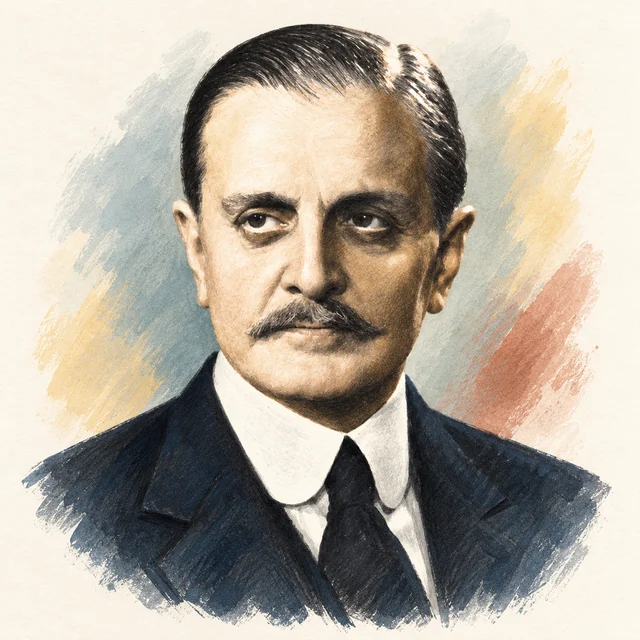
Illustrated portrait of Carlos Saavedra Lamas

Carlos Saavedra Lamas

Prize share · 1

Saavedra Lamas received the full Peace Prize for his work to end the Chaco conflict and for promoting the Anti-War Treaty. The recognition was personal; neither the six mediating states nor a peace conference became laureates.

Read the biography ↗

03 · Years in the making

The path here

  1. 1932

    Saavedra Lamas becomes foreign minister; the Chaco War begins that year.

  2. 1933

    The Anti-War Treaty is signed in Rio; Argentina resumes active League participation.

  3. 1935

    Six-state mediation under his chairmanship secures agreements ending hostilities.

  4. 1936

    He presides over the League Assembly and receives the Peace Prize.

  5. 1938

    Bolivia and Paraguay sign the final peace treaty.

04 · Read further

From the original sources

Original explanations by Curionode, based on the official records below. Biographical details and affiliations refer to the award year.

  1. Official award summary nobelprize.org
  2. Award ceremony speech nobelprize.org
  3. OAS: Anti-War Treaty record oas.org
  4. League of Nations chronology ungeneva.org
  5. Diplomatic record: the final Chaco treaty history.state.gov
  6. Official biography: Carlos Saavedra Lamas nobelprize.org