c.curionodeThe Nobel Archive

1950 · Chemistry

Joining two partners to build a six-membered ring

Diels and Alder discovered and developed a versatile way to construct rings from suitable unsaturated molecular partners.

Diene synthesisRing constructionOrganic chemistry
1950Chemistry

Visual guide

The prize, pictured

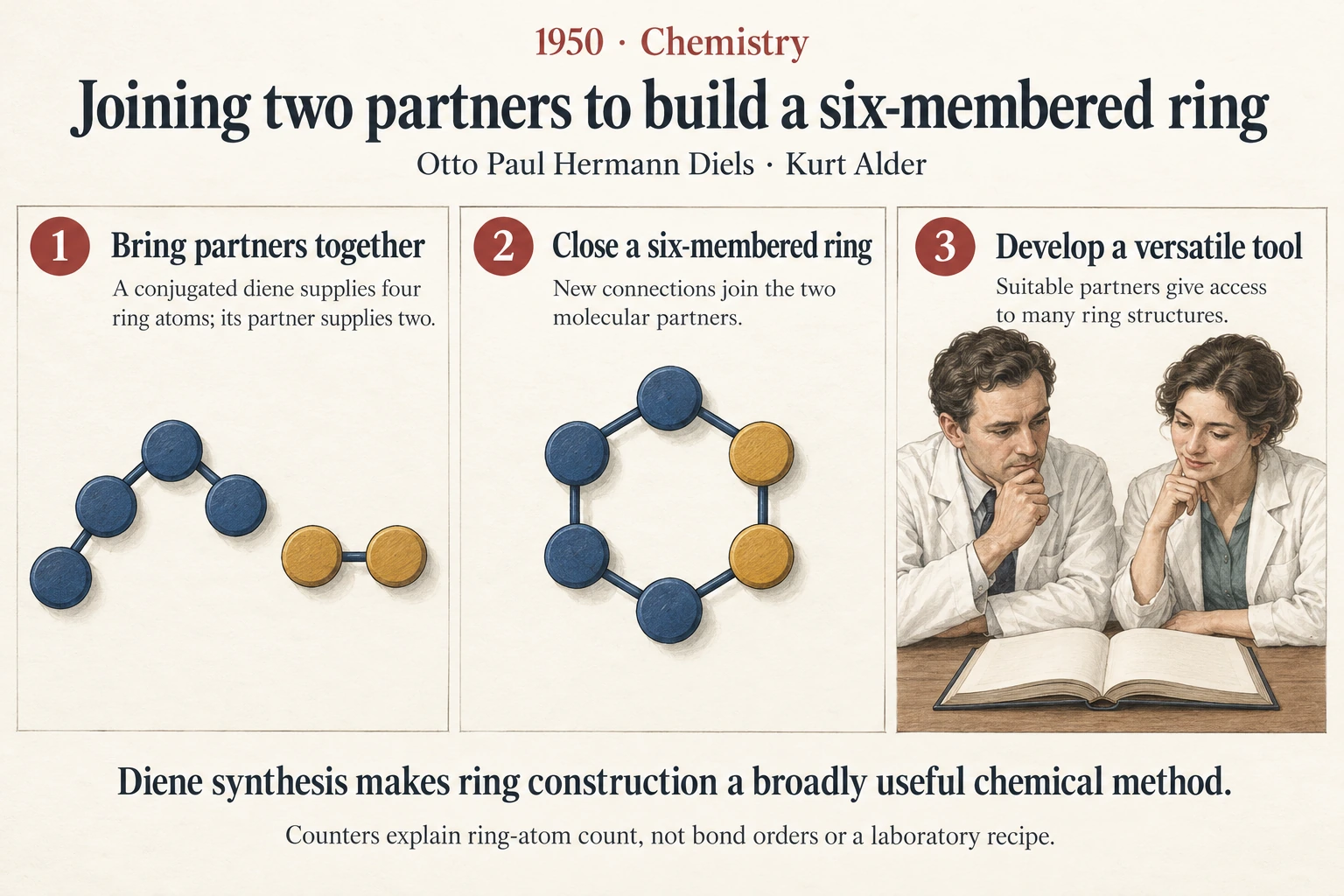
Infographic explaining Joining two partners to build a six-membered ring
Original AI-generated infographic. A conceptual overview; the explanations and sources below provide context.
Read the poster text

Diene synthesis makes ring construction a broadly useful chemical method.

  1. Bring partners together

    A conjugated diene supplies four ring atoms; its partner supplies two.

  2. Close a six-membered ring

    New connections join the two molecular partners.

  3. Develop a versatile tool

    Suitable partners give access to many ring structures.

Counters explain ring-atom count, not bond orders or a laboratory recipe.

01 · The discovery

The idea, in everyday language

Building a complex organic molecule requires control over which atoms become connected. Diels and Alder recognised a general pattern: a conjugated diene, with four carbon atoms linked by alternating double and single bonds, can combine with a suitable unsaturated partner called a dienophile. In the classic alkene example, the partner supplies two more carbon atoms to the new ring.

Two new connections close a six-membered ring, with one double bond remaining in this simple example. The result is a new bonded molecule, not a loose mixture or simply a longer chain. Their 1928 work and subsequent investigations made the pattern into a powerful research method. Earlier chemists had observed examples; the prize recognised Diels and Alder’s discovery, interpretation and development of the synthesis.

Why it matters

Varying suitable partners opens routes to many ring structures, useful in studying and constructing natural products and industrial materials. Diels and Alder received one half each. Their 1950 affiliations were Kiel and Cologne, although the original collaborative work was done at Kiel.
02 · The people

Who brought the idea to life?

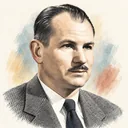
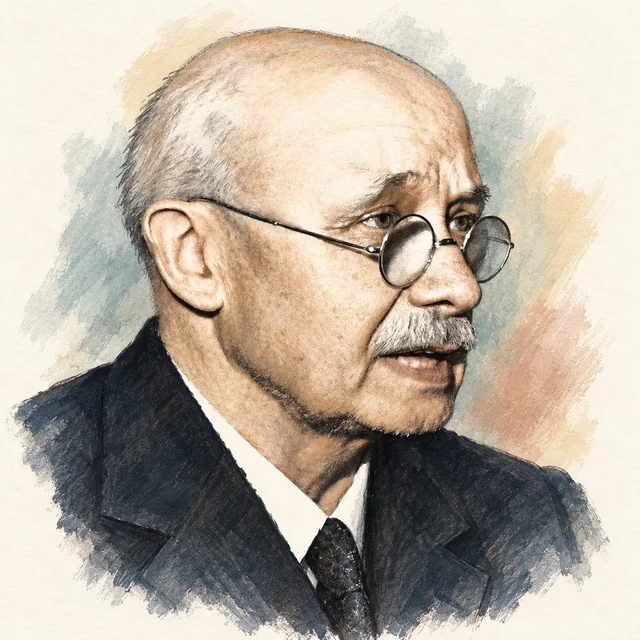
Illustrated portrait of Otto Paul Hermann Diels

Otto Paul Hermann Diels

Prize share · 1/2

Diels discovered and developed the diene synthesis with Alder, making ring construction a broadly useful method in organic chemistry. He received one half of the Chemistry Prize.

Read the biography ↗
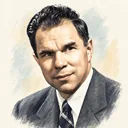
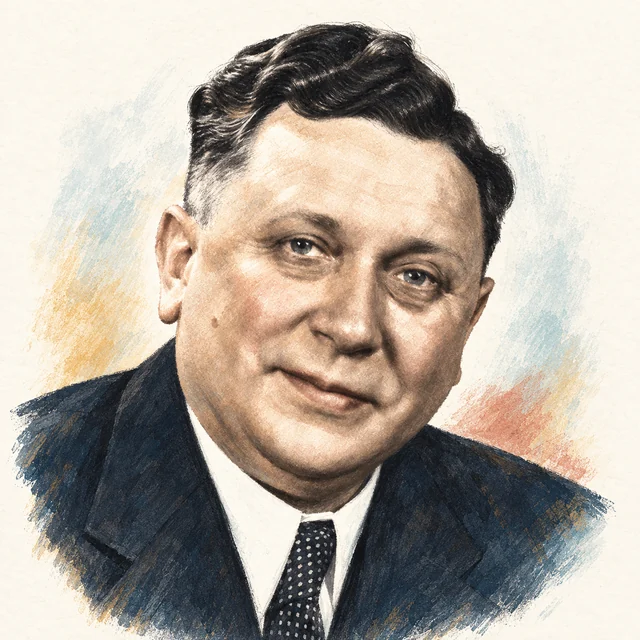
Illustrated portrait of Kurt Alder

Kurt Alder

Prize share · 1/2

Alder discovered and developed diene synthesis with Diels and investigated its scope and stereochemical behaviour. He received one half of the Chemistry Prize.

Read the biography ↗

03 · Years in the making

The path here

  1. 1916

    Diels moves to Kiel.

  2. 1926

    Alder completes his doctorate under Diels.

  3. 1928

    They publish the work establishing diene synthesis.

  4. 1936

    Alder moves to industrial synthetic-rubber research.

  5. 1940

    Alder becomes a professor at Cologne.

  6. 1945

    Diels retires; Kiel remains his recorded award affiliation.

  7. 1950

    They share the Chemistry Prize equally.

04 · Read further

From the original sources

Original explanations by Curionode, based on the official records below. Biographical details and affiliations refer to the award year.

  1. Official award summary nobelprize.org
  2. Award ceremony speech nobelprize.org
  3. Nobel background: closing the circle nobelprize.org
  4. Official biography: Otto Paul Hermann Diels nobelprize.org
  5. Official biography: Kurt Alder nobelprize.org

More in Chemistry

Browse this subject ↗