01 · The discovery
The idea, in everyday language
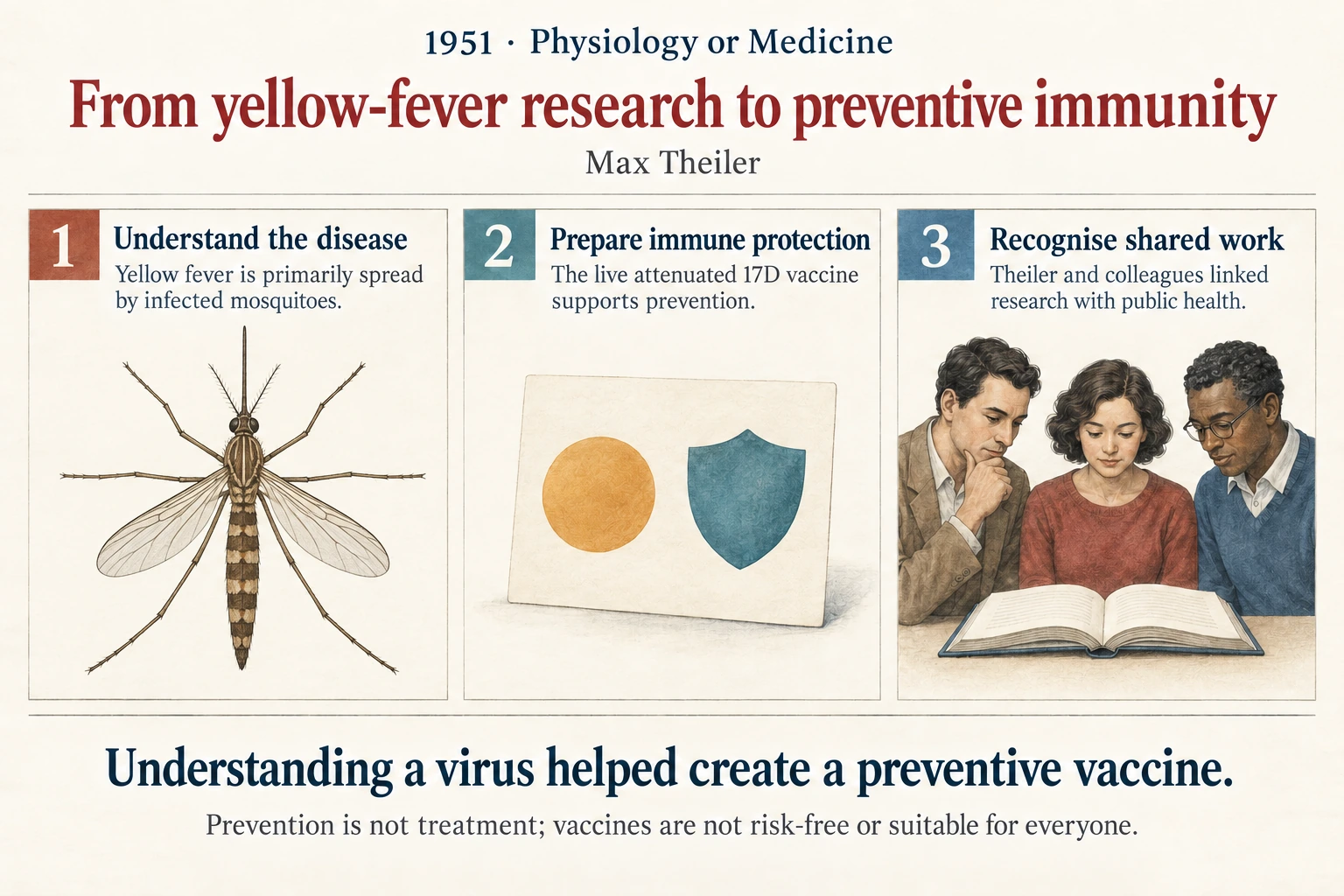
Yellow fever is a viral disease primarily transmitted by infected mosquitoes. Earlier researchers had established the mosquito connection; Theiler did not discover that route of transmission. His 1930 work with a mouse model enabled more extensive experimental investigation, while subsequent studies examined how altered virus strains could induce protection.
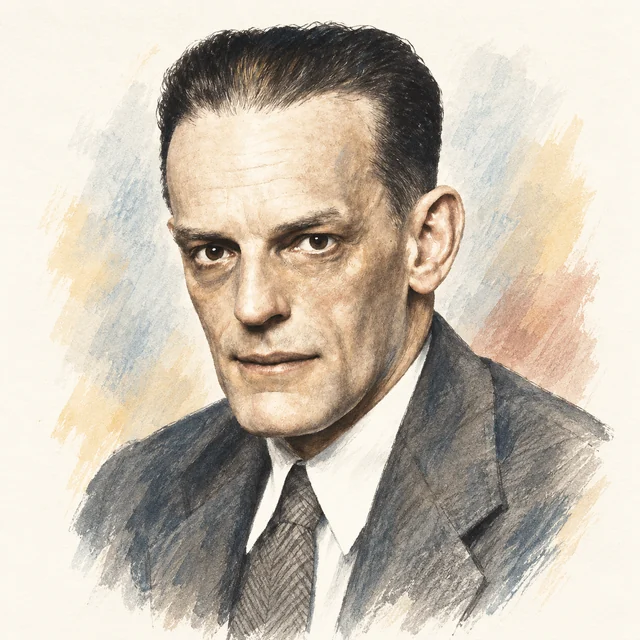
The 17D vaccine uses a live attenuated virus: its capacity to cause disease is reduced while it can stimulate an immune response. Theiler and Hugh H. Smith published their human-immunisation work in 1937. This was a later step in a collaborative programme, not simply the earlier mouse-adapted strain renamed. The 1951 award recognised Theiler’s discoveries concerning yellow fever and ways to combat it.
Why it matters
The work provided a major preventive tool and a model for linking virology with vaccine development. Theiler alone received the prize; Smith and other researchers, health workers and participating communities contributed to development and use. Research at the Rockefeller Foundation should be distinguished from the separate Rockefeller Institute whose campus housed the laboratories.