01 · The discovery
The idea, in everyday language
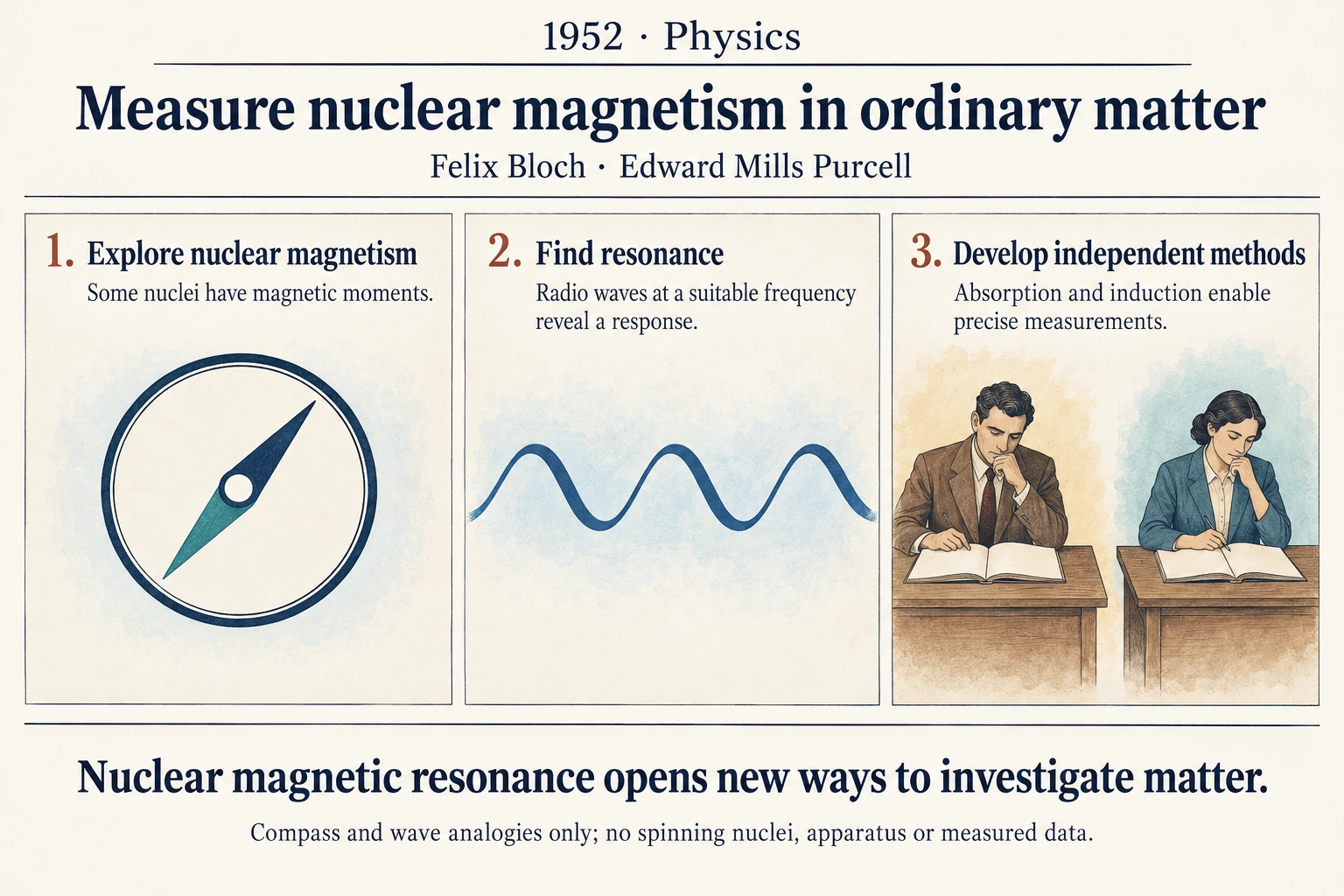
Many atomic nuclei have a magnetic moment. In an applied magnetic field, radio waves at a suitable resonance frequency can change their quantum spin states. Detecting this very weak response in an ordinary sample required methods beyond the earlier molecular-beam approach associated with Rabi.
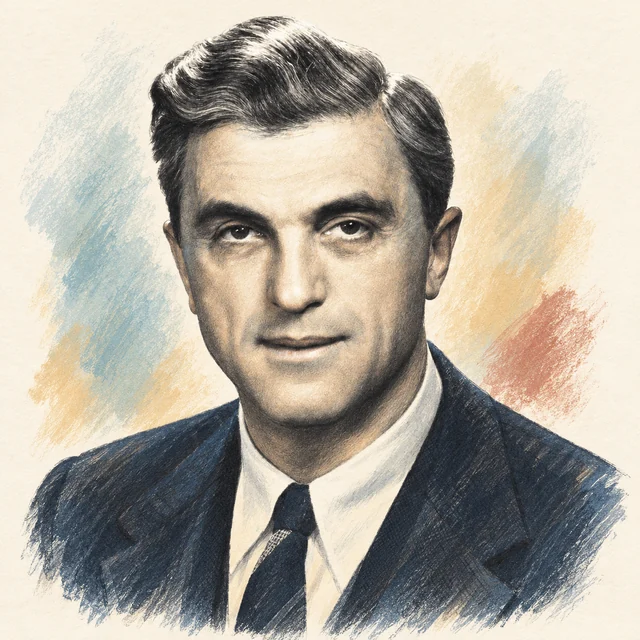
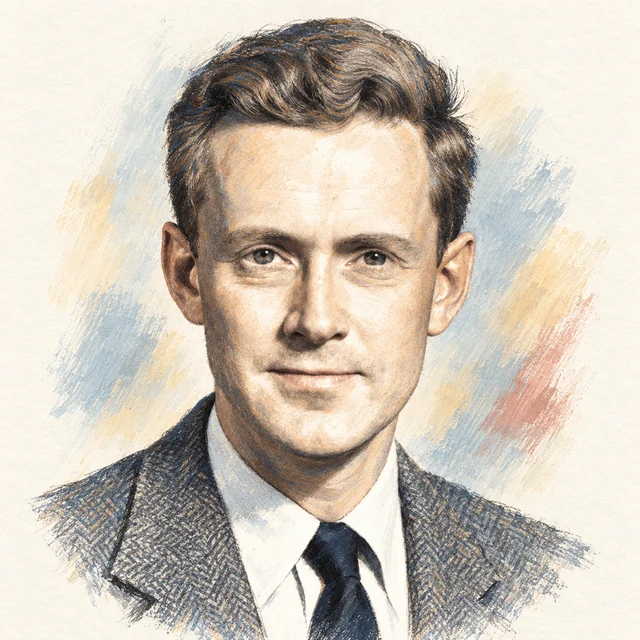
Purcell, Henry Torrey and Robert Pound developed resonance-absorption measurements; Bloch, William Hansen and Martin Packard independently developed nuclear induction. The two groups’ reports appeared in 1946. The methods detected related nuclear magnetic behaviour in different ways, opening measurements in solids and liquids. Bloch and Purcell each received half the 1952 prize.
Why it matters
Nuclear magnetic resonance became a powerful way to investigate matter, magnetic moments and interactions with surrounding material. Its applications expanded through physics, chemistry and biology. Medical magnetic resonance imaging developed later, through further discoveries and techniques; it was not already the finished 1952 achievement.