c.curionodeThe Nobel Archive

1953 · Chemistry

Recognise a large molecule behind a familiar material

Staudinger established the macromolecular view: many polymers are large molecules whose building units are joined by covalent bonds.

MacromoleculesCovalent connectivityPolymer science
1953Chemistry

Visual guide

The prize, pictured

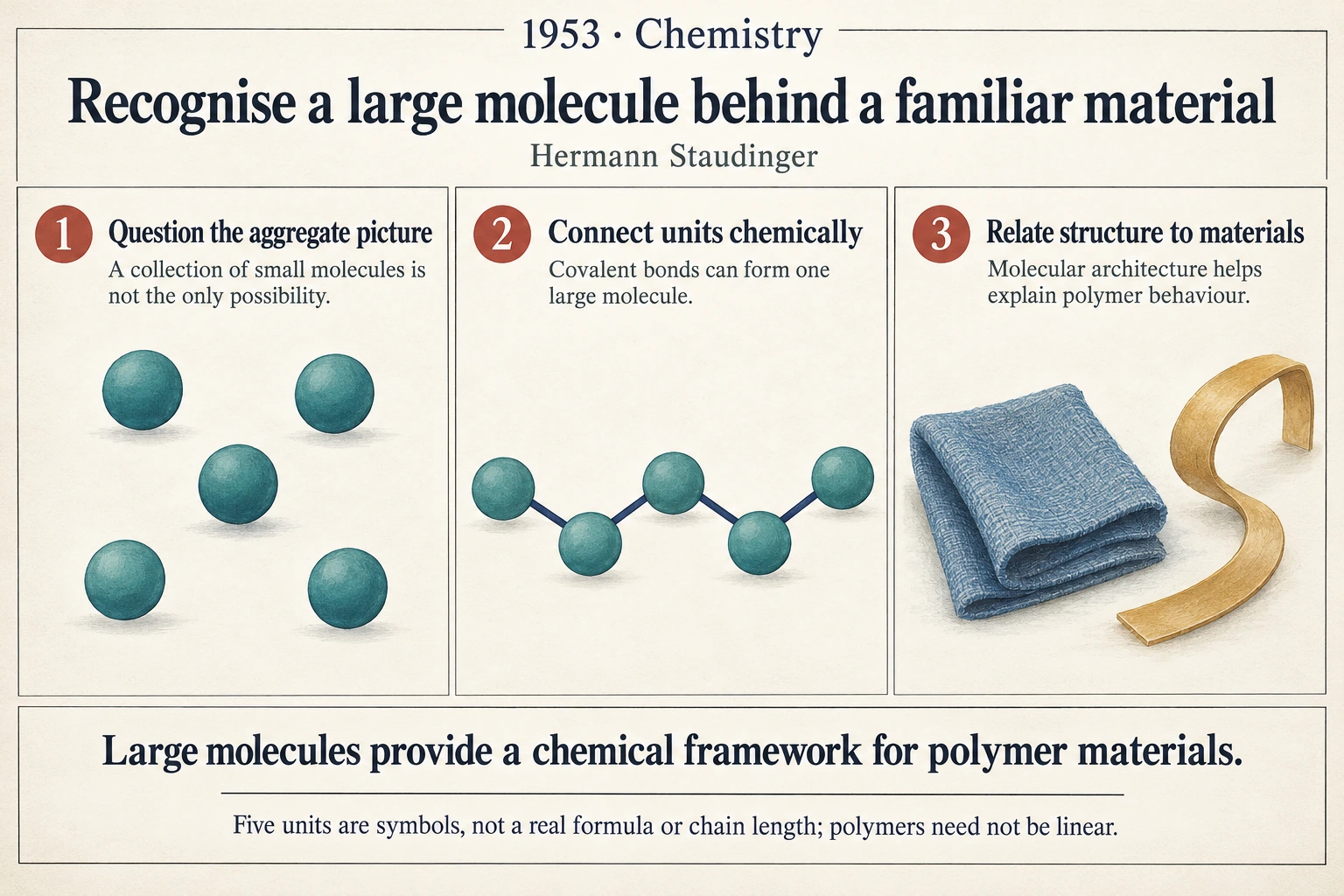
Infographic explaining Recognise a large molecule behind a familiar material
Original AI-generated infographic. A conceptual overview; the explanations and sources below provide context.
Read the poster text

Large molecules provide a chemical framework for polymer materials.

  1. Question the aggregate picture

    A collection of small molecules is not the only possibility.

  2. Connect units chemically

    Covalent bonds can form one large molecule.

  3. Relate structure to materials

    Molecular architecture helps explain polymer behaviour.

Five units are symbols, not a real formula or chain length; polymers need not be linear.

01 · The discovery

The idea, in everyday language

Why do rubber and cellulose behave so differently from ordinary small-molecule substances? One influential explanation treated them as associations of many small molecules. Staudinger argued that chemical bonds can instead connect units into genuinely large molecules.

His 1920 polymerisation paper and subsequent chemical and viscosity studies supported this interpretation. Persistence of polymer properties through suitable chemical changes challenged aggregate explanations. The macromolecular concept gained acceptance and connected molecular architecture with material behaviour. The full 1953 prize recognised discoveries in macromolecular chemistry.

Why it matters

The concept gave natural materials such as rubber and cellulose, and synthetic polymers, a common chemical framework. Researchers and industrial chemists could investigate how connectivity, size and arrangement affect properties. Earlier materials and collective industrial advances were not invented by one laureate.
02 · The people

Who brought the idea to life?

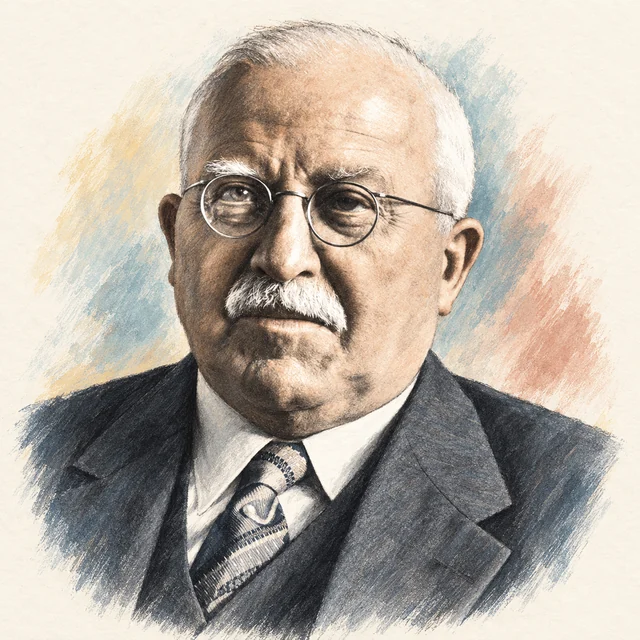
Illustrated portrait of Hermann Staudinger

Hermann Staudinger

Prize share · 1

Staudinger established that polymers can be large molecules with units joined by chemical bonds, rather than merely assemblies of small molecules. He received the full Chemistry Prize.

Read the biography ↗

03 · Years in the making

The path here

  1. 1881

    Staudinger is born in Worms.

  2. 1903

    He completes his doctorate at Halle.

  3. 1912

    He moves to Zurich.

  4. 1920

    He publishes his macromolecular interpretation of polymerisation.

  5. 1926

    He moves to Freiburg.

  6. 1932

    His major book on rubber and cellulose appears.

  7. 1953

    He receives the full Chemistry Prize.

04 · Read further

From the original sources

Original explanations by Curionode, based on the official records below. Biographical details and affiliations refer to the award year.

  1. Official award summary nobelprize.org
  2. Award ceremony speech nobelprize.org
  3. ACS: Staudinger and macromolecular chemistry acs.org
  4. Official biography: Hermann Staudinger nobelprize.org

More in Chemistry

Browse this subject ↗