c.curionodeThe Nobel Archive

1954 · Literature

Let precise details carry unspoken meaning

Hemingway’s economical prose, dialogue and understatement reshaped narrative style; The Old Man and the Sea was specifically recognised in 1954.

Narrative proseUnderstatementDialogue
1954Literature

Visual guide

The prize, pictured

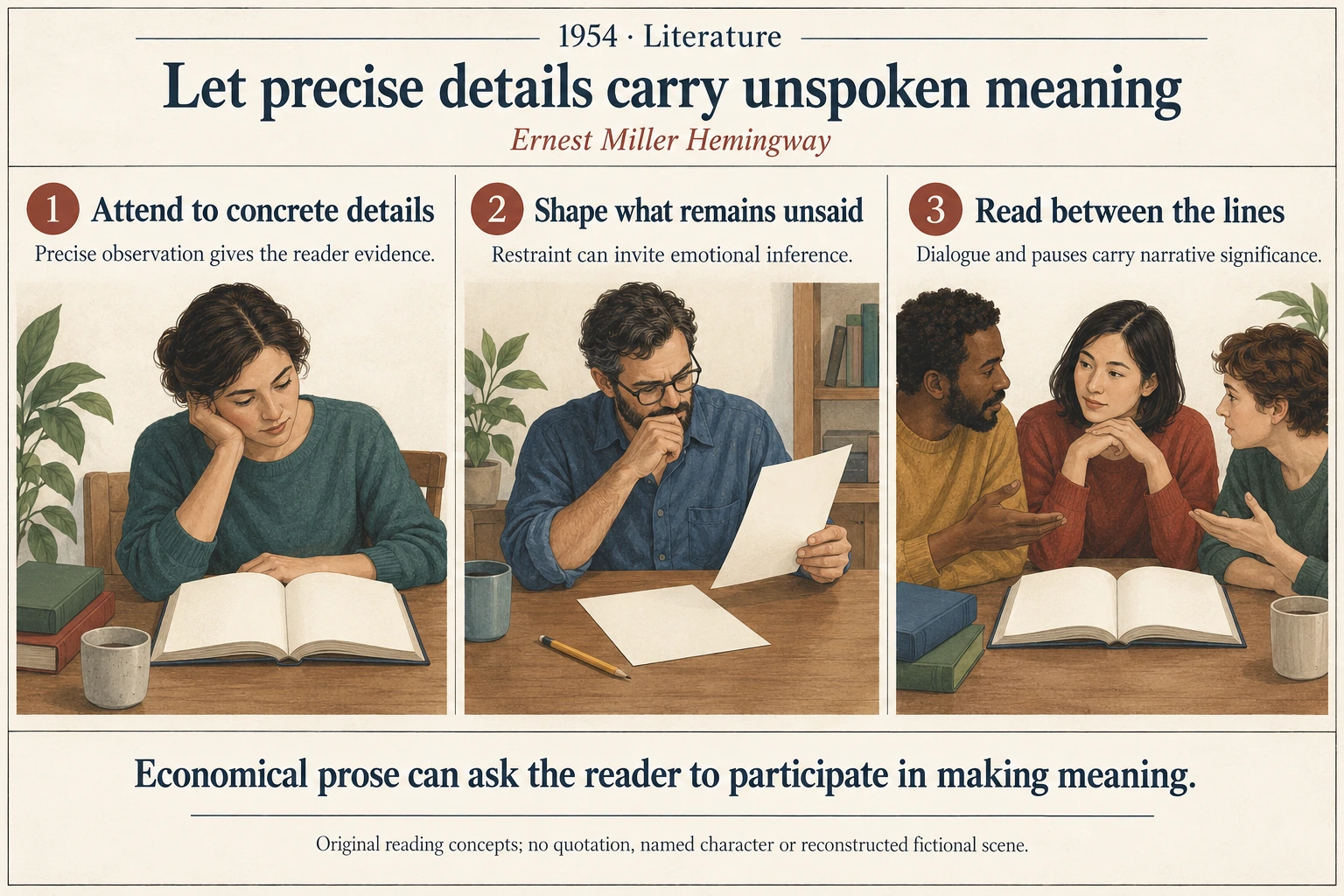
Infographic explaining Let precise details carry unspoken meaning
Original AI-generated infographic. A conceptual overview; the explanations and sources below provide context.
Read the poster text

Economical prose can ask the reader to participate in making meaning.

  1. Attend to concrete details

    Precise observation gives the reader evidence.

  2. Shape what remains unsaid

    Restraint can invite emotional inference.

  3. Read between the lines

    Dialogue and pauses carry narrative significance.

Original reading concepts; no quotation, named character or reconstructed fictional scene.

01 · The contribution

The idea, in everyday language

How can a story convey emotional pressure without explaining every feeling? Hemingway developed prose in which concrete observations, dialogue and pauses invite the reader to infer significance. Journalistic training contributed to his discipline, but the fiction transforms experience rather than functioning as a literal record of his own life.

The Sun Also Rises in 1926, Men Without Women in 1927, A Farewell to Arms in 1929 and For Whom the Bell Tolls in 1940 show different settings and narrative forms. The Old Man and the Sea in 1952 received particular mention in the award motivation. The full 1954 prize recognised narrative mastery and influence on contemporary style, rather than a mechanical rule that every sentence should be short.

Why it matters

Hemingway’s approach influenced short fiction and novels beyond the United States. Precision, rhythm, dialogue and narrative restraint gave writers and readers ways to encounter experience without exhaustive explanation. His work also invites critical questions about violence, gender and the limits of a narrator’s perspective.
02 · The people

Who brought the idea to life?

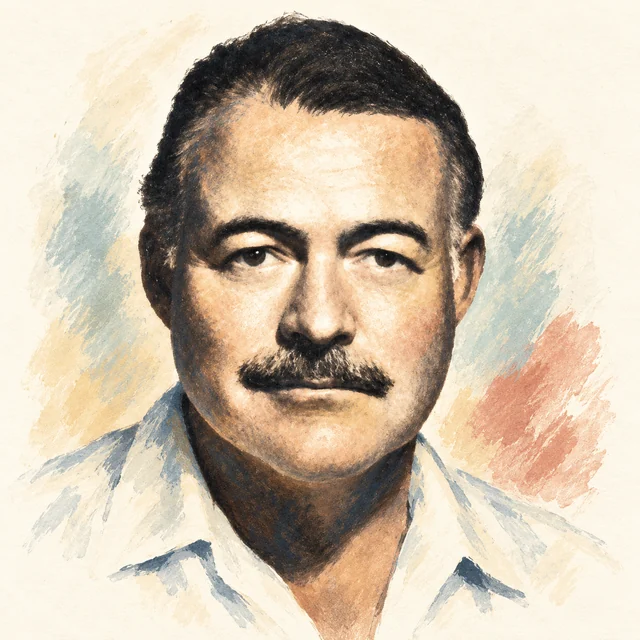
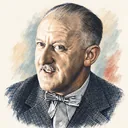
Illustrated portrait of Ernest Miller Hemingway

Ernest Miller Hemingway

Prize share · 1

Hemingway developed influential narrative prose through economy, dialogue and understatement; The Old Man and the Sea was specifically recognised in the award motivation. He received the full Literature Prize.

Read the biography ↗

03 · Years in the making

The path here

  1. 1899

    Hemingway is born in Oak Park.

  2. 1926

    The Sun Also Rises appears.

  3. 1927

    Men Without Women appears.

  4. 1929

    A Farewell to Arms appears.

  5. 1940

    For Whom the Bell Tolls appears.

  6. 1952

    The Old Man and the Sea appears.

  7. 1954

    Hemingway receives the full Literature Prize; health prevents attendance.

04 · Read further

From the original sources

Original explanations by Curionode, based on the official records below. Biographical details and affiliations refer to the award year.

  1. Official award summary nobelprize.org
  2. Award ceremony speech nobelprize.org
  3. JFK archive: Hemingway’s manuscripts and Cuban home jfk.blogs.archives.gov
  4. Official biography: Ernest Miller Hemingway nobelprize.org

More in Literature

Browse this subject ↗