c.curionodeThe Nobel Archive

1956 · Literature

Refining lyric language through a lifetime of revision

Jiménez renewed Spanish lyric poetry through concentrated expression, poetic prose and sustained revision.

Lyric poetryRevisionSpanish-language literature
1956Literature

Visual guide

The prize, pictured

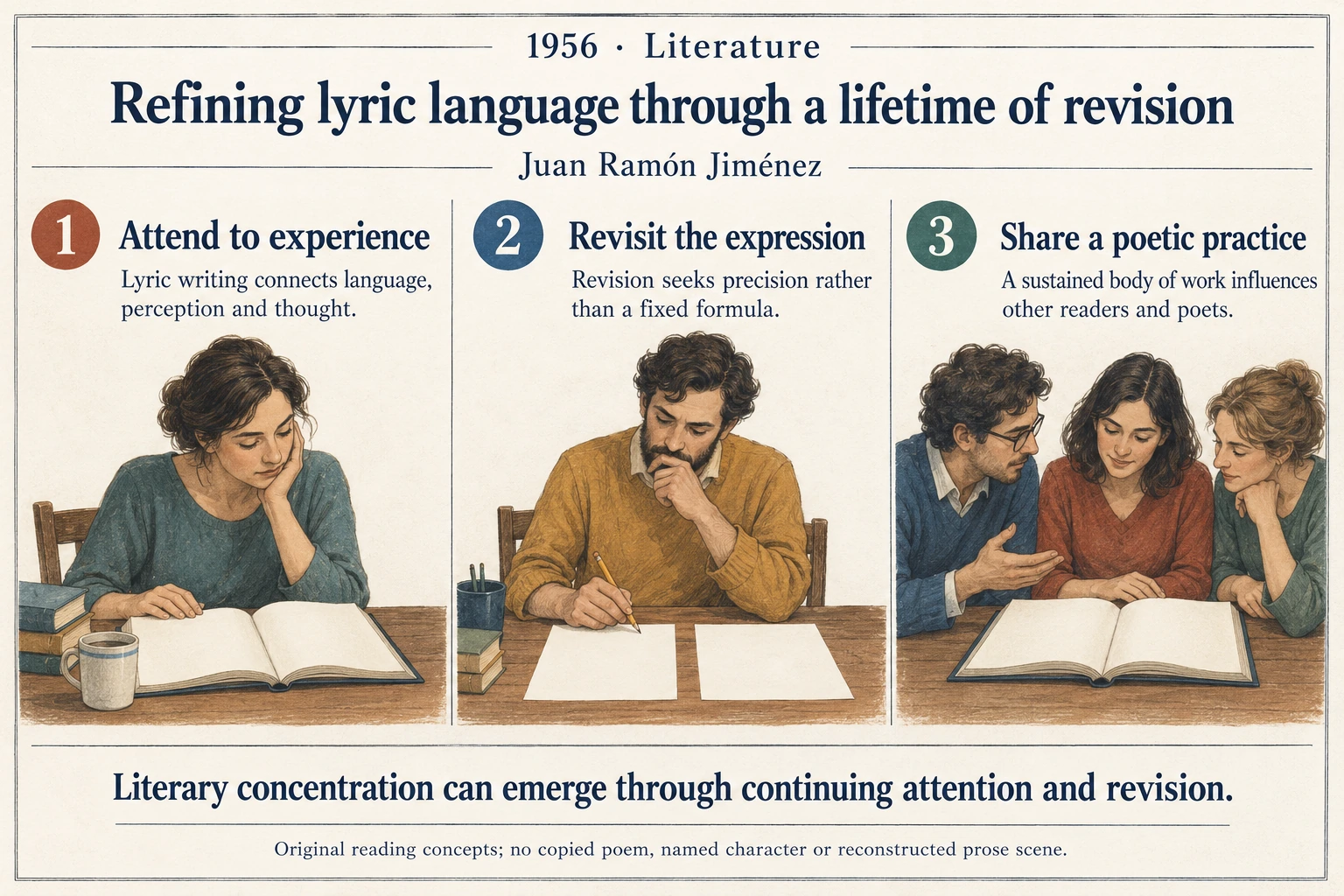
Infographic explaining Refining lyric language through a lifetime of revision
Original AI-generated infographic. A conceptual overview; the explanations and sources below provide context.
Read the poster text

Literary concentration can emerge through continuing attention and revision.

  1. Attend to experience

    Lyric writing connects language, perception and thought.

  2. Revisit the expression

    Revision seeks precision rather than a fixed formula.

  3. Share a poetic practice

    A sustained body of work influences other readers and poets.

Original reading concepts; no copied poem, named character or reconstructed prose scene.

01 · The contribution

The idea, in everyday language

How can a poem make an experience precise while shedding unnecessary ornament? Jiménez’s early writing drew on Romanticism and Symbolism, while his later work pursued a more concentrated relation between language, perception and thought.

Poetry and poetic prose developed together. Platero y yo first appeared in a shorter edition in 1914 and a full edition in 1917. The 1916 American journey with Zenobia Camprubí informed Diario de un poeta recién casado, published in 1917. Eternidades in 1918 and Piedra y cielo in 1919 continued the search for precision. He repeatedly revised and reorganised earlier work, influencing younger Spanish-language poets rather than following one fixed style throughout his life.

Why it matters

The full 1956 award recognised his lyric poetry as a major contribution to Spanish-language literature. Translation, criticism and revision were part of a wider literary life, including collaborative work with Zenobia. He lived in Puerto Rico from 1951, and both partners helped establish the university’s research collection in 1955. The award concerns the body of poetry, rather than the popularity of one prose book alone.

02 · The people

Who brought the idea to life?

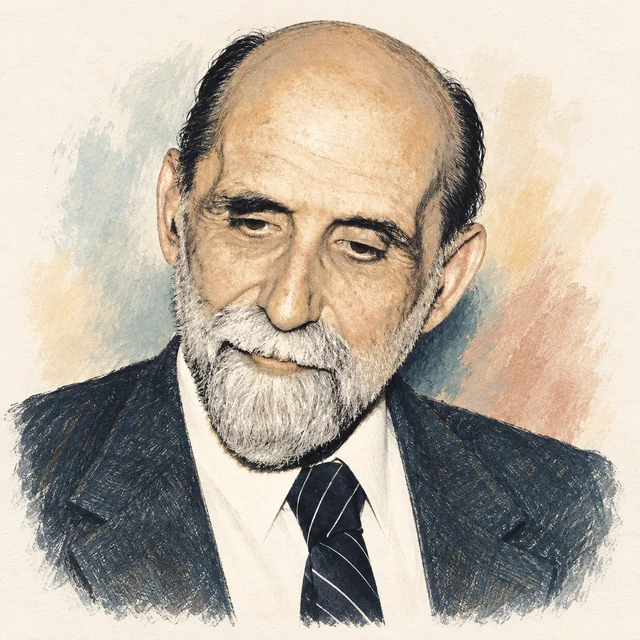
Illustrated portrait of Juan Ramón Jiménez

Juan Ramón Jiménez

Prize share · 1

Jiménez renewed Spanish lyric poetry through concentrated expression, revision and sustained attention to poetic language. He received the full Literature Prize.

Read the biography ↗

03 · Years in the making

The path here

  1. 1881

    Jiménez is born in Moguer.

  2. 1900

    Almas de violeta and Ninfeas are published.

  3. 1903–1904

    Arias tristes and Jardines lejanos appear.

  4. 1914

    The shorter Platero y yo edition is published.

  5. 1916

    Jiménez travels to the United States and marries Zenobia in New York.

  6. 1917

    Diario de un poeta recién casado and the full Platero edition appear.

  7. 1918–1919

    Eternidades and Piedra y cielo are published.

  8. 1936

    He leaves Spain during the Civil War.

  9. 1949

    Animal de fondo is published.

  10. 1951

    He settles in Puerto Rico.

  11. 1955

    The university’s Zenobia and Juan Ramón research collection is founded.

  12. 1956

    He receives the full Literature Prize.

04 · Read further

From the original sources

Original explanations by Curionode, based on the official records below. Biographical details and affiliations refer to the award year.

  1. Official award summary nobelprize.org
  2. Award ceremony speech nobelprize.org
  3. Official Jiménez bibliography nobelprize.org
  4. Jiménez museum: Platero edition history casamuseozenobiajuanramonjimenez.com
  5. Cervantes library: Jiménez’s 1916 journey cervantesvirtual.com
  6. University of Puerto Rico: Zenobia and Juan Ramón collection upr.edu
  7. Official biography: Juan Ramón Jiménez nobelprize.org

More in Literature

Browse this subject ↗