01 · The contribution
The idea, in everyday language
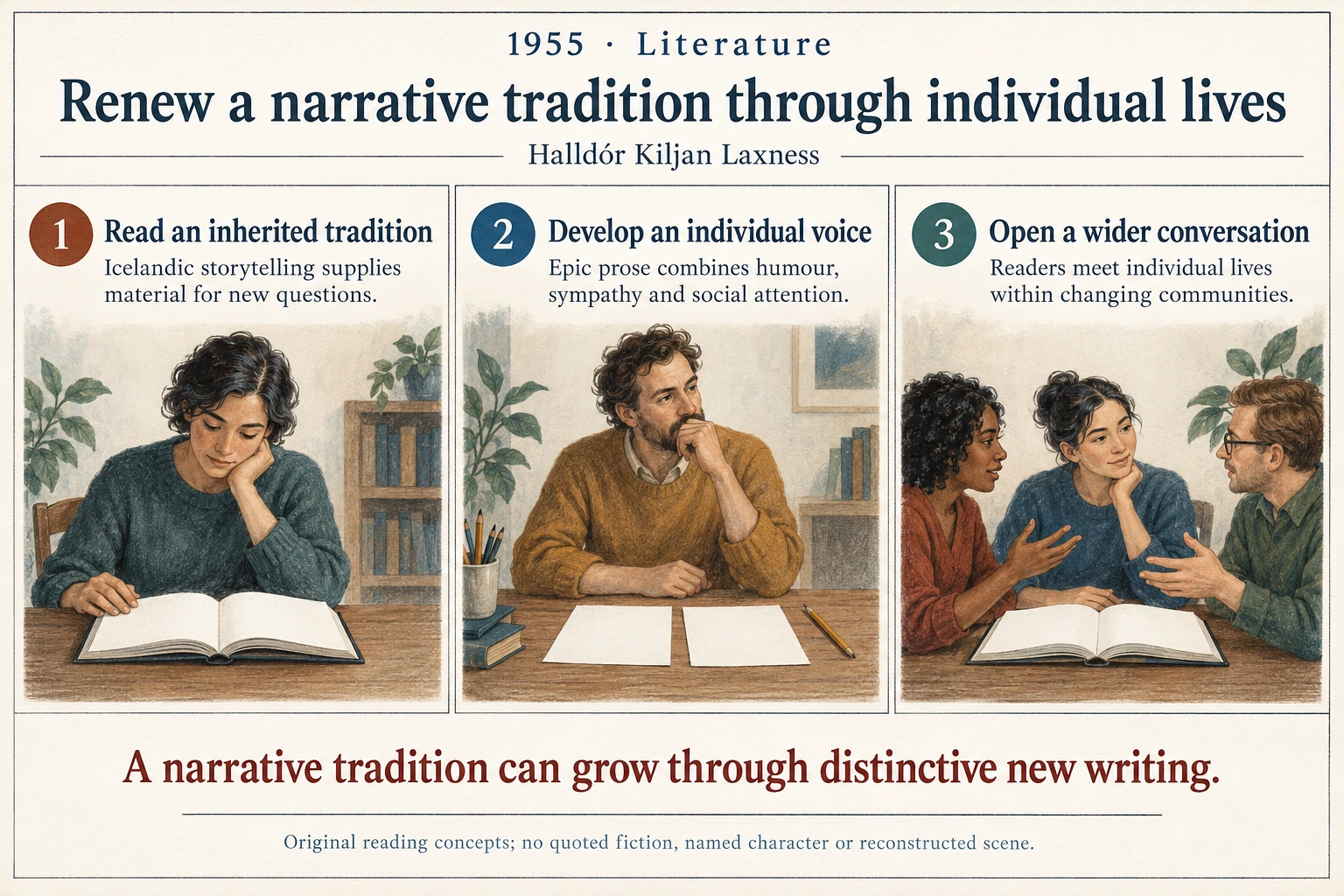
How can a long narrative tradition remain alive in a changing society? Laxness drew on Icelandic storytelling while developing varied modern prose forms. His novels examined particular lives, material hardship, ambition and community, with humour and sympathy that resist reducing characters to a single political lesson.
The award-year body of work included Salka Valka in 1931–1932, Independent People in 1934–1935 and the four-part World Light in 1937–1940. Iceland’s Bell in 1943–1946 and Gerpla in 1952 engaged historical material and the saga tradition; The Atom Station in 1948 addressed contemporary questions. The 1955 prize recognised a vivid epic art that renewed Icelandic narrative, rather than one book or one uniform account of Icelandic society.
Why it matters
The full Literature Prize recognised a distinctive contribution to Icelandic narrative art. The work connected individual destinies with broader social settings and carried Icelandic writing to readers in translation. Acknowledging a national tradition does not imply that one author speaks for every person or replaces the work of other writers.