c.curionodeThe Nobel Archive

1957 · Physiology or Medicine

Changing a chemical structure to change a biological response

Bovet investigated synthetic substances that inhibit selected actions of substances in the body.

Chemical structure and actionAntihistaminesSelected physiological responses
1957Physiology or Medicine

Visual guide

The prize, pictured

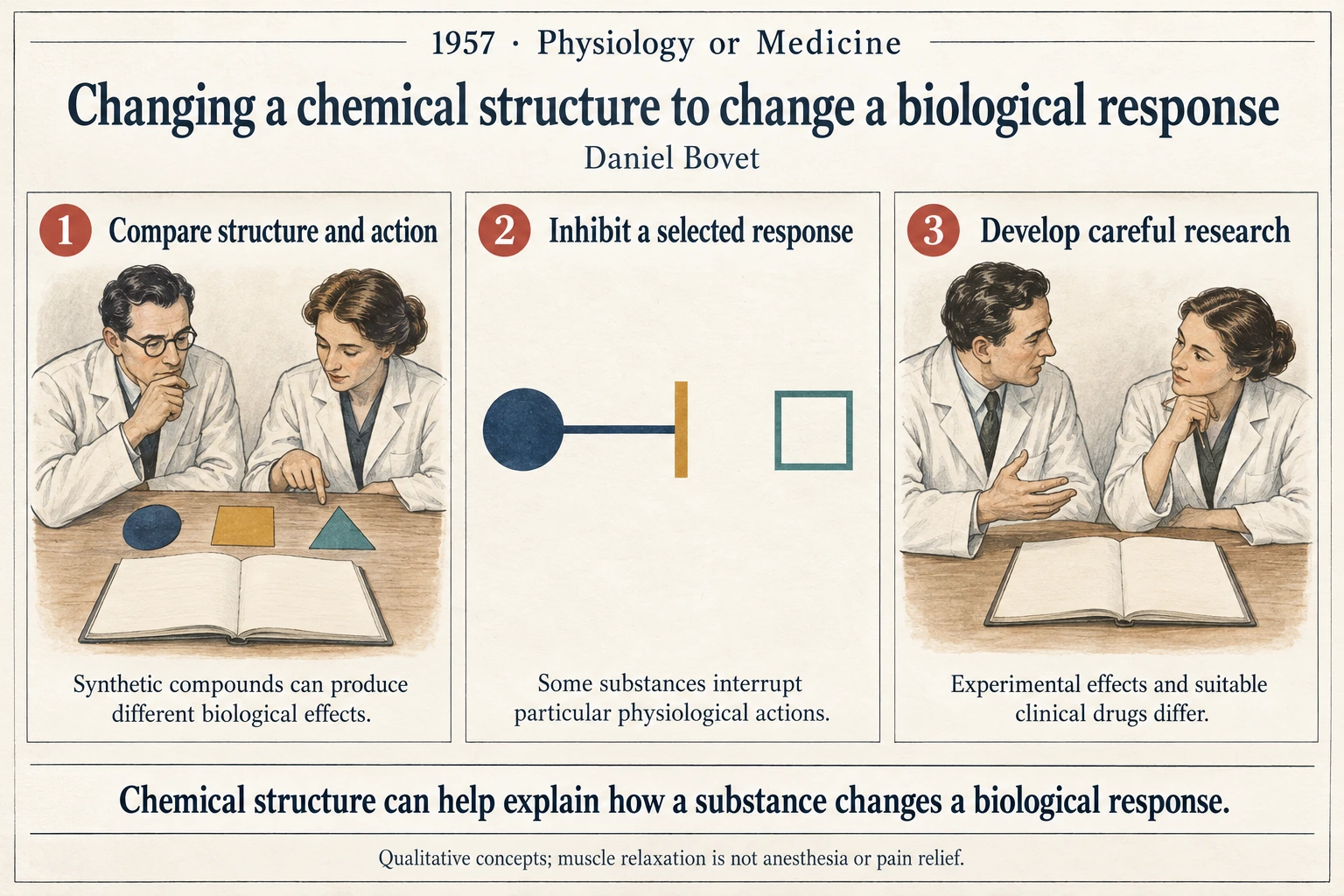
Infographic explaining Changing a chemical structure to change a biological response
Original AI-generated infographic. A conceptual overview; the explanations and sources below provide context.
Read the poster text

Chemical structure can help explain how a substance changes a biological response.

  1. Compare structure and action

    Synthetic compounds can produce different biological effects.

  2. Inhibit a selected response

    Some substances interrupt particular physiological actions.

  3. Develop careful research

    Experimental effects and suitable clinical drugs differ.

Qualitative concepts; muscle relaxation is not anesthesia or pain relief.

01 · The discovery

The idea, in everyday language

Signals such as histamine and acetylcholine can produce biological responses, but a chemical substance’s composition alone does not predict how it will affect those responses. Researchers needed to relate chemical structure to action, including effects on blood vessels and skeletal muscles.

Bovet systematically compared synthetic compounds and their biological effects. With Anne-Marie Staub he found a synthetic antihistamine in 1937; that early substance was too toxic for clinical use, while subsequent research developed more useful agents. His curare-like substance research in the 1940s investigated inhibition of nerve-to-muscle responses. Filomena Bovet-Nitti and other collaborators contributed to the broader programme connecting structure with pharmacological action.

Why it matters

The work helped make the relationship between chemical structure and biological action a systematic field of investigation. Antihistamine and muscle-relaxant research opened important uses, but an experimental effect and a suitable clinical medicine are different stages. Bovet received the full prize for discoveries concerning synthetic substances, particularly vascular and skeletal-muscle actions.

02 · The people

Who brought the idea to life?

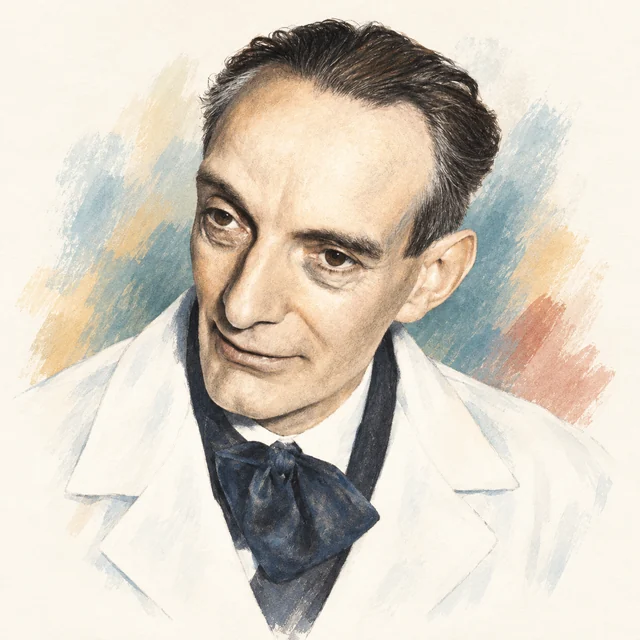
Illustrated portrait of Daniel Bovet

Daniel Bovet

Prize share · 1

Bovet connected synthetic chemical structures with inhibition of selected physiological actions, particularly in blood vessels and skeletal muscles. He received the full Medicine Prize.

Read the biography ↗

03 · Years in the making

The path here

  1. 1927

    Bovet graduates at Geneva.

  2. 1929

    He completes a science doctorate and joins the Institut Pasteur.

  3. 1937

    Bovet and Staub identify a synthetic antihistamine; the early substance is unsuitable for clinical use.

  4. 1940s

    He investigates synthetic curare-like substances and skeletal-muscle responses.

  5. 1947

    He joins the Istituto Superiore di Sanità in Rome.

  6. 1948

    Bovet and Filomena Bovet-Nitti publish their book relating structure and pharmacodynamic action.

  7. 1957

    Bovet receives the full Medicine Prize.

  8. 1959

    Later: a collaborative book on curare and curare-like agents appears.

04 · Read further

From the original sources

Original explanations by Curionode, based on the official records below. Biographical details and affiliations refer to the award year.

  1. Official award summary nobelprize.org
  2. Award ceremony speech nobelprize.org
  3. Institut Pasteur Bovet biography pasteur.fr
  4. Later muscle-relaxant label: anesthesia distinction dailymed.nlm.nih.gov
  5. Official biography: Daniel Bovet nobelprize.org

More in Physiology or Medicine

Browse this subject ↗