01 · The discovery
The idea, in everyday language
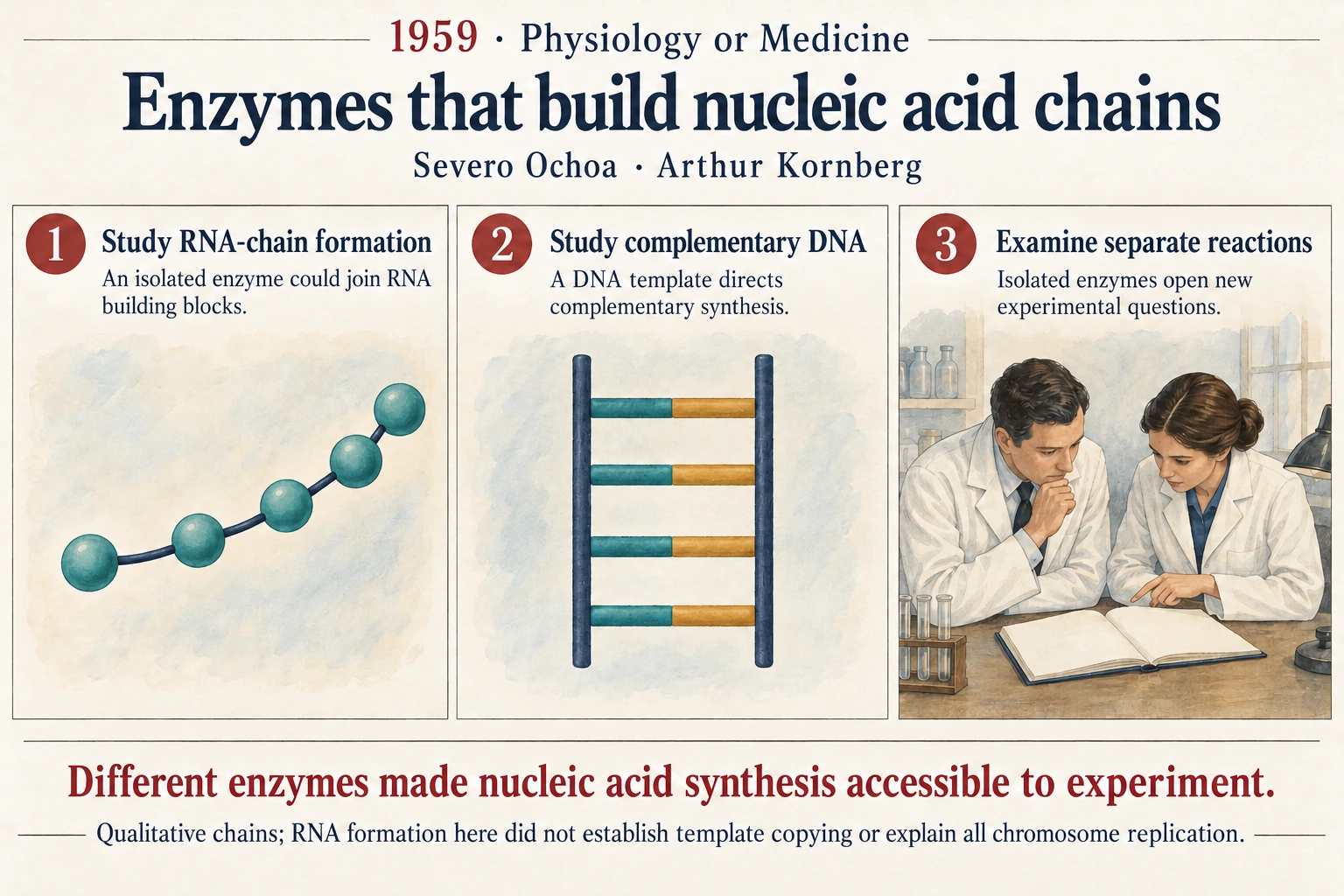
Knowing that nucleic acids carried biological information did not explain how cells assembled their chains. Researchers needed to identify enzymes and study synthesis outside the cell, separating particular reactions from the complexity of living systems.
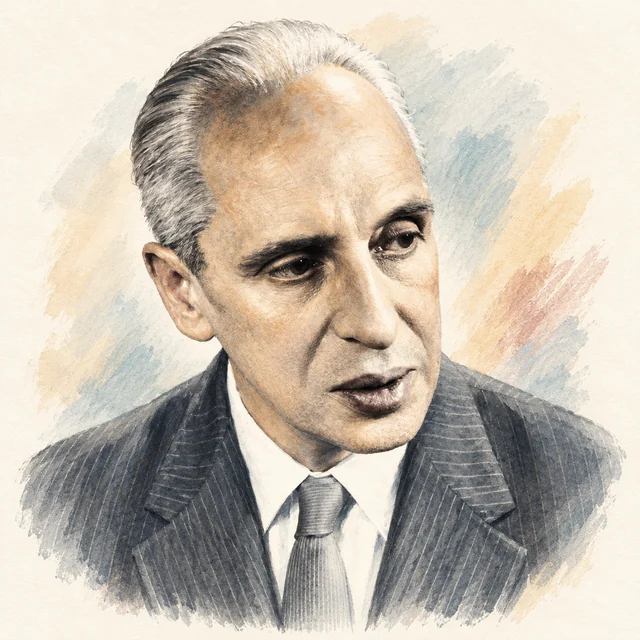
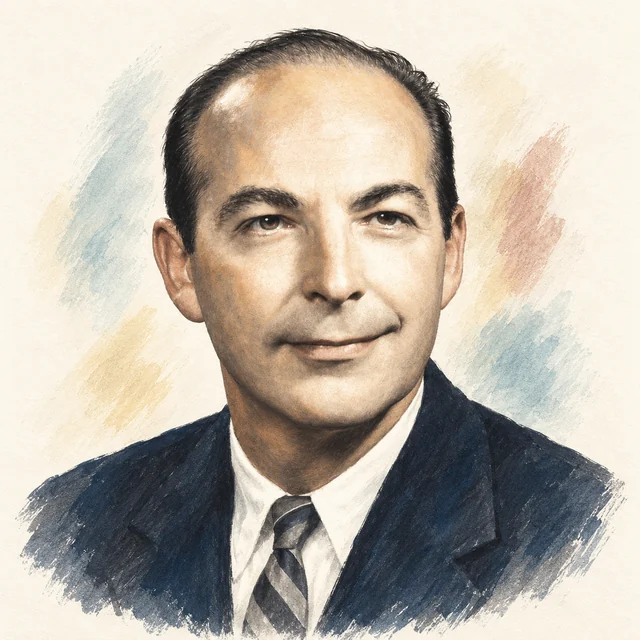
In 1955 Marianne Grunberg-Manago and Ochoa reported an enzyme activity that could form RNA chains: polynucleotide phosphorylase. Kornberg and collaborators, including Bessman, Lehman and Simms, reported enzymatic DNA synthesis in 1956. The DNA polymerase used a DNA template to direct complementary synthesis. These were separate experimental achievements, recognised by equal shares of the 1959 prize.
Why it matters
Isolated enzymes helped researchers examine nucleic acid synthesis and investigate the relationship between molecular structure and biological information. The discoveries enabled later work without themselves deciphering the complete genetic code. Ochoa’s enzyme was subsequently studied in RNA metabolism; those later findings should not be treated as achievements already established by the 1959 award.