c.curionodeThe Nobel Archive

1959 · Chemistry

Reading chemistry through electrical response

Heyrovský’s polarography made current–potential curves useful for analysing substances in solution.

PolarographyElectrochemistryAnalysis of solutions
1959Chemistry

Visual guide

The prize, pictured

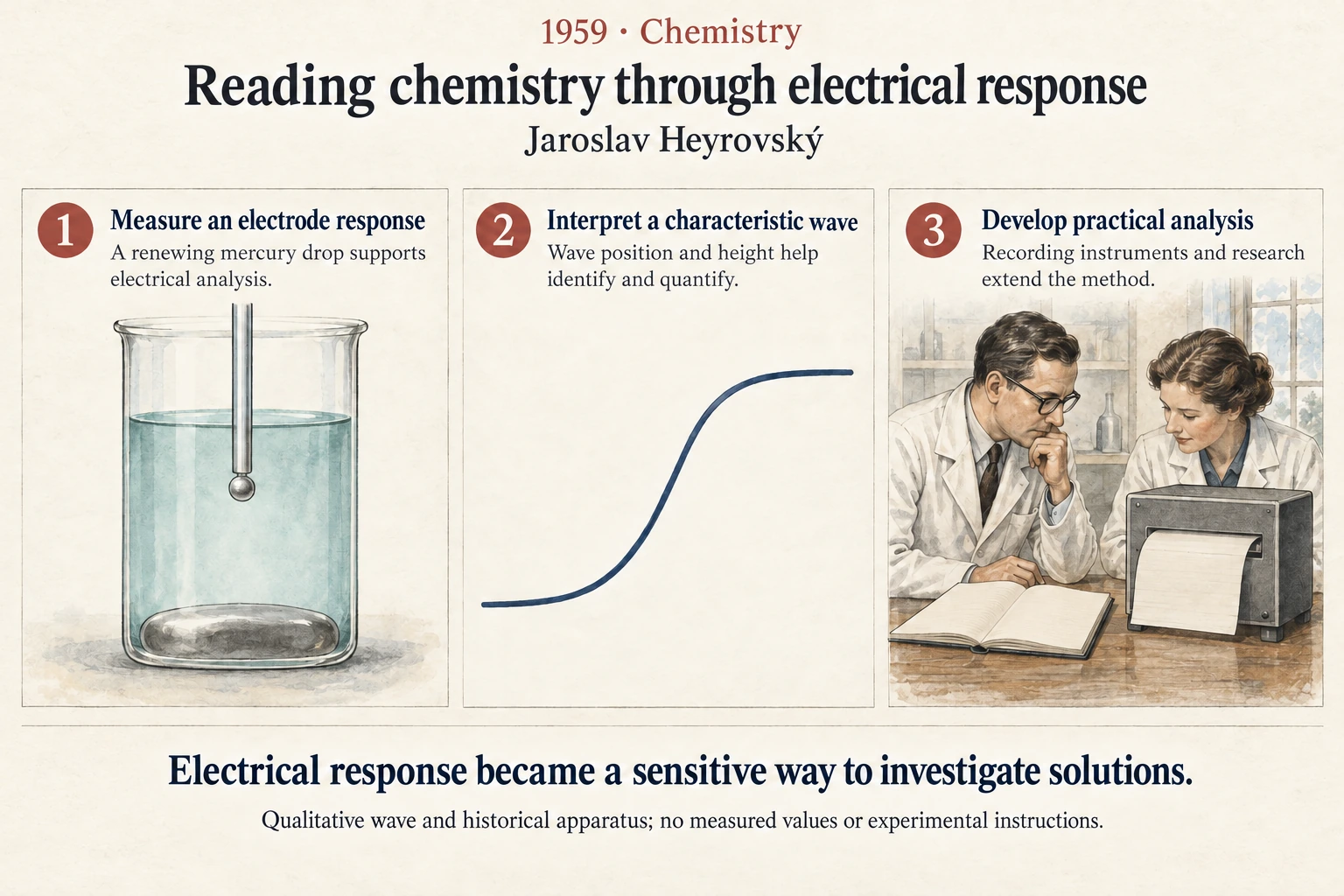
Infographic explaining Reading chemistry through electrical response
Original AI-generated infographic. A conceptual overview; the explanations and sources below provide context.
Read the poster text

Electrical response became a sensitive way to investigate solutions.

  1. Measure an electrode response

    A renewing mercury drop supports electrical analysis.

  2. Interpret a characteristic wave

    Wave position and height help identify and quantify.

  3. Develop practical analysis

    Recording instruments and research extend the method.

Qualitative wave and historical apparatus; no measured values or experimental instructions.

01 · The discovery

The idea, in everyday language

Analysts needed sensitive ways to identify substances and estimate their quantities in small samples. An unexpected problem with mercury drops led Heyrovský to measure electrical responses rather than continue weighing the drops.

In 1922 he developed polarographic analysis using a dropping mercury electrode. The renewing surface supported reproducible measurements as applied potential changed. Electrochemical reactions produced characteristic responses; their position and height could help identify substances and estimate concentration. With Shikata he constructed the automatic polarograph in 1924.

Why it matters

Polarography brought sensitive chemical analysis to research and industrial laboratories. Heyrovský and collaborators developed its theory, recording instruments and applications. The full prize recognised both discovery and sustained development, rather than a claim that every substance can always be identified without interference.

02 · The people

Who brought the idea to life?

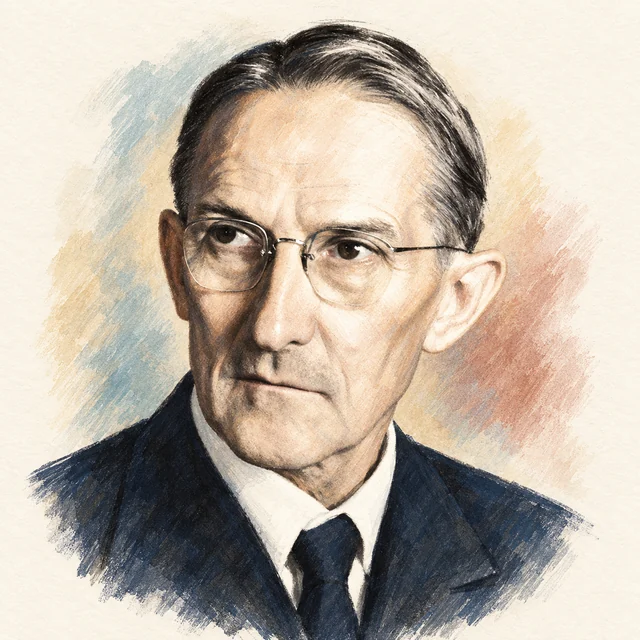
Illustrated portrait of Jaroslav Heyrovský

Jaroslav Heyrovský

Prize share · 1

Heyrovský discovered and developed polarographic methods for identifying and measuring substances through electrochemical responses. He received the full Chemistry Prize.

Read the biography ↗

03 · Years in the making

The path here

  1. 1913

    Heyrovský receives his London bachelor’s degree.

  2. 1918

    He completes his Prague doctorate.

  3. 1921

    He receives a London DSc.

  4. 1922

    He develops polarographic analysis.

  5. 1924

    He and Shikata construct an automatic polarograph.

  6. 1926

    He becomes professor of physical chemistry at Charles University.

  7. 1950

    He becomes director of the Polarographic Institute.

  8. 1952

    The institute joins the Academy of Sciences.

  9. 1959

    He receives the Chemistry Prize.

04 · Read further

From the original sources

Original explanations by Curionode, based on the official records below. Biographical details and affiliations refer to the award year.

  1. Official award summary nobelprize.org
  2. Award ceremony speech nobelprize.org
  3. Heyrovský’s Nobel lecture nobelprize.org
  4. Official biography: Jaroslav Heyrovský nobelprize.org

More in Chemistry

Browse this subject ↗