c.curionodeThe Nobel Archive

1960 · Literature

Poetry across nature and human experience

Perse used expansive imagery and rhythmic language to reflect exile, natural forces and the conditions of his time.

Poetic imageryExileRhythm and nature
1960Literature

Visual guide

The prize, pictured

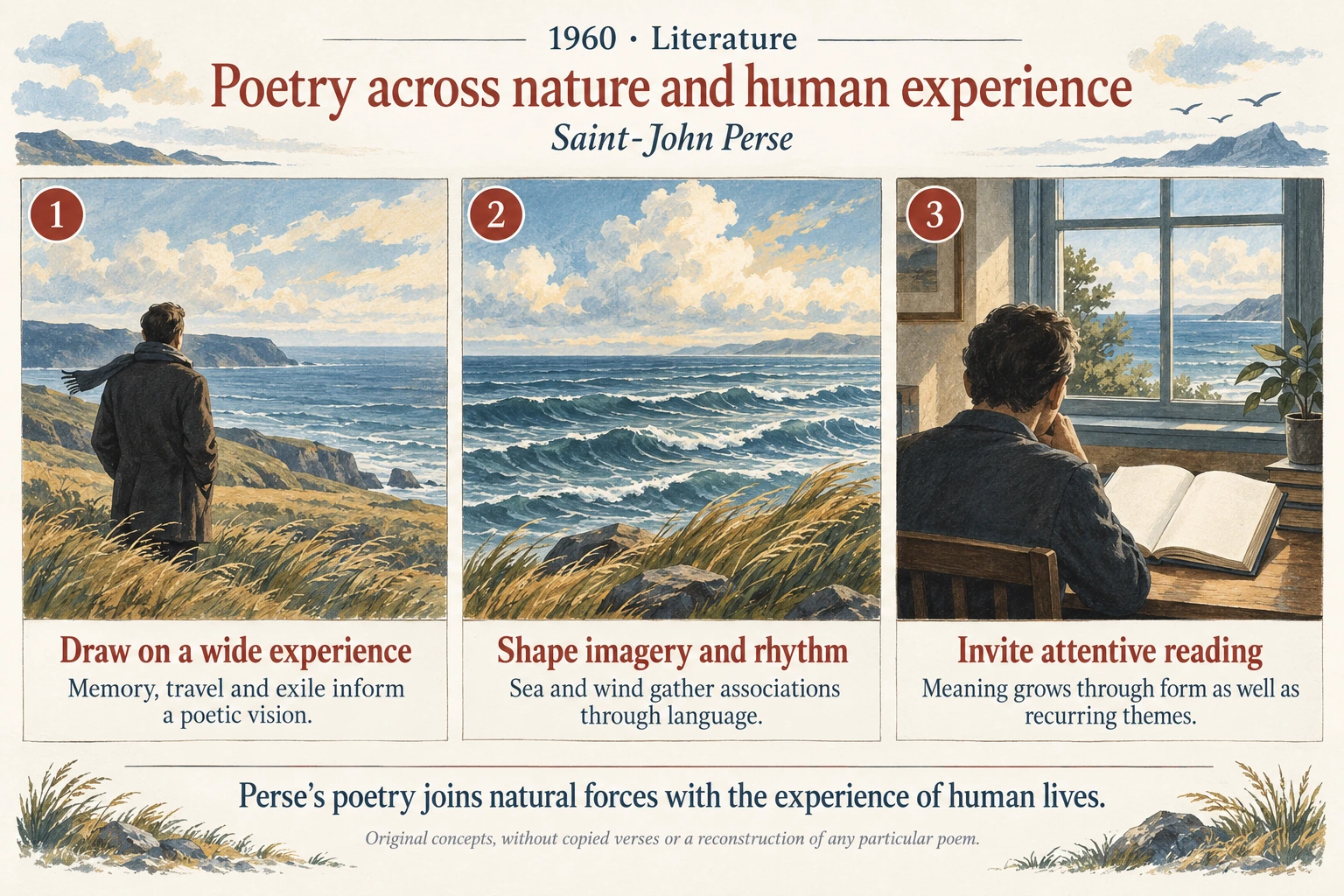
Infographic explaining Poetry across nature and human experience
Original AI-generated infographic. A conceptual overview; the explanations and sources below provide context.
Read the poster text

Perse’s poetry joins natural forces with the experience of human lives.

  1. Draw on a wide experience

    Memory, travel and exile inform a poetic vision.

  2. Shape imagery and rhythm

    Sea and wind gather associations through language.

  3. Invite attentive reading

    Meaning grows through form as well as recurring themes.

Original concepts, without copied verses or a reconstruction of any particular poem.

01 · The contribution

The idea, in everyday language

How can poetry give form to experiences that exceed a single place or ordinary narrative? Perse’s writing drew on childhood memory, travel and exile while reaching toward broad questions about people and the natural world.

His poems combine dense imagery, long rhythmic movements and references across disciplines. Éloges gathered early work in 1911; Anabase followed in 1924. Exil, Vents and Amers developed the recurring concerns of displacement, wind, sea and human endurance. Chronique appeared in a magazine in 1959 and as a book in 1960.

Why it matters

The prize recognised a distinctive poetic language and an imaginative view of contemporary human conditions. It encouraged attention to demanding verse whose significance comes from its language and form as well as its themes. Perse’s diplomatic career informed his experience but was not the contribution rewarded by the Literature Prize.

02 · The people

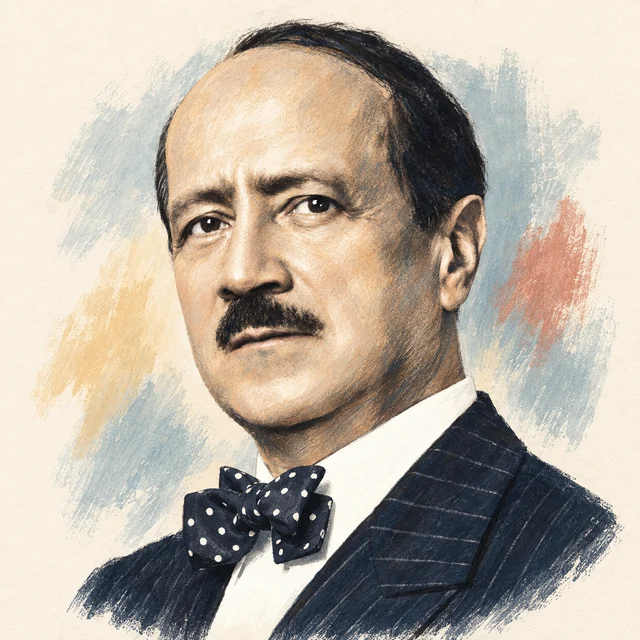
Who brought the idea to life?

03 · Years in the making

The path here

  1. 1887

    Alexis Leger is born in Guadeloupe.

  2. 1899

    His family moves to Pau.

  3. 1911

    Éloges is published.

  4. 1916

    His posting to China begins.

  5. 1924

    Anabase appears under the name Saint-John Perse.

  6. 1942

    Exil is published.

  7. 1946

    Vents is published.

  8. 1957

    Amers appears and he returns to France.

  9. 1959–1960

    Chronique appears in a magazine, then as a book.

  10. 1960

    He receives the Literature Prize.

04 · Read further

From the original sources

Original explanations by Curionode, based on the official records below. Biographical details and affiliations refer to the award year.

  1. Official award summary nobelprize.org
  2. Award ceremony speech nobelprize.org
  3. Saint-John Perse Foundation chronology fondationsaintjohnperse.fr
  4. Official biography: Saint-John Perse nobelprize.org

More in Literature

Browse this subject ↗