01 · The discovery
The idea, in everyday language
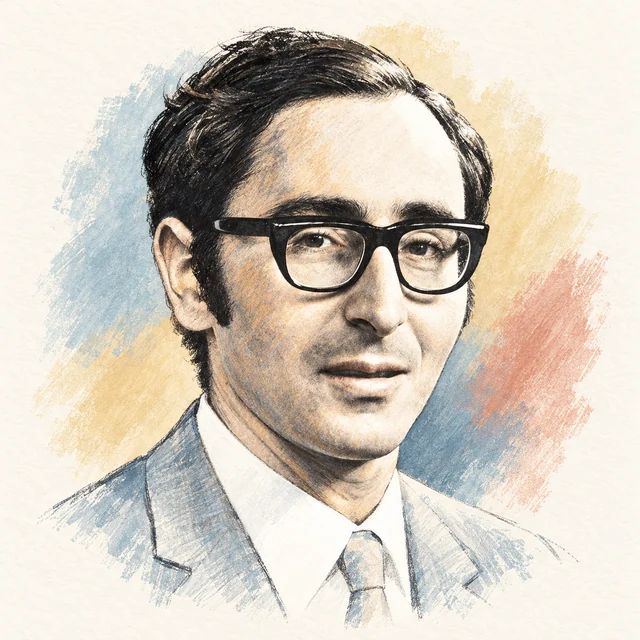
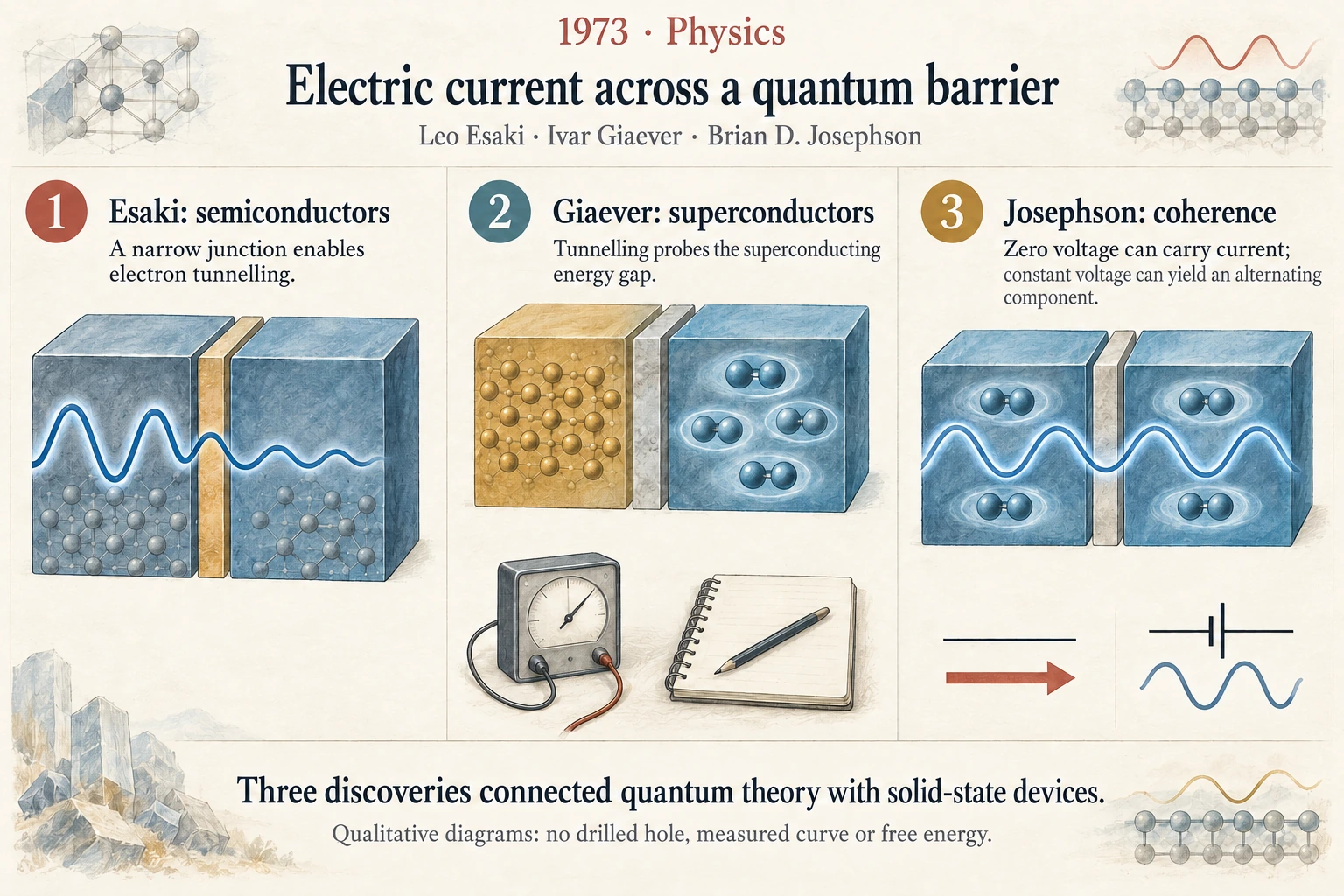
Esaki studied heavily doped semiconductor junctions. Their narrow barrier allowed electrons to tunnel, producing the distinctive response of a tunnel diode. Giaever studied a different junction: a thin insulating layer next to superconducting material. Measuring its tunnelling current exposed the energy gap associated with superconductivity. The current became a probe of electronic states.
Josephson predicted that two superconductors could remain quantum-mechanically coupled across an insulating barrier. A supercurrent could flow at zero voltage, depending on their relative phase. At a constant nonzero voltage an alternating current component could appear. This coherent behaviour differs from single-electron tunnelling spectroscopy. The prize assigned a quarter each to Esaki and Giaever and half to Josephson.
Why it matters
The discoveries connected quantum theory with solid-state devices and measurements. Tunnel junctions became useful both as electronic components and as probes of superconductivity. Josephson effects later supported exceptionally sensitive measurement methods and voltage standards.