01 · The discovery
The idea, in everyday language
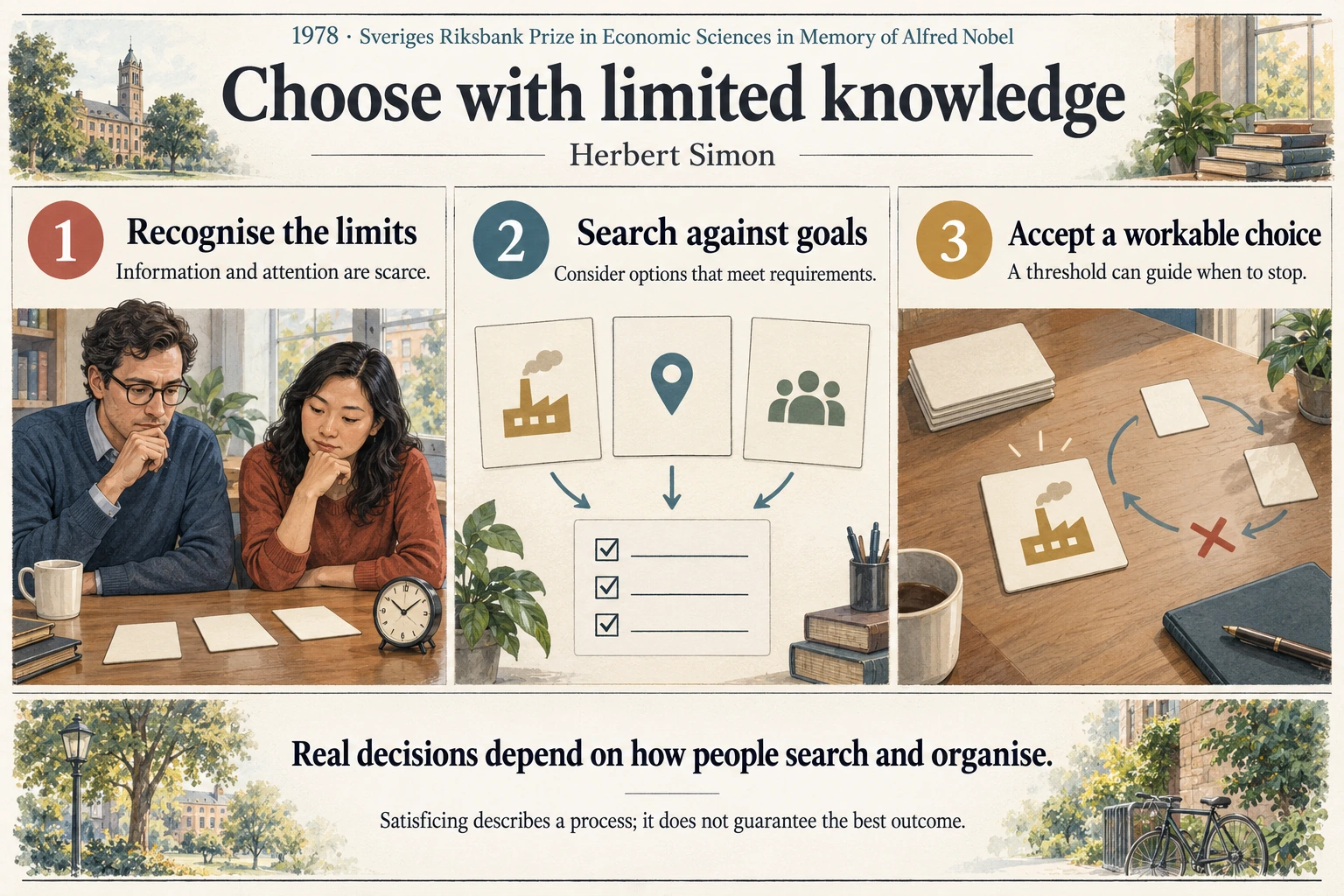
An organisation divides work, channels information and establishes procedures. These arrangements shape what its members notice and which alternatives they consider. Simon’s bounded rationality asks how a choice can be made when the complete optimisation problem exceeds the decision maker’s practical abilities.
One mechanism is satisficing: search for an alternative that meets an aspiration level, then stop when an acceptable option is found. The threshold can change with experience, and search itself takes effort. This explains a process of choice rather than assuming that an actor has already compared every possible outcome.
Why it matters
The research brought observation, psychology and organisational structure into economic accounts of decisions. It helped explain why routines, information systems and the design of an organisation matter alongside prices and incentives.