01 · The contribution
The idea, in everyday language
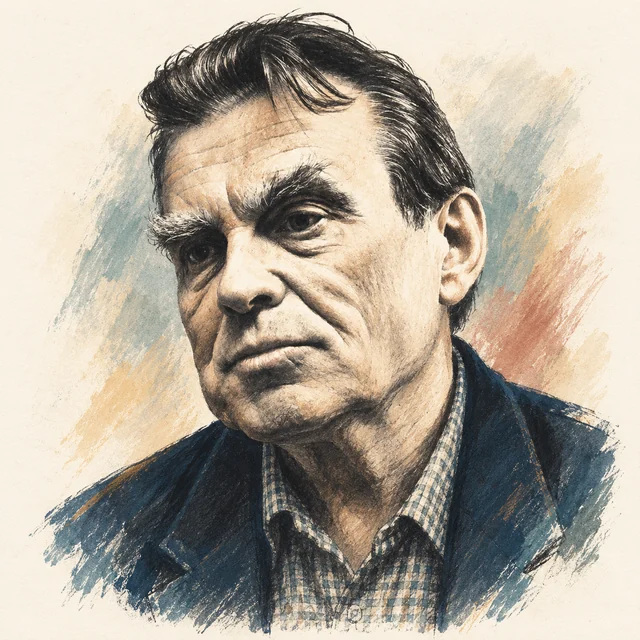
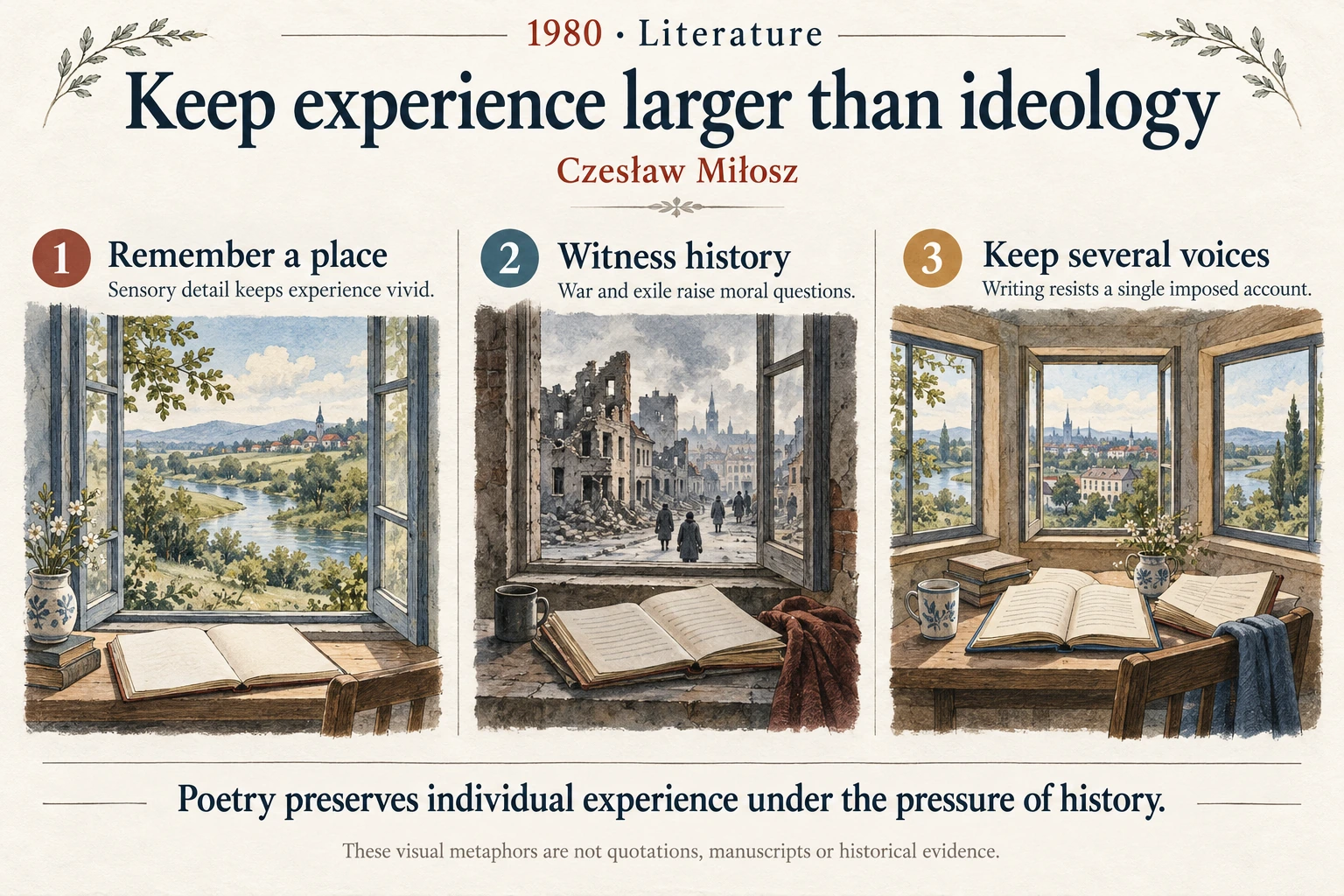
The challenge in Miłosz’s writing was how to witness historical catastrophe without surrendering the richness of ordinary life. Poems joined sensory details, remembered places, different voices and moral questioning. His Polish-language work grew from a borderland culture and from the upheavals of Warsaw, postwar diplomacy and exile.
The Captive Mind examined how intellectuals could accommodate themselves to totalitarian power, while poetry refused to reduce the world to a single explanation. These are related concerns expressed through different literary forms. His work also included translation and criticism; the 1980 recognition concerned a body of writing rather than a single book or a slogan.
Why it matters
His writing gave readers ways to consider responsibility, displacement and intellectual independence without erasing the particulars of a life. Exile and translation carried Polish literature into wider conversation, including through his work at Berkeley. The Nobel award recognised literary achievement, not proof that a single interpretation of history is complete.