01 · The discovery
The idea, in everyday language
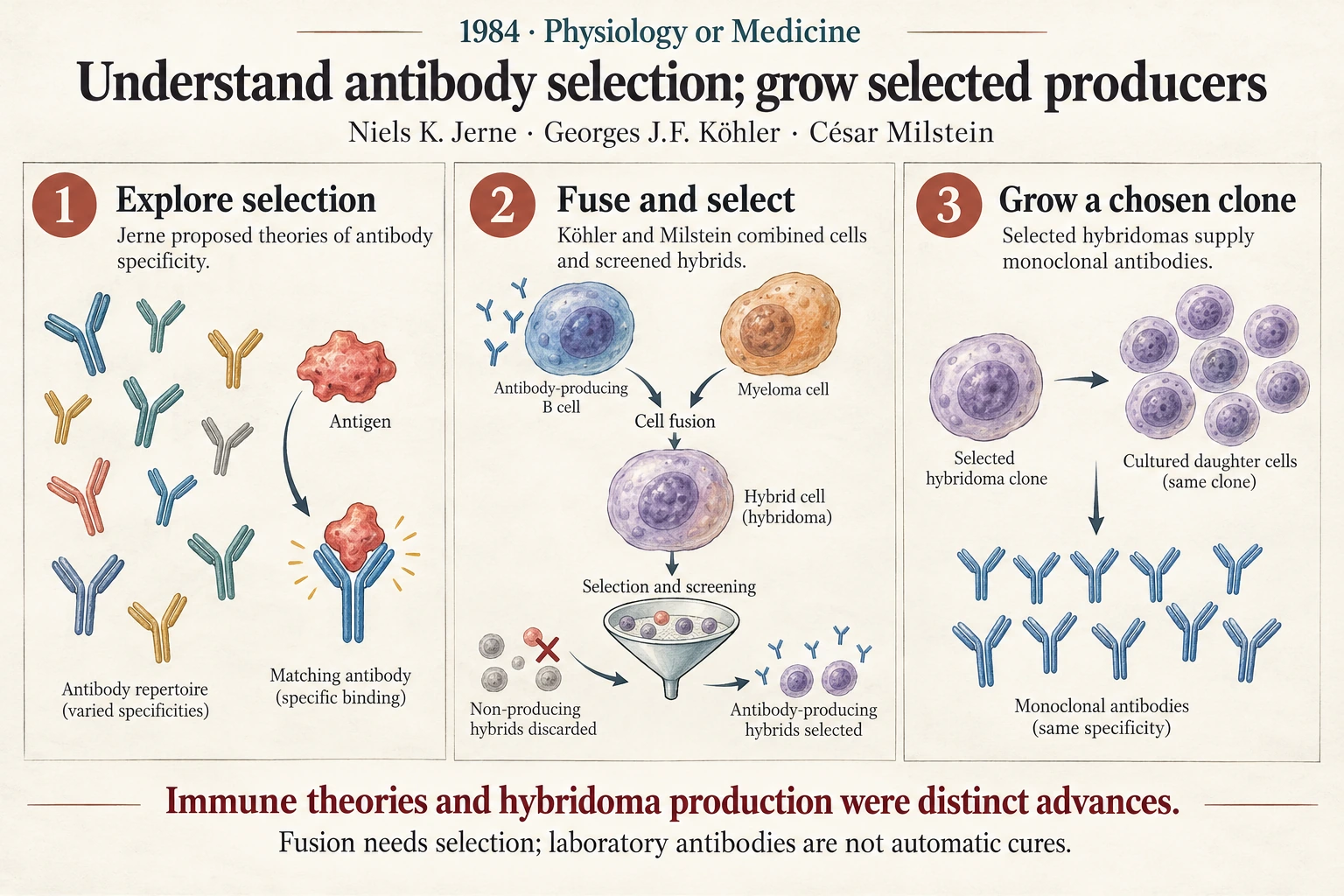
An immune system must recognise many possible targets and regulate its responses. Jerne proposed theories in which antigen selects existing antibody specificities, rather than instructing the shape of a new antibody. His later idiotypic-network theory explored recognition among antibodies themselves. These were influential conceptual models, with scope and limitations that subsequent research examined.
Köhler and Milstein addressed a practical problem: obtaining a sustained supply of antibody with selected specificity. In 1975 they fused antibody-producing spleen cells with myeloma cells capable of continuing to grow in culture. Selection, screening and cloning yielded hybridoma lines producing monoclonal antibodies. The theoretical work and laboratory technique were distinct contributions, recognised with equal thirds of the prize.
Why it matters
The theories reframed questions about diversity and regulation. Hybridomas supplied reproducible reagents for research and diagnostic tests and provided foundations for later antibody therapeutics. Later clinical products needed further engineering, safety assessment and validation.