01 · The discovery
The idea, in everyday language
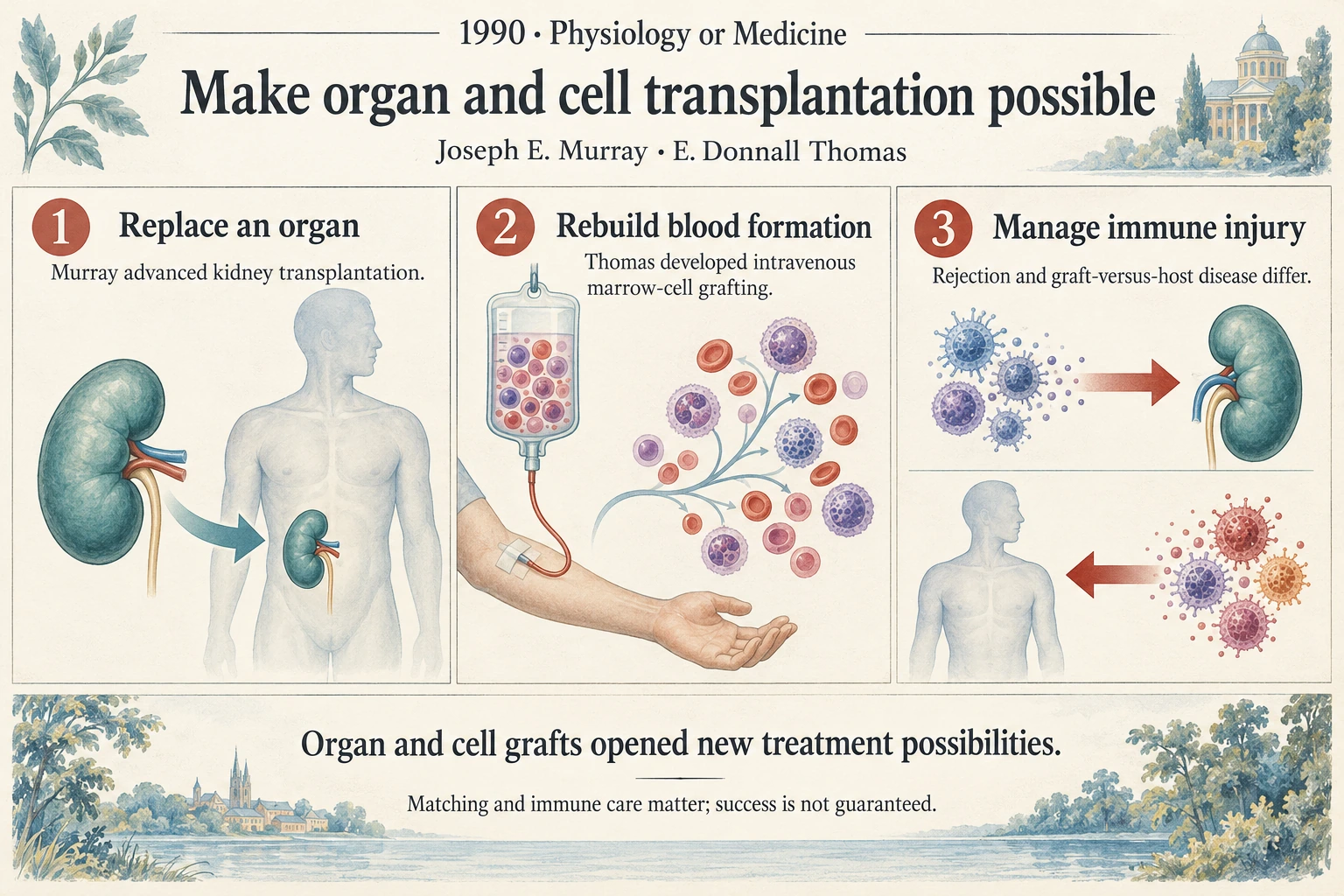
Replacing a failing organ or a diseased blood-forming system requires more than transferring material. The recipient’s immune system can recognise a graft as foreign and reject it. Murray’s team established kidney transplantation between identical twins in 1954, bypassing this major immune incompatibility. Subsequent work with colleagues developed methods for transplanting kidneys between genetically different people, including drug-supported control of rejection.
Thomas worked with marrow cells capable of restoring blood formation. These cells are infused into a vein and can establish themselves in marrow; they are not inserted into the spinal cord or sewn into a bone. Progress required tissue matching, preparation of the recipient and extensive supportive care. Donor immune cells can also attack the recipient, causing graft-versus-host disease. Managing these different directions of immune injury was essential.
Why it matters
The work helped establish transplantation as treatment for selected organ failures and blood diseases. Murray and Thomas represent different clinical approaches built through broad collaborations in surgery, immunology, drug development and patient care. Success opened new possibilities, while complications, suitable donors and long-term follow-up remained central.