01 · The contribution
The idea, in everyday language
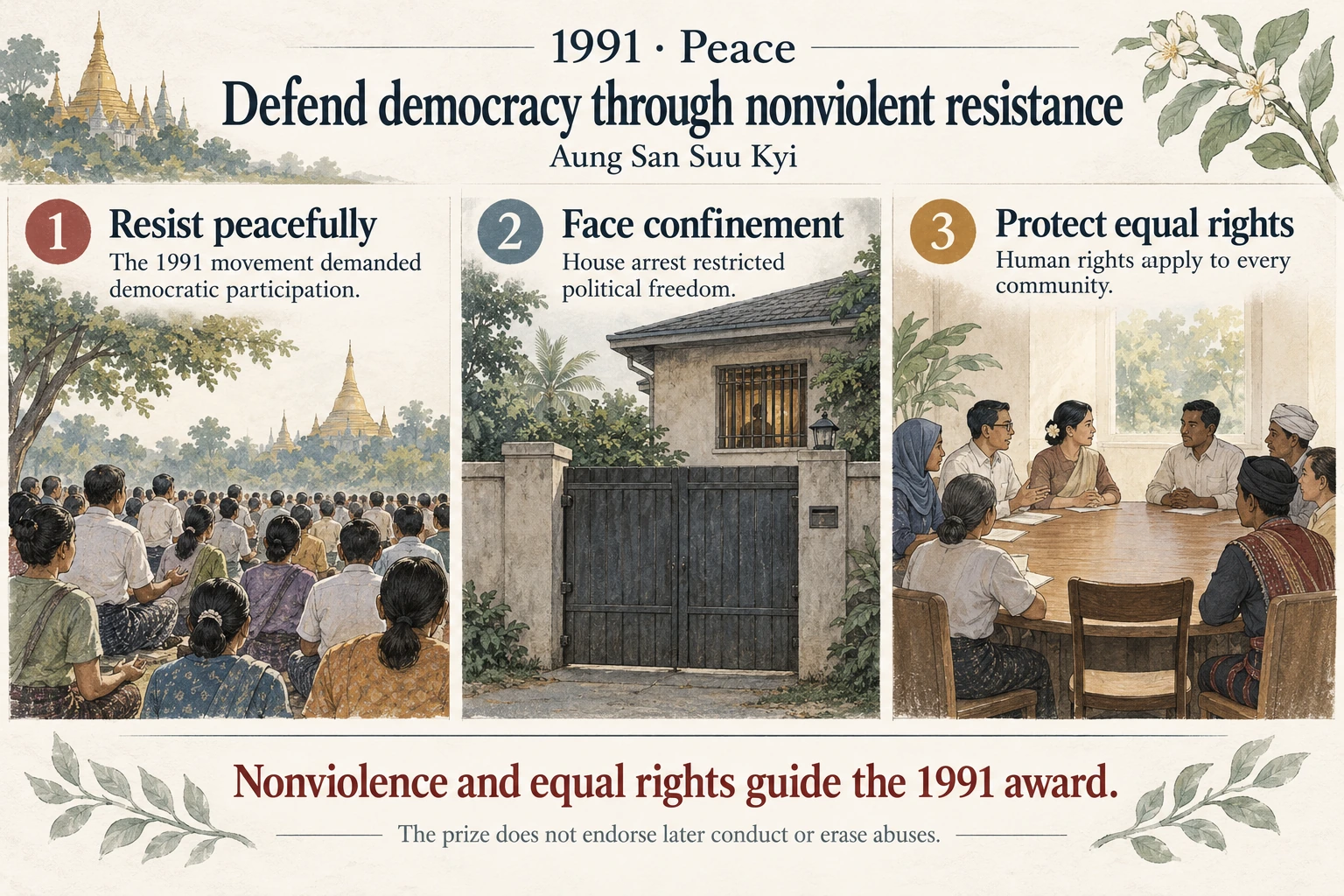
Burma’s military authorities suppressed the democracy movement that expanded in 1988. Aung San Suu Kyi helped establish the National League for Democracy and called for nonviolent political change. The party won the 1990 parliamentary election, but the military did not transfer power. She remained under house arrest when the 1991 Peace Prize recognised her struggle for democracy and human rights.
The recognition drew international attention to political prisoners and denied democratic participation. It did not mean that the 1990 vote had made her president or that military rule had ended. The prize’s human-rights principle also requires attention to people excluded from later political protection, including the Rohingya. The account of the 1991 movement must therefore be read alongside documented later abuses and responsibility.
Why it matters
The award amplified a nonviolent democracy campaign and resistance to political confinement. Its significance belongs to that historical struggle. UN investigators later documented grave crimes against the Rohingya and criticised denial of responsibility by military and civilian authorities. In 2019 Suu Kyi represented Myanmar in International Court of Justice proceedings concerning alleged genocide, defending the state’s position.