c.curionodeThe Nobel Archive

1993 · Economic Sciences

Testing how economies changed

Fogel and North renewed economic history by combining historical evidence with explicit theories of economic and institutional change.

The Sveriges Riksbank Prize in Economic Sciences in Memory of Alfred Nobel.

economic historycounterfactual analysisinstitutionshistorical evidence
1993Economic Sciences

Visual guide

The prize, pictured

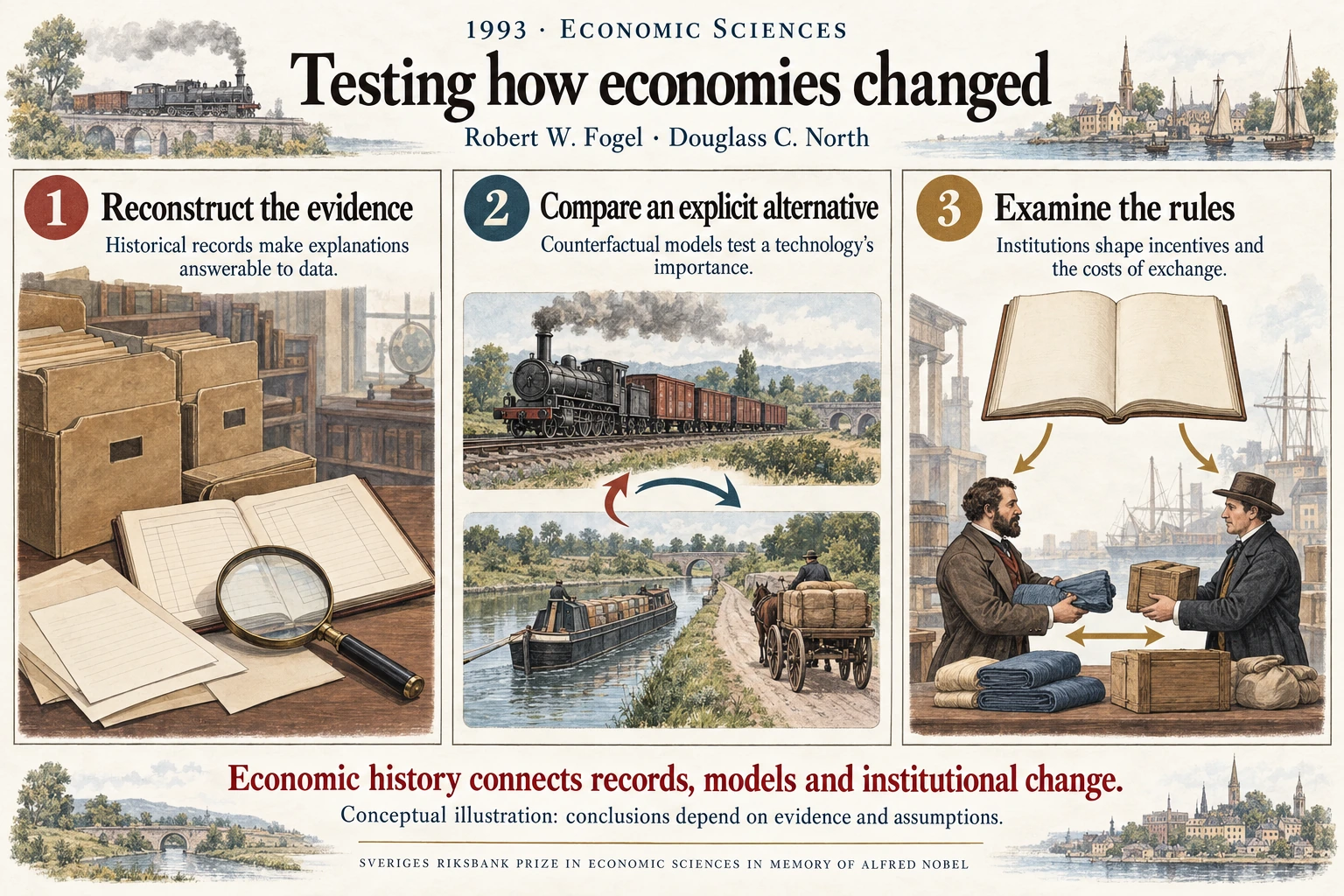
Infographic explaining Testing how economies changed
Original AI-generated infographic. A conceptual overview; the explanations and sources below provide context.
Read the poster text

Economic history connects records, models and institutional change.

  1. Reconstruct the evidence

    Historical records make explanations answerable to data.

  2. Compare an explicit alternative

    Counterfactual models test a technology’s importance.

  3. Examine the rules

    Institutions shape incentives and the costs of exchange.

Conceptual illustration: conclusions depend on evidence and assumptions.

01 · The discovery

The idea, in everyday language

A persuasive story about the past can still hide assumptions. Fogel assembled historical data and used economic models to test claims about major developments. His study of American railroads compared actual transport with a carefully constructed alternative without railways, asking how much difference the technology made. A counterfactual is a modelled comparison, not another history that can be directly observed.

North examined the rules within which people make economic choices. Formal laws, informal expectations and enforcement shape the costs and risks of exchange. Organisational changes can matter alongside technology, and inefficient arrangements can persist when interests and inherited institutions resist change. The two researchers offered different but related ways to make explanations of long-run change more explicit and testable.

Why it matters

Their work changed how economists and historians use quantitative evidence, compare alternatives and analyse institutions. Fogel’s research also connected historical demography with health and living conditions; North connected economic choices with political and social constraints. The prize recognised renewed methods, not a settled answer to every historical dispute.
02 · The people

Who brought the idea to life?

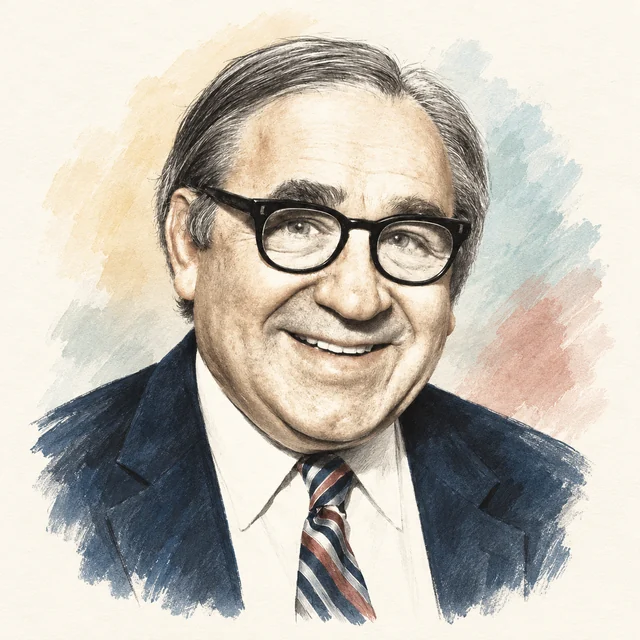
Illustrated portrait of Robert W. Fogel

Robert W. Fogel

Prize share · 1/2

Fogel combined historical records with explicit economic models and counterfactual comparisons, asking what might have happened without a particular institution or technology. His railway study challenged claims that railroads were indispensable to American growth. Work on slavery provoked major controversy, while demographic research investigated changing health and mortality. Quantitative estimates depend on assumptions and sources; economic profitability never establishes the justice or wellbeing of people subjected to an institution.

Read the biography ↗
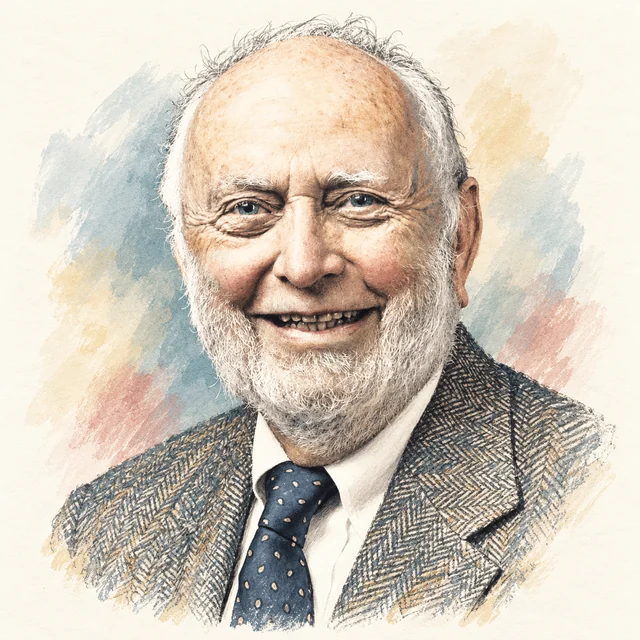
Illustrated portrait of Douglass C. North

Douglass C. North

Prize share · 1/2

North explained how formal rules, informal constraints and enforcement shape the incentives and transaction costs of economic life. Historical shipping research helped him distinguish organisational change from technology alone. His later work asked why inefficient institutions can persist and why change depends on inherited arrangements and political choices. Institutions influence growth, but the theory is not a claim that every new rule is efficient or that one institutional formula fits all societies.

Read the biography ↗

03 · Years in the making

The path here

  1. 1961

    North publishes a study of American economic growth and regional connections.

  2. 1964

    Fogel uses counterfactual analysis to reassess the importance of railroads.

  3. 1968

    North investigates productivity and organisational change in ocean shipping.

  4. 1990

    North develops an account of institutions, incentives and long-run change.

  5. 1993

    Fogel and North share the Economic Sciences memorial prize equally.

04 · Read further

From the original sources

Original explanations by Curionode, based on the official records below. Biographical details and affiliations refer to the award year.

  1. Official announcement nobelprize.org

More in Economic Sciences

Browse this subject ↗