c.curionodeThe Nobel Archive

1994 · Peace

Opening a negotiated path

The 1994 prize recognised efforts behind the Oslo process, when Israeli and Palestinian leaders sought a route away from prolonged conflict.

Oslo processIsraeli–Palestinian negotiationsinterim self-governmentunresolved issues
1994Peace

Visual guide

The prize, pictured

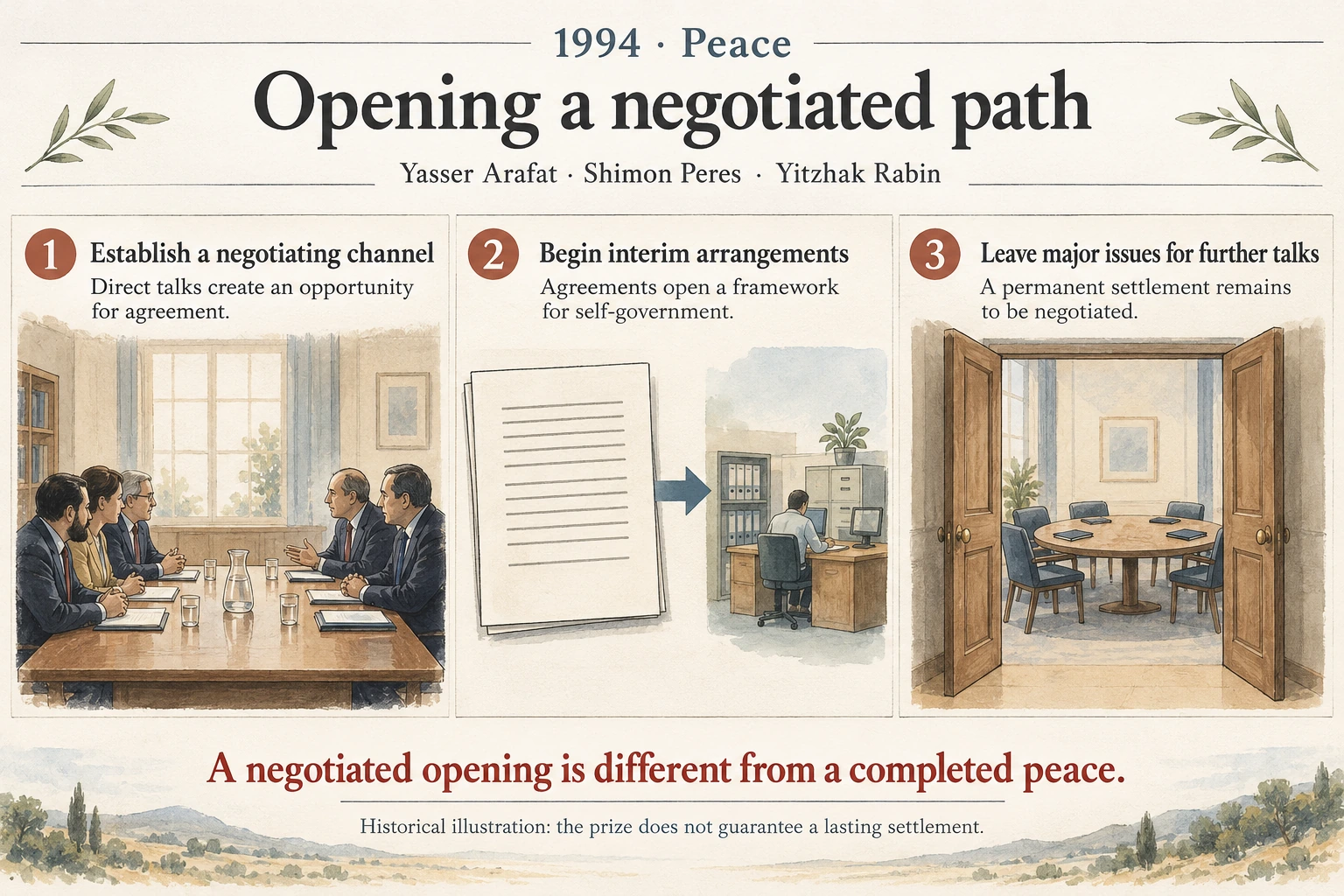
Infographic explaining Opening a negotiated path
Original AI-generated infographic. A conceptual overview; the explanations and sources below provide context.
Read the poster text

A negotiated opening is different from a completed peace.

  1. Establish a negotiating channel

    Direct talks create an opportunity for agreement.

  2. Begin interim arrangements

    Agreements open a framework for self-government.

  3. Leave major issues for further talks

    A permanent settlement remains to be negotiated.

Historical illustration: the prize does not guarantee a lasting settlement.

01 · The contribution

The idea, in everyday language

The Oslo process created a negotiating channel between Israel and the Palestine Liberation Organization. Arafat authorised Palestinian participation, Peres helped lead the Israeli negotiations, and Rabin gave the government’s political approval. The 1993 Declaration of Principles and subsequent implementation agreements opened a framework for interim Palestinian self-government and further negotiations.

The Nobel Committee saw these acts as opportunities to replace confrontation with cooperation and hoped the award would encourage the process. The agreements did not resolve the whole conflict. The Declaration explicitly left matters including Jerusalem, refugees, settlements, security arrangements and borders for permanent-status talks. Recognising an opening in 1994 therefore differs from claiming a just and lasting settlement had already been secured.

Why it matters

The agreements enabled new political arrangements and created expectations of a further settlement. Their importance lies in the shift toward direct negotiations and the institutions they initiated, as well as in the disputes and limitations they left. Many negotiators and communities contributed; the three recipients did not alone control its outcome.
02 · The people

Who brought the idea to life?

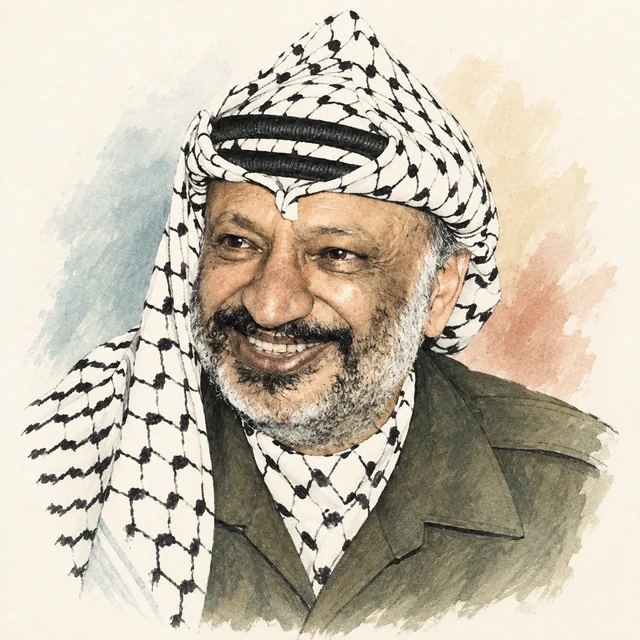
Illustrated portrait of Yasser Arafat

Yasser Arafat

Prize share · 1/3

Arafat authorised Palestinian participation in the secret Oslo talks and supported the agreements that opened an interim self-government process. The Nobel Committee recognised these efforts alongside the Israeli leadership of Peres and Rabin. His role was part of a wider negotiation involving many participants, not a completed resolution of Palestinian rights, security or statehood. The award does not erase the violence and disputed decisions in his wider political history.

Read the biography ↗
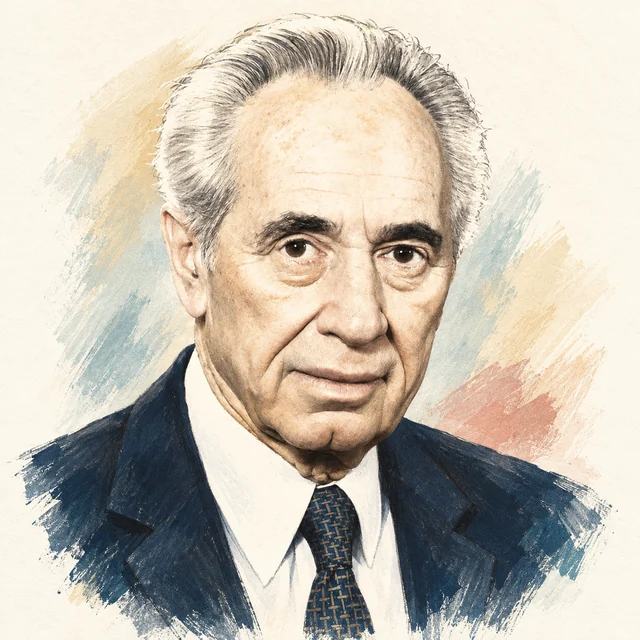
Illustrated portrait of Shimon Peres

Shimon Peres

Prize share · 1/3

As foreign minister, Peres helped lead the Israeli side of the Oslo negotiating process. Working with colleagues and with Rabin’s approval, he supported a channel that produced the 1993 Declaration of Principles and subsequent implementation agreements. The prize recognised the effort to move toward negotiated cooperation. It was not a final settlement, and recognition of this diplomacy does not amount to a complete judgement on his defence or government record.

Read the biography ↗
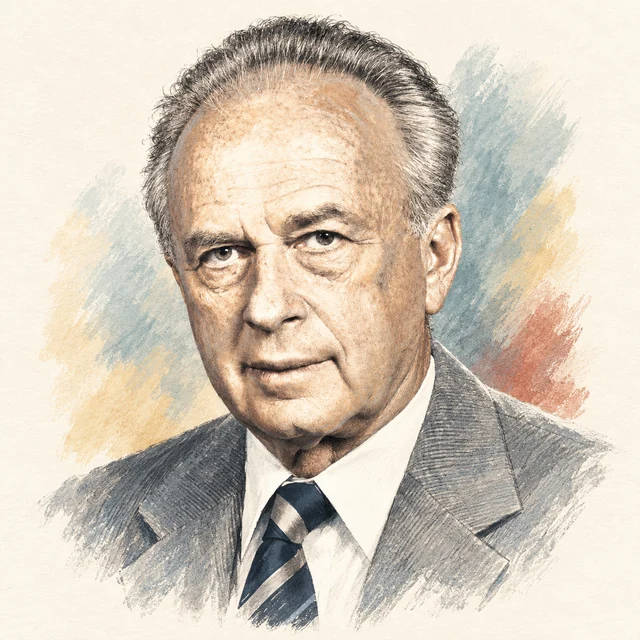
Illustrated portrait of Yitzhak Rabin

Yitzhak Rabin

Prize share · 1/3

Rabin supplied the prime-ministerial approval and political leadership needed for the Israeli government to pursue the Oslo agreements. He shared the 1994 prize with Peres and Arafat for efforts toward peace, while central issues remained unresolved. He was assassinated on 4 November 1995, after the award, amid opposition to the process. His death belongs to its later history, not to an account claiming peace was already secured in 1994.

Read the biography ↗

03 · Years in the making

The path here

  1. 1993

    Secret Oslo talks lead to the Declaration of Principles, signed in Washington on 13 September.

  2. 1994

    Implementation agreements begin interim arrangements; Arafat, Peres and Rabin share the Peace Prize.

  3. 1995

    Rabin is assassinated on 4 November after the award; the process’s later history remains distinct.

04 · Read further

From the original sources

Original explanations by Curionode, based on the official records below. Biographical details and affiliations refer to the award year.

  1. Official announcement nobelprize.org
  2. UN text of the Oslo Declaration un.org