01 · The contribution
The idea, in everyday language
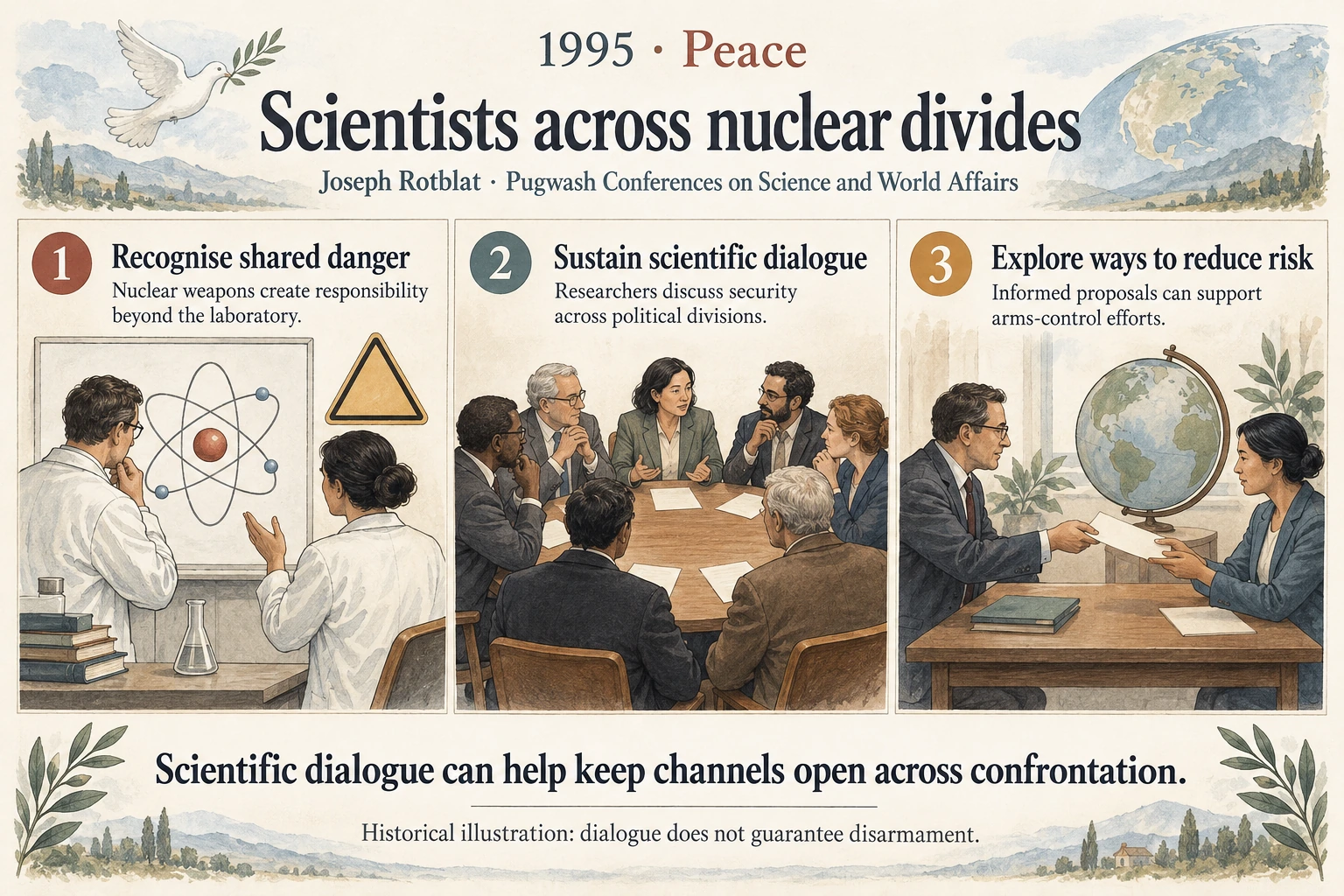
The destructive power of nuclear weapons gave scientists a responsibility extending beyond laboratory discovery. The 1955 Russell–Einstein Manifesto called attention to the threat of nuclear war. The first Pugwash conference in 1957 brought researchers from different countries together to consider that danger. Scientific knowledge could provide common ground even when their governments were opponents.
Rotblat helped organise and sustain this movement, while Pugwash provided an international network of conferences and discussions. Participants explored arms control, disarmament and other security questions, sometimes using informal channels to understand concerns that official negotiations could not readily address. The 1995 Nobel Committee honoured their efforts to reduce nuclear weapons’ role in international politics and, in the longer term, eliminate them.
Why it matters
Pugwash helped create durable channels for technically informed discussion during and after the Cold War. The recognition highlighted both collective institutions and an individual’s sustained leadership. Arms-control outcomes also depend on governments, verification arrangements and many other participants; the award did not claim nuclear disarmament had already been achieved.