c.curionodeThe Nobel Archive

1996 · Peace

Making East Timor’s case heard

The 1996 prize recognised efforts toward a just, peaceful solution through advocacy within East Timor and diplomacy abroad.

East Timorself-determinationnonviolencediplomacy
1996Peace

Visual guide

The prize, pictured

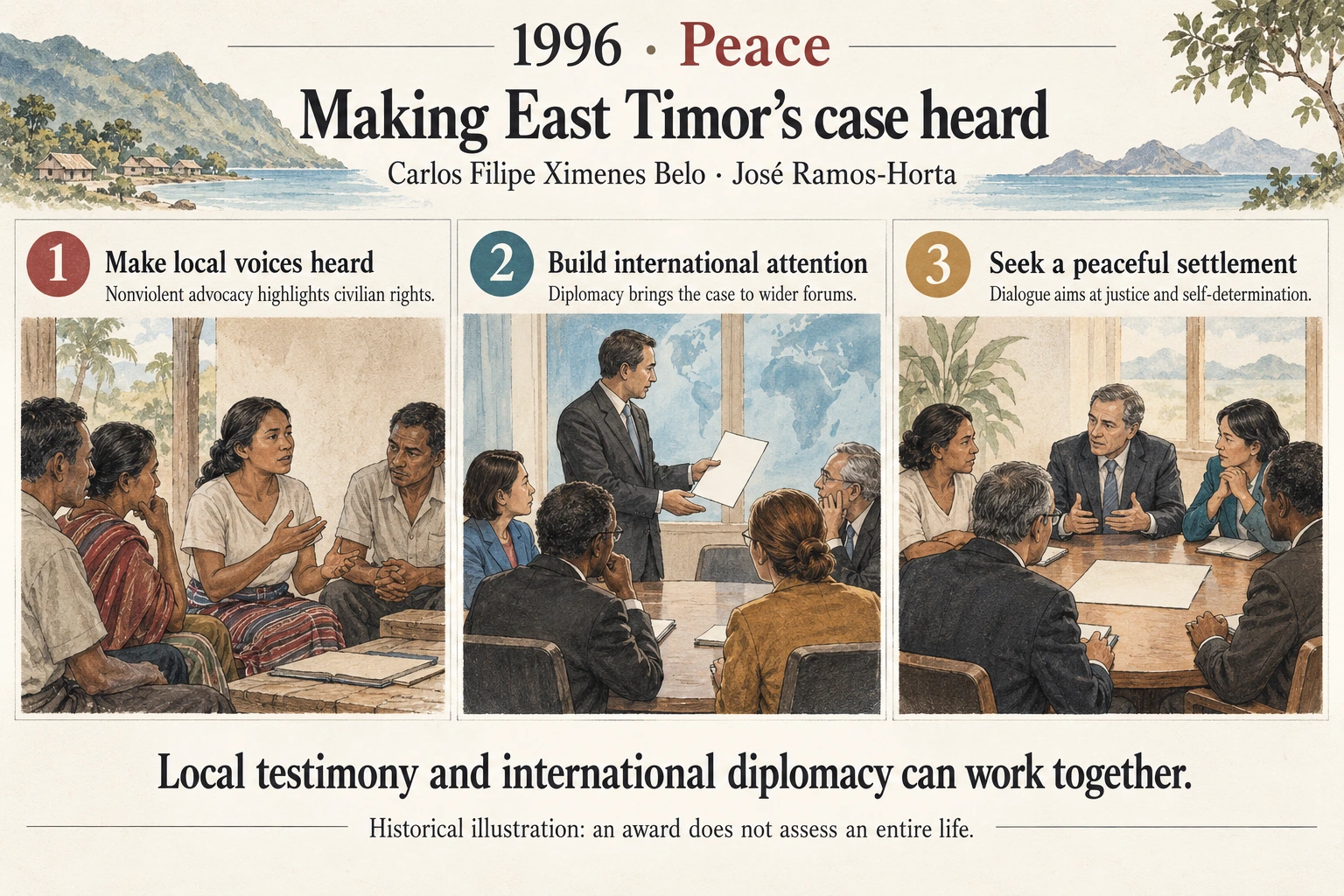
Infographic explaining Making East Timor’s case heard
Original AI-generated infographic. A conceptual overview; the explanations and sources below provide context.
Read the poster text

Local testimony and international diplomacy can work together.

  1. Make local voices heard

    Nonviolent advocacy highlights civilian rights.

  2. Build international attention

    Diplomacy brings the case to wider forums.

  3. Seek a peaceful settlement

    Dialogue aims at justice and self-determination.

Historical illustration: an award does not assess an entire life.

01 · The contribution

The idea, in everyday language

After Indonesia’s 1975 invasion, East Timorese people faced violence and repression. The Nobel Committee highlighted two different roles in the effort to protect civilians and pursue self-determination. Belo, a church leader inside the territory, spoke against abuses and for nonviolence and dialogue. Ramos-Horta brought the East Timorese case to international institutions and developed proposals for a negotiated settlement.

Their work linked local testimony with sustained international attention. Ramos-Horta’s 1992 plan proposed humanitarian cooperation and international involvement as steps toward a peaceful resolution. In 1996 the committee honoured those efforts and hoped to encourage diplomacy; it was not announcing that the conflict had ended. Later events, including the 1999 vote and the UN-supported transition, belong to a distinct subsequent history.

Why it matters

The award increased international attention to East Timorese rights and the search for a settlement based on self-determination. In 1999 voters chose a path toward independence, followed by serious violence and international intervention. A UN transitional administration supported the process that culminated in Timor-Leste’s independence on 20 May 2002.
02 · The people

Who brought the idea to life?

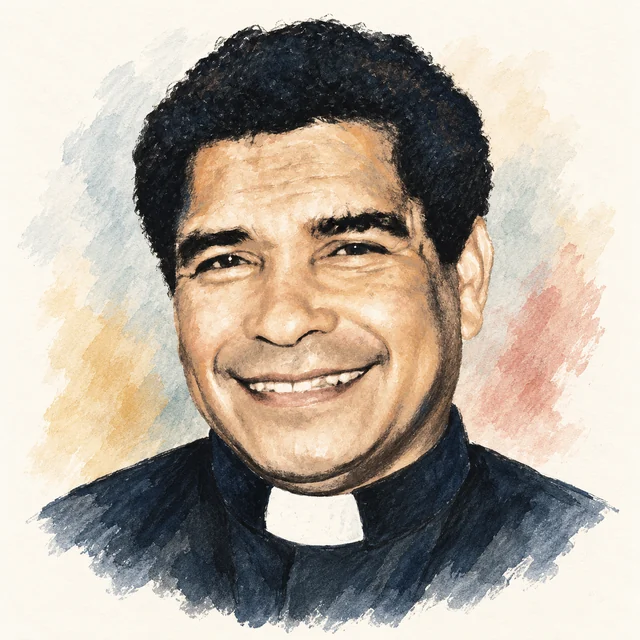
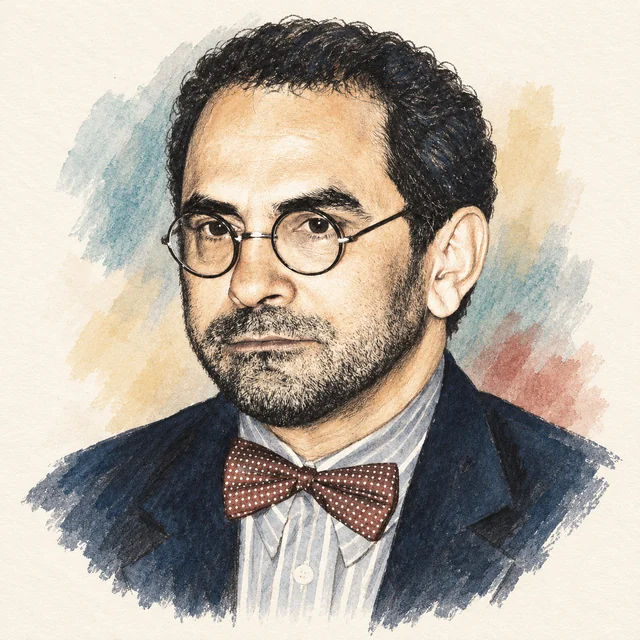
Illustrated portrait of Carlos Filipe Ximenes Belo

Carlos Filipe Ximenes Belo

Prize share · 1/2

The 1996 committee honoured Belo’s award-era efforts to protect East Timorese people and pursue a peaceful settlement grounded in self-determination. As a church leader inside the territory, he spoke for dialogue and against violence. This explains the historical award; it does not erase the later allegations or the Vatican’s confirmed restrictions. The prize was shared equally with the international diplomatic advocate Ramos-Horta.

Read the biography ↗
Illustrated portrait of José Ramos-Horta

José Ramos-Horta

Prize share · 1/2

Ramos-Horta brought the East Timorese struggle to international diplomatic forums and developed proposals for a peaceful settlement. His 1992 peace plan connected humanitarian cooperation and international involvement with a longer path toward withdrawal and self-determination. The 1996 prize recognised these sustained efforts alongside Belo’s work inside the territory. The later UN-assisted transition culminated in independence in May 2002, not in the award year.

Read the biography ↗

03 · Years in the making

The path here

  1. 1975

    Indonesia invades East Timor; Ramos-Horta begins sustained international advocacy.

  2. 1992

    Ramos-Horta presents a peace plan combining humanitarian cooperation and international involvement.

  3. 1996

    Belo and Ramos-Horta share the Peace Prize for efforts toward a just and peaceful solution.

  4. 1999

    A UN-organised vote opens the path to independence; violence and international intervention follow.

  5. 2002

    Timor-Leste becomes independent on 20 May after the UN transitional administration.

  6. 2022

    The Vatican publicly confirms its 2020–2021 disciplinary restrictions on Belo following abuse allegations.

04 · Read further

From the original sources

Original explanations by Curionode, based on the official records below. Biographical details and affiliations refer to the award year.

  1. Official announcement nobelprize.org
  2. UN East Timor mission history peacekeeping.un.org
  3. UN East Timor chronology peacekeeping.un.org
  4. Vatican statement on later restrictions vaticannews.va