c.curionodeThe Nobel Archive

2000 · Peace

Opening a door to dialogue

Kim Dae-jung linked a long struggle for democracy with efforts toward reconciliation on the Korean peninsula.

democracyhuman rightsdialogueKorean peninsula
2000Peace

Visual guide

The prize, pictured

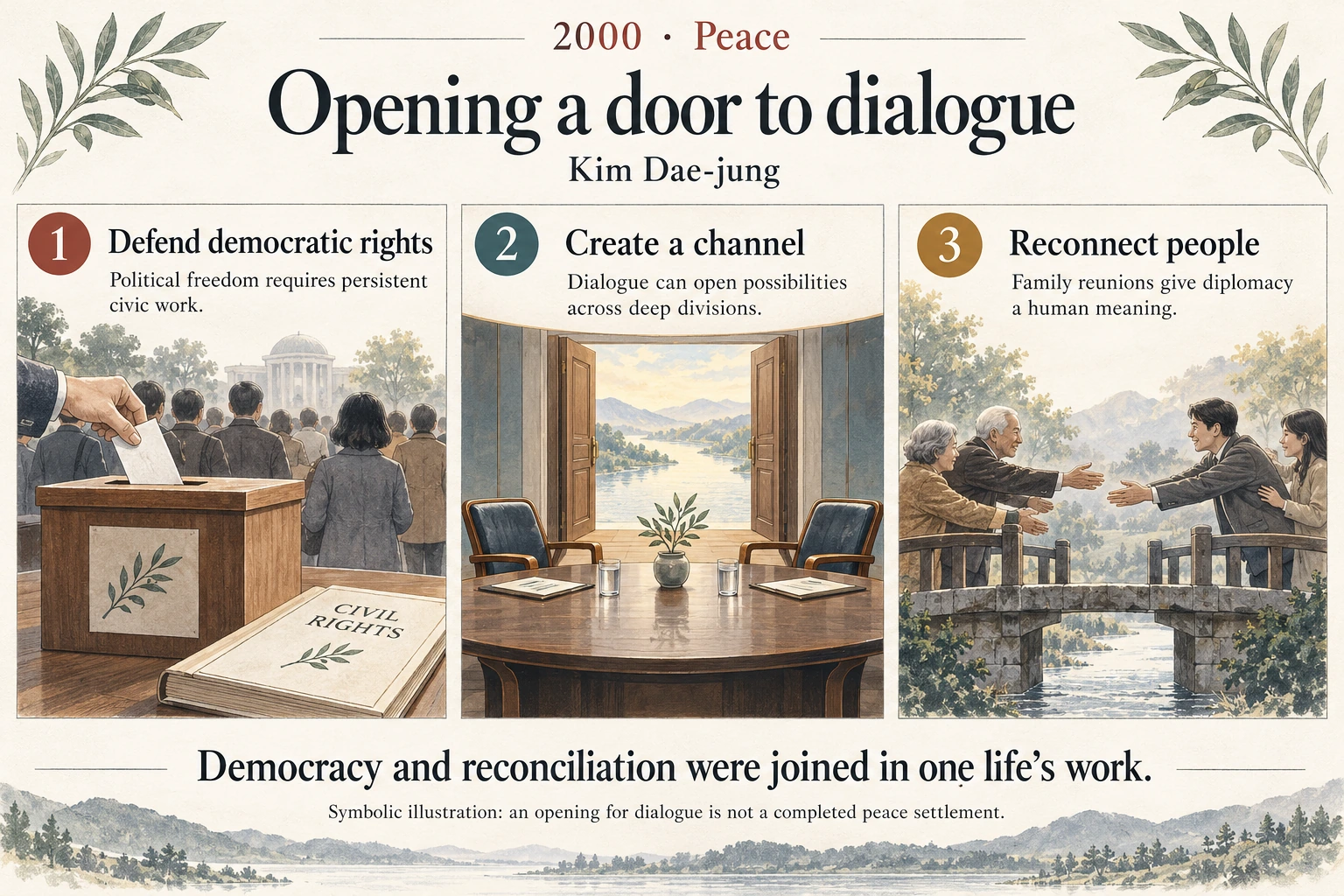
Infographic explaining Opening a door to dialogue
Original AI-generated infographic. A conceptual overview; the explanations and sources below provide context.
Read the poster text

Democracy and reconciliation were joined in one life’s work.

  1. Defend democratic rights

    Political freedom requires persistent civic work.

  2. Create a channel

    Dialogue can open possibilities across deep divisions.

  3. Reconnect people

    Family reunions give diplomacy a human meaning.

Symbolic illustration: an opening for dialogue is not a completed peace settlement.

01 · The contribution

The idea, in everyday language

Kim spent decades opposing authoritarian rule in South Korea, enduring imprisonment, threats, house arrest and exile. His election in 1997 brought an opposition leader to the presidency through democratic voting. The prize recognised this history of work for democracy and human rights, including concern for rights elsewhere in East Asia.

As president, Kim pursued the sunshine policy of engagement with North Korea. In June 2000 he met Kim Jong-il and signed a joint declaration. Dialogue, family reunions and practical exchanges offered ways to reduce hostility and reconnect people separated by division. The award recognised an opening and the efforts behind it, rather than a completed peace settlement.

Why it matters

The prize brought together two dimensions of peace: accountable government and respect for rights within a society, and attempts to reduce hostility between societies. The 2000 summit and family reunions showed a human consequence of diplomacy. Kim’s work also provided a prominent example of an opposition figure continuing a democratic struggle through long periods of repression.

02 · The people

Who brought the idea to life?

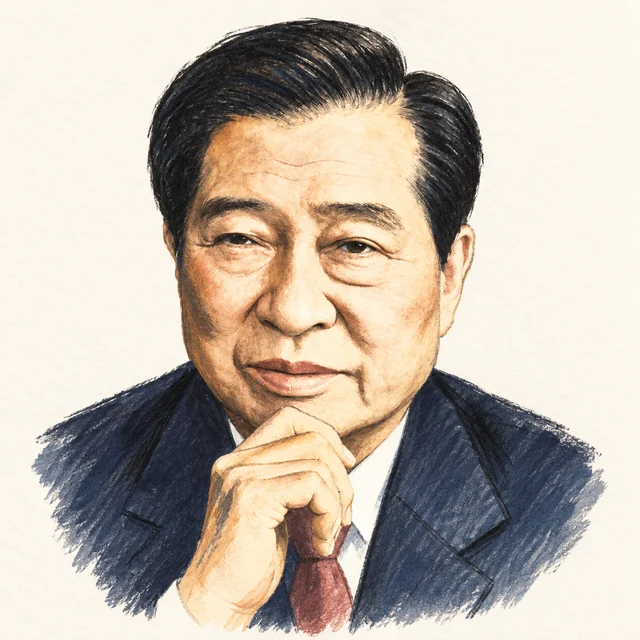
Illustrated portrait of Kim Dae-jung

Kim Dae-jung

Prize share · 1/1

The award recognised Kim’s work for democracy and human rights in South Korea and East Asia, and especially reconciliation with North Korea. His sunshine policy sought dialogue and practical cooperation. In June 2000 he met North Korean leader Kim Jong-il, and they signed a joint declaration. Family reunions and other exchanges gave the opening a human dimension. The prize honoured these efforts; it did not mean that division or security tensions had been resolved.

Read the biography ↗

03 · Years in the making

The path here

  1. 1997

    Kim won the South Korean presidential election.

  2. 2000

    The June summit produced a joint declaration and opportunities for renewed contact.

  3. 2000

    The Peace Prize recognised democracy, human rights and reconciliation efforts.

04 · Read further

From the original sources

Original explanations by Curionode, based on the official records below. Biographical details and affiliations refer to the award year.

  1. Official announcement nobelprize.org