01 · The discovery
The idea, in everyday language
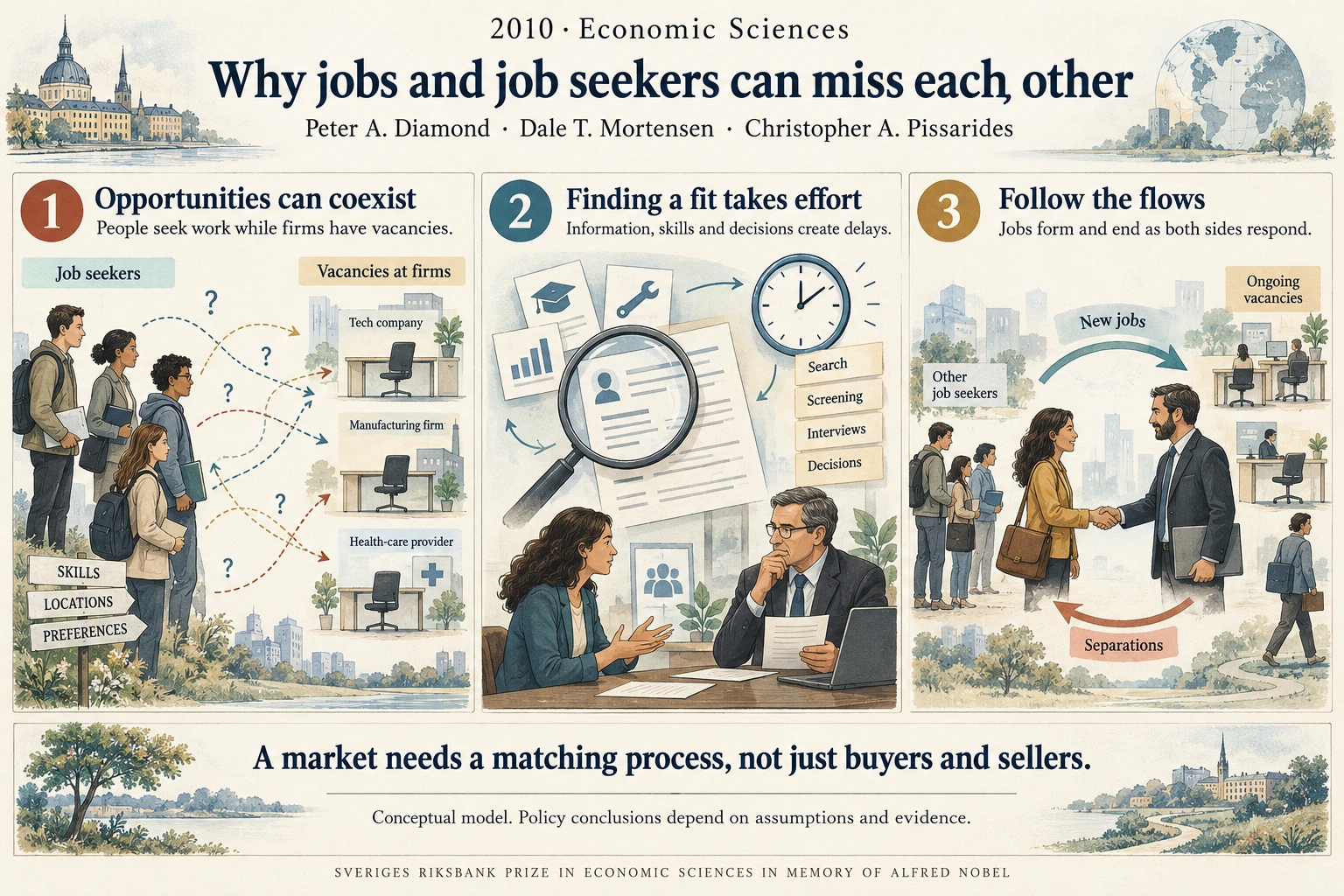
A vacant job does not instantly find the right worker. People need information, skills must fit, firms spend resources recruiting and both sides decide whether an offer is worthwhile. Diamond, Mortensen and Pissarides made these search frictions part of economic theory. Once finding a partner takes time and effort, a market behaves differently from a diagram where supply and demand meet immediately.
Their labour-market framework follows flows: firms open vacancies, unemployed people search, matches form and existing jobs can end. Wages and the attractiveness of searching depend on the opportunities facing both sides. Diamond supplied foundational insights into search markets; Mortensen and Pissarides developed models especially influential in explaining unemployment, job creation and job destruction.
Why it matters
The theory provides a way to study vacancy rates, unemployment duration, wage differences and the effects of labour-market policy together. It helps explain why improving information or matching can matter, and why changes in hiring or job separation can affect unemployment even without a simple shortage of all work.