c.curionodeThe Nobel Archive

2013 · Peace

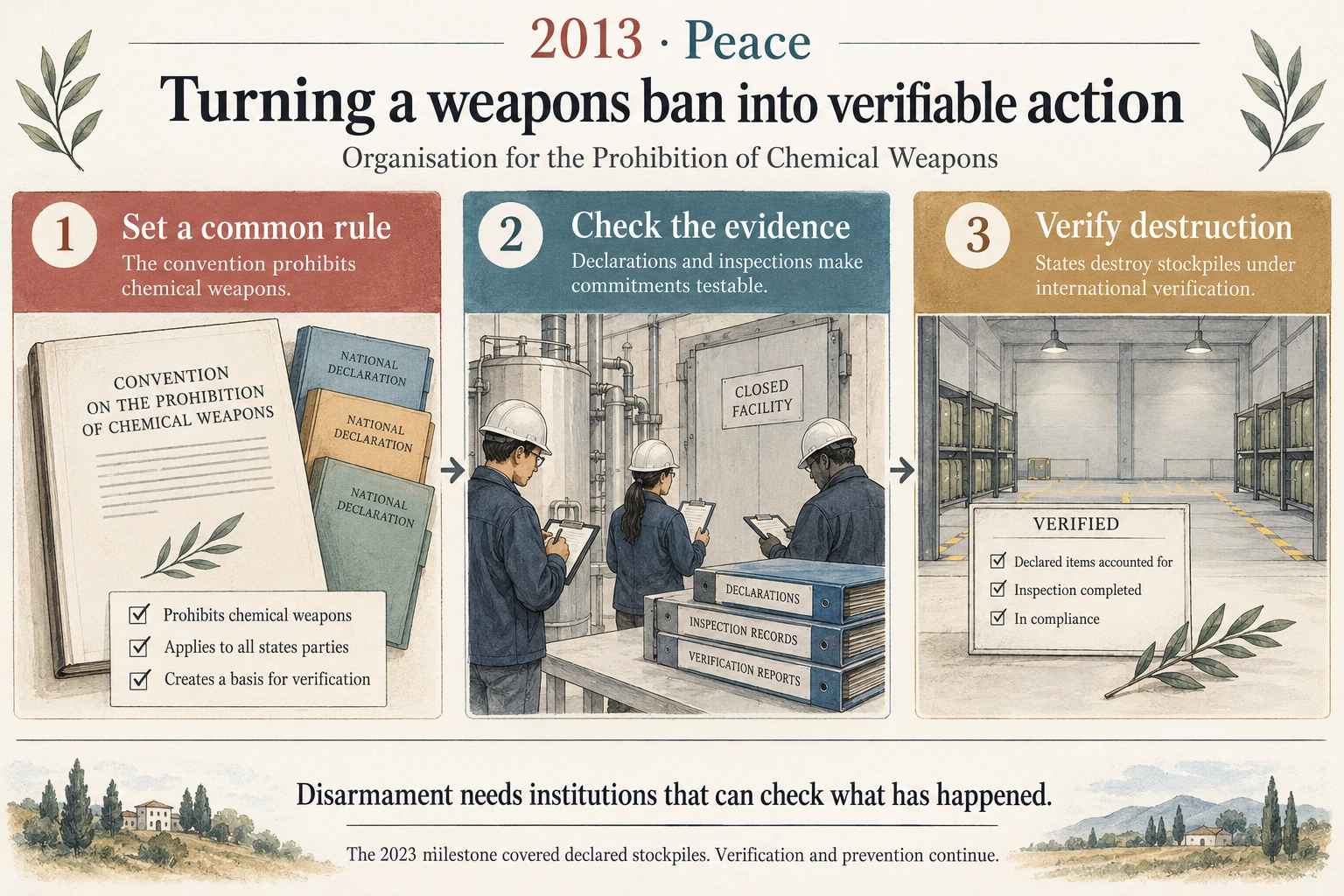
Turning a weapons ban into verifiable action

The OPCW connects an international prohibition with declarations, inspections and verified destruction.

disarmamentverificationinternational cooperation
2013Peace

Visual guide

The prize, pictured

Infographic explaining Turning a weapons ban into verifiable action
Original AI-generated infographic. A conceptual overview; the explanations and sources below provide context.
Read the poster text

Disarmament needs institutions that can check what has happened.

  1. Set a common rule

    The convention prohibits chemical weapons.

  2. Check the evidence

    Declarations and inspections make commitments testable.

  3. Verify destruction

    States destroy stockpiles under international verification.

The 2023 milestone covered declared stockpiles. Verification and prevention continue.

01 · The contribution

The idea, in everyday language

A treaty can state that chemical weapons must disappear, but a promise alone does not show what has happened. The Chemical Weapons Convention entered into force in 1997, and the Organisation for the Prohibition of Chemical Weapons became its implementing body. States must provide information about relevant activities and holdings; the organisation uses inspections and technical assessment to check compliance. Its work links diplomatic commitments with evidence.

The 2013 Peace Prize recognised the organisation’s sustained efforts to eliminate chemical weapons. Destruction is undertaken by states and verified by the OPCW; inspectors are not an independent army carrying out disarmament. Verification also covers parts of the chemical industry because materials and facilities can have peaceful uses. The challenge is to make the prohibition credible while supporting legitimate chemistry and international cooperation.

Why it matters

The prize highlighted a practical institution through which states could pursue disarmament together. A later milestone came on 7 July 2023, when the OPCW announced that the stockpiles then declared by all states parties had been verified as destroyed. That achievement illustrates the value of sustained monitoring over many years, rather than a single diplomatic announcement.

02 · The recipients

Who brought the idea to life?

Symbolic illustration representing Organisation for the Prohibition of Chemical Weapons

Organisation for the Prohibition of Chemical Weapons

Prize share · 1/1

The organisation checks treaty compliance and verifies destruction carried out by states, turning a disarmament commitment into a process that can be examined. In July 2023 it announced that the stockpiles then declared by all states parties had been verified as destroyed. That milestone did not establish that no undeclared weapons existed or that further investigation, verification and prevention were unnecessary.

Read the biography ↗

03 · Years in the making

The path here

  1. 1997

    The Chemical Weapons Convention enters into force and the OPCW begins work.

  2. 2013

    The Nobel Peace Prize recognises the organisation’s efforts toward elimination.

  3. 2023

    The OPCW reports verified destruction of the stockpiles then declared by all states parties.

04 · Read further

From the original sources

Original explanations by Curionode, based on the official records below. Biographical details and affiliations refer to the award year.

  1. Official announcement nobelprize.org
  2. OPCW: declared stockpiles, July 2023 opcw.org
  3. OPCW: eliminating chemical weapons opcw.org