01 · The discovery
The idea, in everyday language
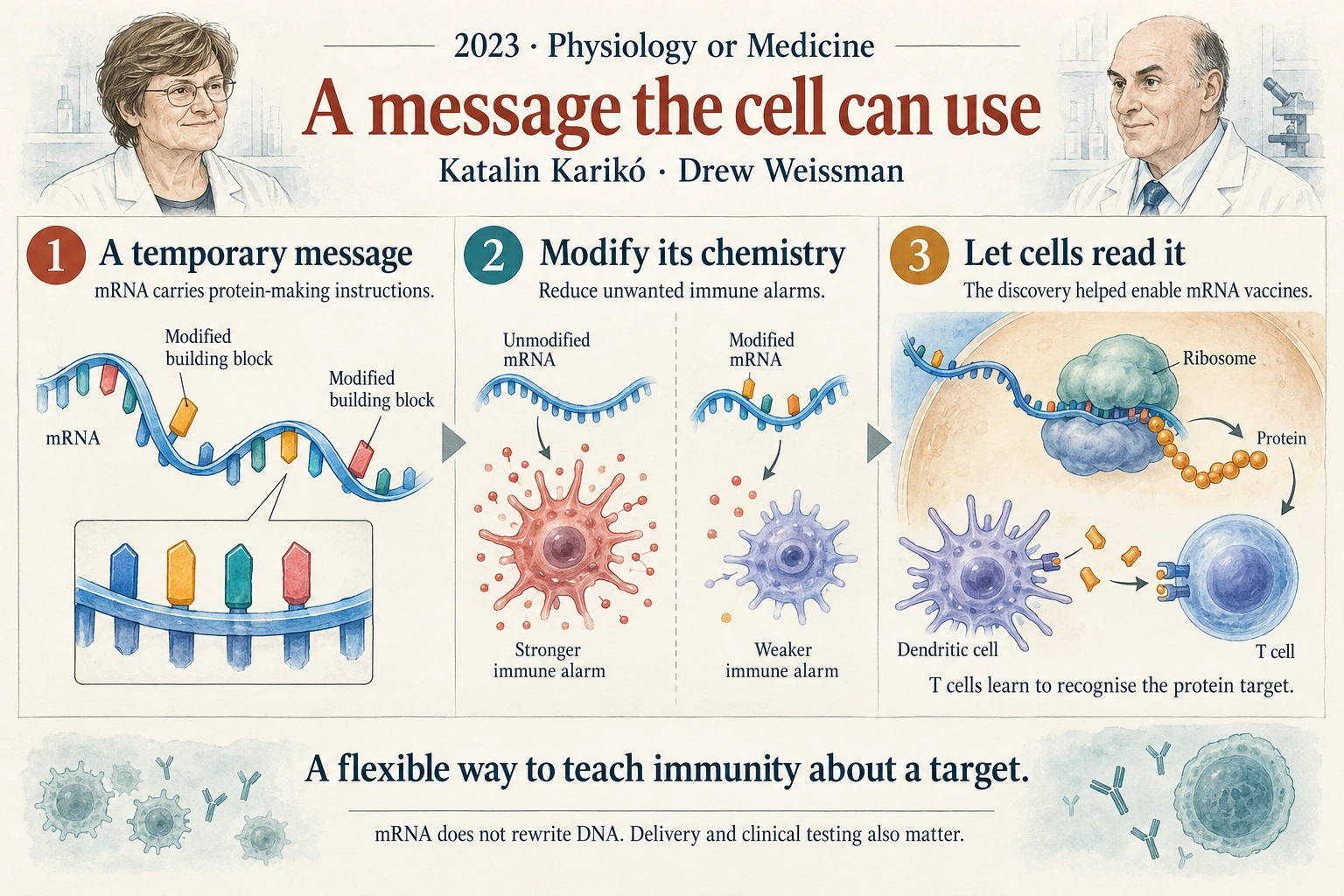
Messenger RNA is a temporary working copy of genetic instructions. Cells read it to make proteins. Early attempts to use laboratory-made mRNA ran into a problem: immune cells reacted strongly to the message itself.
Karikó and Weissman found that modifying some of RNA’s chemical building blocks reduced this unwanted response and could improve protein production. That basic discovery became a key part of the platform used in effective mRNA vaccines against COVID-19.
Why it matters
The work enabled a flexible vaccine approach: change the encoded message to teach the immune system about a different target. Delivery systems, manufacturing and clinical trials were also essential.