c.curionodeThe Nobel Archive

1901 · Chemistry

Give chemical change and solutions a quantitative language

Van ’t Hoff connected chemical dynamics with measurement and related the osmotic pressure of dilute solutions to particle concentration and temperature. The first Chemistry Prize recognised both areas.

Chemical dynamicsOsmotic pressurePhysical chemistry
1901Chemistry

Visual guide

The prize, pictured

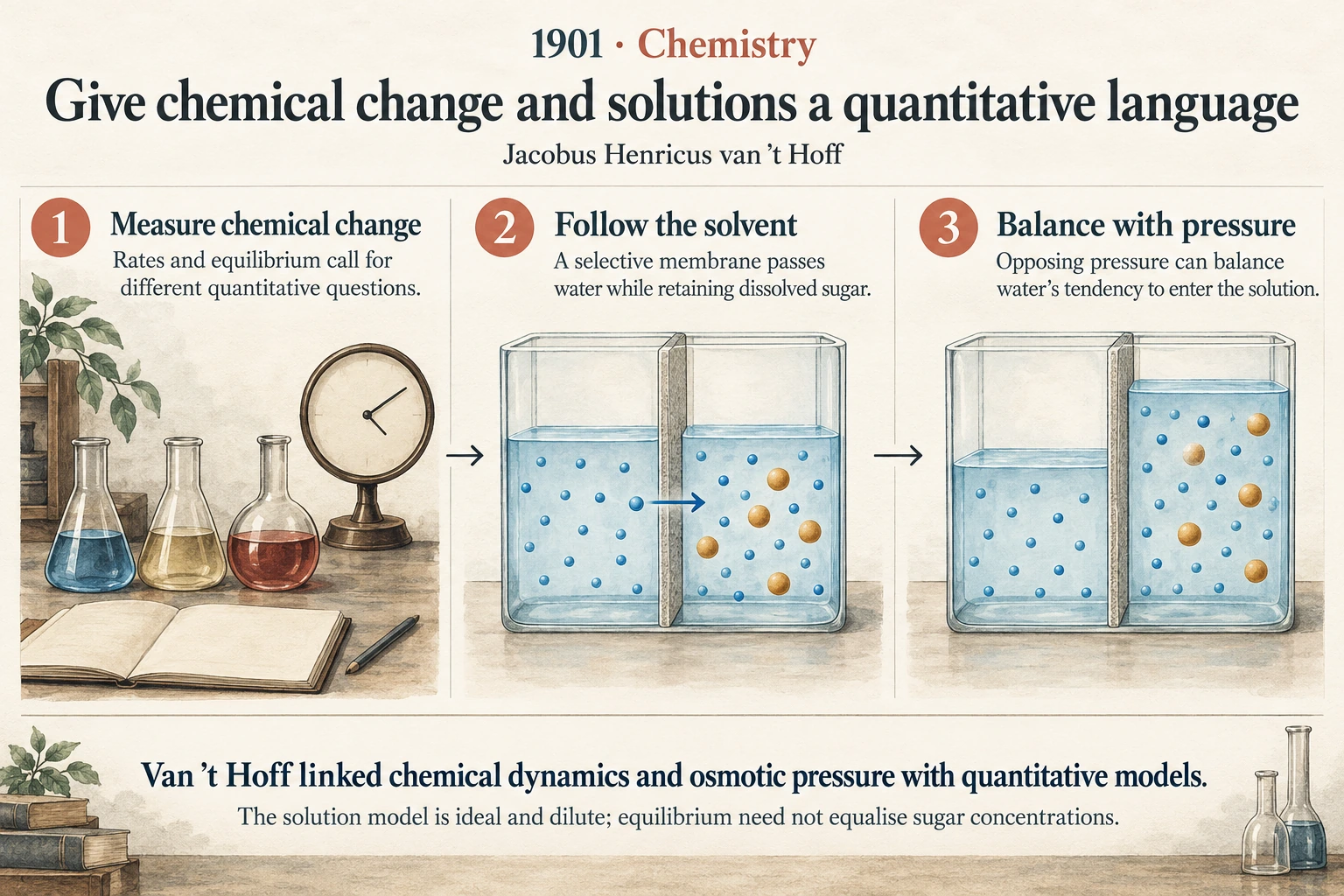
Infographic explaining Give chemical change and solutions a quantitative language
Original AI-generated infographic. A conceptual overview; the explanations and sources below provide context.
Read the poster text

Van ’t Hoff linked chemical dynamics and osmotic pressure with quantitative models.

  1. Measure chemical change

    Rates and equilibrium call for different quantitative questions.

  2. Follow the solvent

    A selective membrane passes water while retaining dissolved sugar.

  3. Balance with pressure

    Opposing pressure can balance water’s tendency to enter the solution.

The solution model is ideal and dilute; equilibrium need not equalise sugar concentrations.

01 · The discovery

The idea, in everyday language

Chemical dynamics asks about changes in chemical systems, including rates and equilibrium. Van ’t Hoff helped connect those questions with quantitative models and thermodynamics rather than describing reactions only by their final products.

For a membrane that passes solvent but retains a solute, solvent can enter the solution. An opposing pressure can balance this tendency. In an ideal dilute solution, the required osmotic pressure follows a relation analogous to the gas law, depending on temperature and the concentration of independently moving dissolved particles.

Why it matters

The work helped establish physical chemistry as a quantitative field and connected laboratory solutions with biological and geological problems. It also supplied tools for thinking about molecular quantities through measurable bulk properties.

02 · The people

Who brought the idea to life?

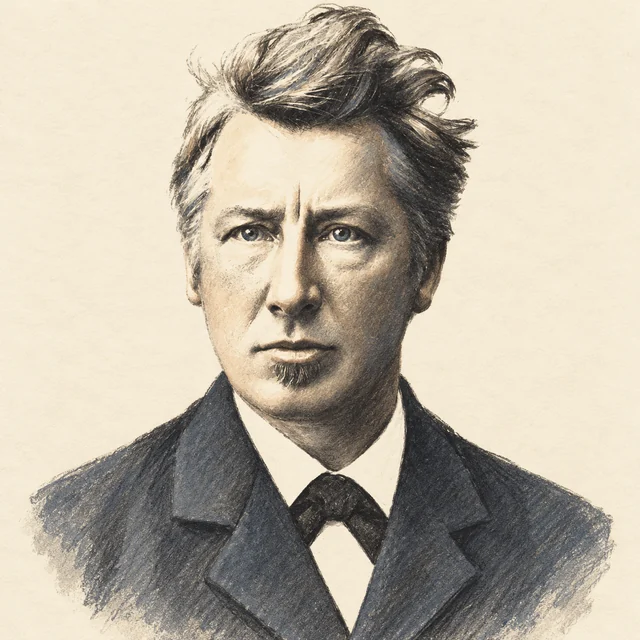
Illustrated portrait of Jacobus Henricus van 't Hoff

Jacobus Henricus van 't Hoff

Prize share · 1

Van ’t Hoff developed quantitative approaches to chemical dynamics and the osmotic pressure of dilute solutions. His full Chemistry Prize recognised these contributions; tetrahedral carbon was another influential part of his work.

Read the biography ↗

03 · Years in the making

The path here

  1. 1852

    Van ’t Hoff is born in Rotterdam.

  2. 1874

    He completes his doctorate and proposes tetrahedral carbon; Le Bel develops related ideas independently.

  3. 1877 / 1878

    He joins Amsterdam and becomes professor.

  4. 1884

    Études de dynamique chimique appears.

  5. 1885

    He develops the osmotic-pressure relationship for dilute solutions.

  6. 1896

    He moves to Berlin.

  7. 1901

    He receives the full first Chemistry Prize.

  8. 1911

    He dies at Steglitz.

04 · Read further

From the original sources

Original explanations by Curionode, based on the official records below. Biographical details and affiliations refer to the award year.

  1. Official award summary nobelprize.org
  2. Award ceremony speech nobelprize.org
  3. Van ’t Hoff’s Nobel lecture: selected opening pages nobelprize.org

More in Chemistry

Browse this subject ↗