c.curionodeThe Nobel Archive

1907 · Physics

Measure tiny differences with interfering light

A ruler cannot reveal every small difference in length or every detail in a spectrum. Michelson developed optical instruments that used the interference of light as a remarkably sensitive comparison.

InterferencePrecision opticsMetrology
1907Physics

Visual guide

The prize, pictured

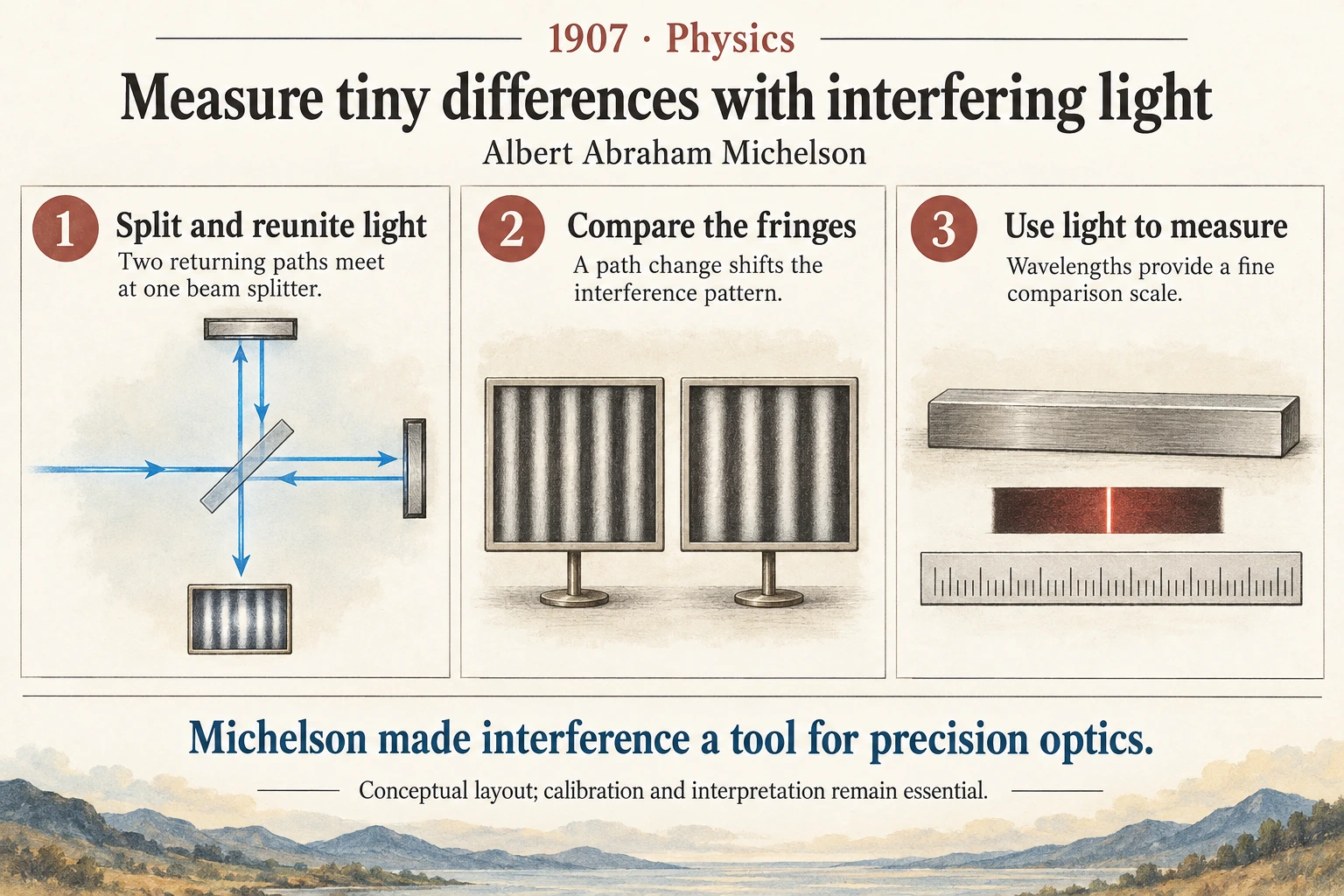
Infographic explaining Measure tiny differences with interfering light
Original AI-generated infographic. A conceptual overview; the explanations and sources below provide context.
Read the poster text

Michelson made interference a tool for precision optics.

  1. Split and reunite light

    Two returning paths meet at one beam splitter.

  2. Compare the fringes

    A path change shifts the interference pattern.

  3. Use light to measure

    Wavelengths provide a fine comparison scale.

Conceptual layout; calibration and interpretation remain essential.

01 · The discovery

The idea, in everyday language

An interferometer divides a light beam into two coherent parts, sends them along different paths and brings them together again. Their relative phase determines where the combined light is bright or dark. Changing a path moves the fringes, turning a small difference into a pattern that can be observed and compared.

Michelson applied precise optics to spectroscopy and measurement. Work with Benoît compared the metre with cadmium light in 1892–1893. The 1887 experiment with Morley was one influential use of interference: it did not reveal the expected ether-drift effect. The 1907 prize recognised a wider programme of instruments and investigations, rather than only this one experiment.

Why it matters

Interference made wavelengths useful as tools for checking length and examining spectral detail. Later applications reached astronomy, including Michelson and Pease’s 1920 stellar measurement. Such later results show the reach of the method without becoming the reason for the earlier prize.
02 · The people

Who brought the idea to life?

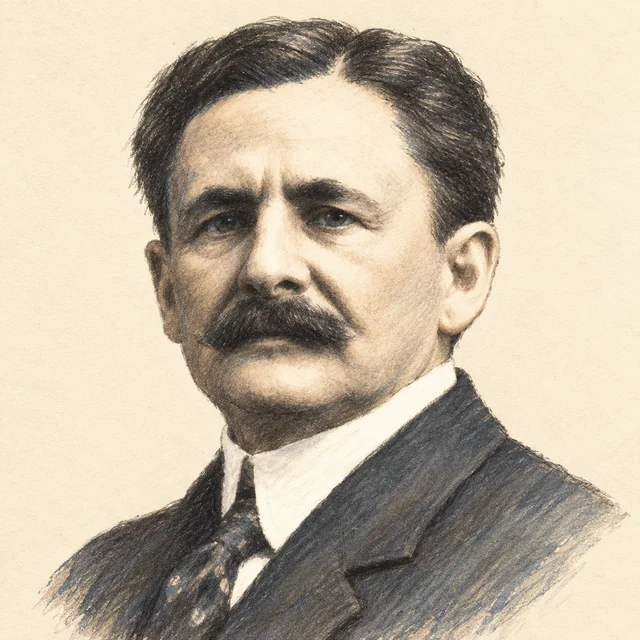
Illustrated portrait of Albert Abraham Michelson

Albert Abraham Michelson

Prize share · 1

Michelson received the full Physics Prize for optical precision instruments and the spectroscopic and metrological investigations made with them. Interference turned small differences in light paths into observable fringes.

Read the biography ↗

03 · Years in the making

The path here

  1. 1873

    Michelson graduates from the United States Naval Academy.

  2. 1881

    He develops an early interferometer.

  3. 1887

    Michelson and Morley report no expected ether-drift signal.

  4. 1892

    He joins the University of Chicago.

  5. 1892–1893

    Michelson and Benoît compare the metre with cadmium light.

  6. 1907

    The Physics Prize recognises precision optical instruments and investigations.

  7. 1920

    Michelson and Pease measure Betelgeuse’s angular diameter.

04 · Read further

From the original sources

Original explanations by Curionode, based on the official records below. Biographical details and affiliations refer to the award year.

  1. Official award summary nobelprize.org
  2. Prepared presentation and private address nobelprize.org
  3. University of Chicago: Michelson and precision optics chronicle.uchicago.edu
  4. BIPM: historical interferometric measurement of the metre bipm.org
  5. Mount Wilson Observatory: Michelson and Pease’s stellar interferometer mtwilson.edu