c.curionodeThe Nobel Archive

1908 · Peace

Build a lasting movement for peace and arbitration

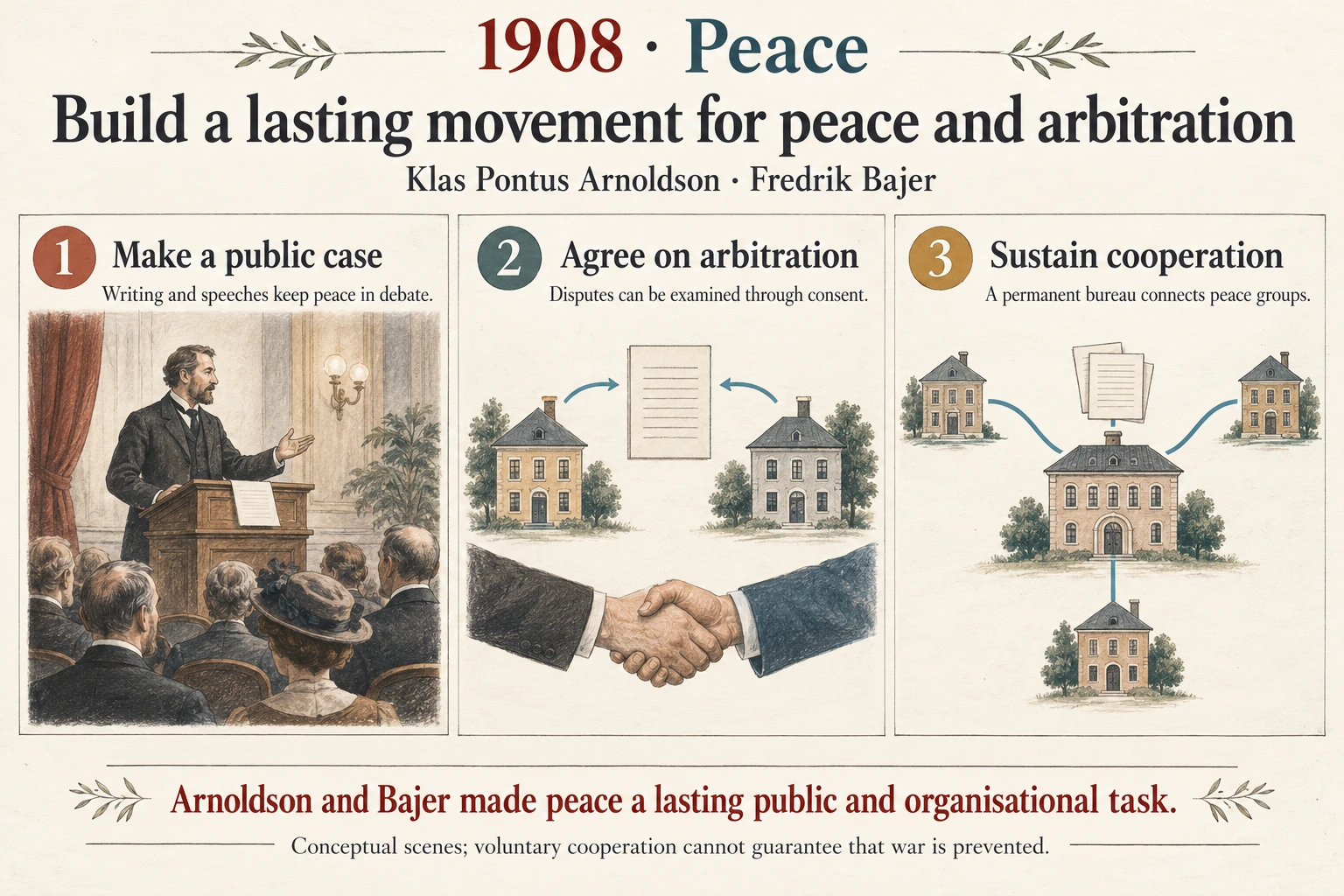
Peace needed sustained public work between diplomatic crises. Arnoldson and Bajer used writing, parliamentary proposals and organised cooperation to make alternatives to war part of political life.

Peace societiesArbitrationNordic cooperation
1908Peace

Visual guide

The prize, pictured

Infographic explaining Build a lasting movement for peace and arbitration
Original AI-generated infographic. A conceptual overview; the explanations and sources below provide context.
Read the poster text

Arnoldson and Bajer made peace a lasting public and organisational task.

  1. Make a public case

    Writing and speeches keep peace in debate.

  2. Agree on arbitration

    Disputes can be examined through consent.

  3. Sustain cooperation

    A permanent bureau connects peace groups.

Conceptual scenes; voluntary cooperation cannot guarantee that war is prevented.

01 · The contribution

The idea, in everyday language

Arnoldson helped build the Swedish peace movement, promoting neutrality and international arbitration. During tensions over the union with Norway he urged that peace should come before maintaining the union by force. Speaking, petitions and books carried these arguments beyond parliament, while the peaceful dissolution of 1905 depended on many actors.

Bajer linked parliamentary action with national and international organisation. He promoted Danish neutrality and arbitration, worked with Matilde Bajer for women’s rights and helped establish the permanent peace bureau in Bern in 1891. Regular information, correspondence and meetings could keep cooperation alive between congresses. The prize recognised two long public careers, with one half awarded to each person.

Why it matters

Their work helped create lasting civic and parliamentary networks for peace. The award made public persuasion, institutional organisation and arbitration visible as political work, alongside formal diplomacy.
02 · The people

Who brought the idea to life?

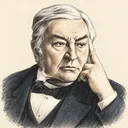
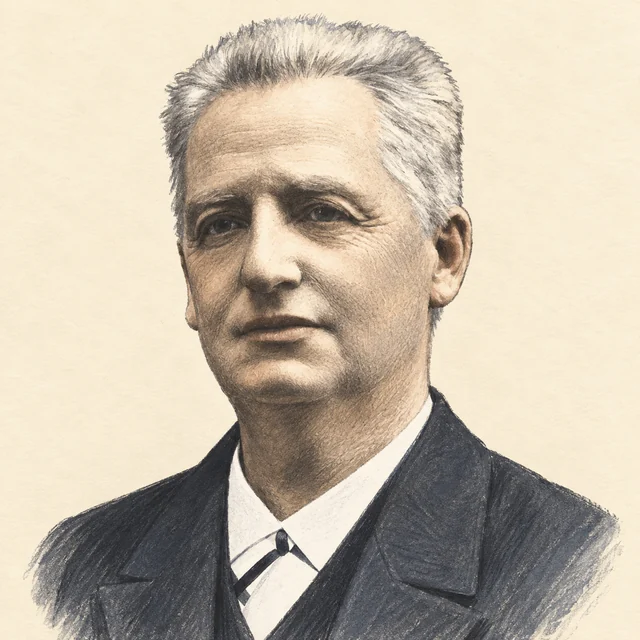
Illustrated portrait of Klas Pontus Arnoldson

Klas Pontus Arnoldson

Prize share · 1/2

Arnoldson received half the Peace Prize for long work for peace through politics, public writing, speaking and peace-society organisation. Arbitration, neutrality and opposition to war between Sweden and Norway were central concerns.

Read the biography ↗
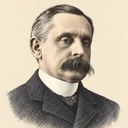
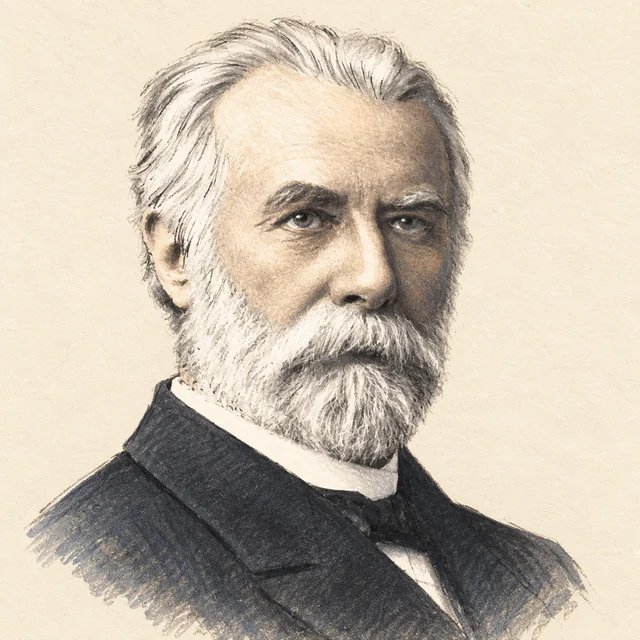
Illustrated portrait of Fredrik Bajer

Fredrik Bajer

Prize share · 1/2

Bajer received half the Peace Prize for long work as a politician, peace-society leader, speaker and author. He connected national peace groups and helped establish the permanent international bureau that supported their cooperation.

Read the biography ↗

03 · Years in the making

The path here

  1. 1871

    Matilde and Fredrik Bajer help establish the Danish Women’s Society.

  2. 1872

    Bajer enters the Danish parliament.

  3. 1882

    He establishes a Danish neutrality society; Arnoldson enters Sweden’s parliament.

  4. 1883

    Arnoldson helps found the Swedish Peace and Arbitration Society.

  5. 1891

    The permanent peace bureau is established in Bern with Bajer as first president.

  6. 1905

    The Sweden–Norway union is dissolved peacefully.

  7. 1907

    Bajer becomes the bureau’s honorary president.

  8. 1908

    Arnoldson and Bajer receive equal Peace Prize shares.

04 · Read further

From the original sources

Original explanations by Curionode, based on the official records below. Biographical details and affiliations refer to the award year.

  1. Official award summary nobelprize.org
  2. Historical presentation account nobelprize.org
  3. Swedish Peace and Arbitration Society: Arnoldson and the society’s origins svenskafreds.se
  4. Danish Women’s Society: Matilde and Fredrik Bajer danskkvindesamfund.dk