01 · The contribution
The idea, in everyday language
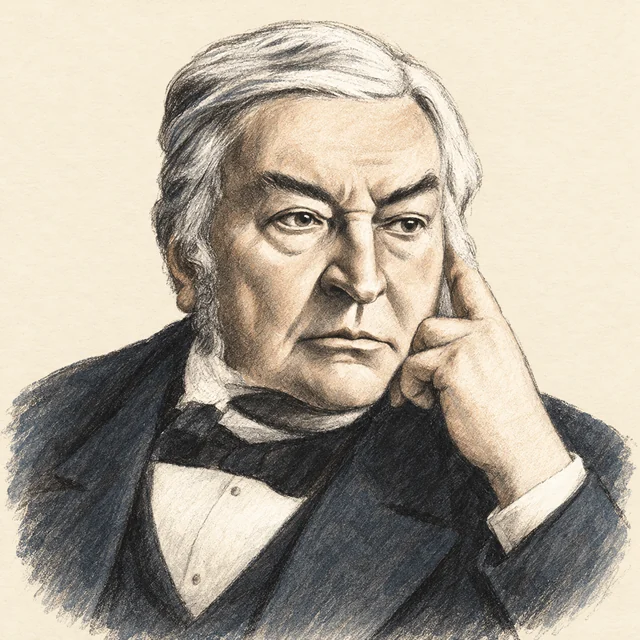
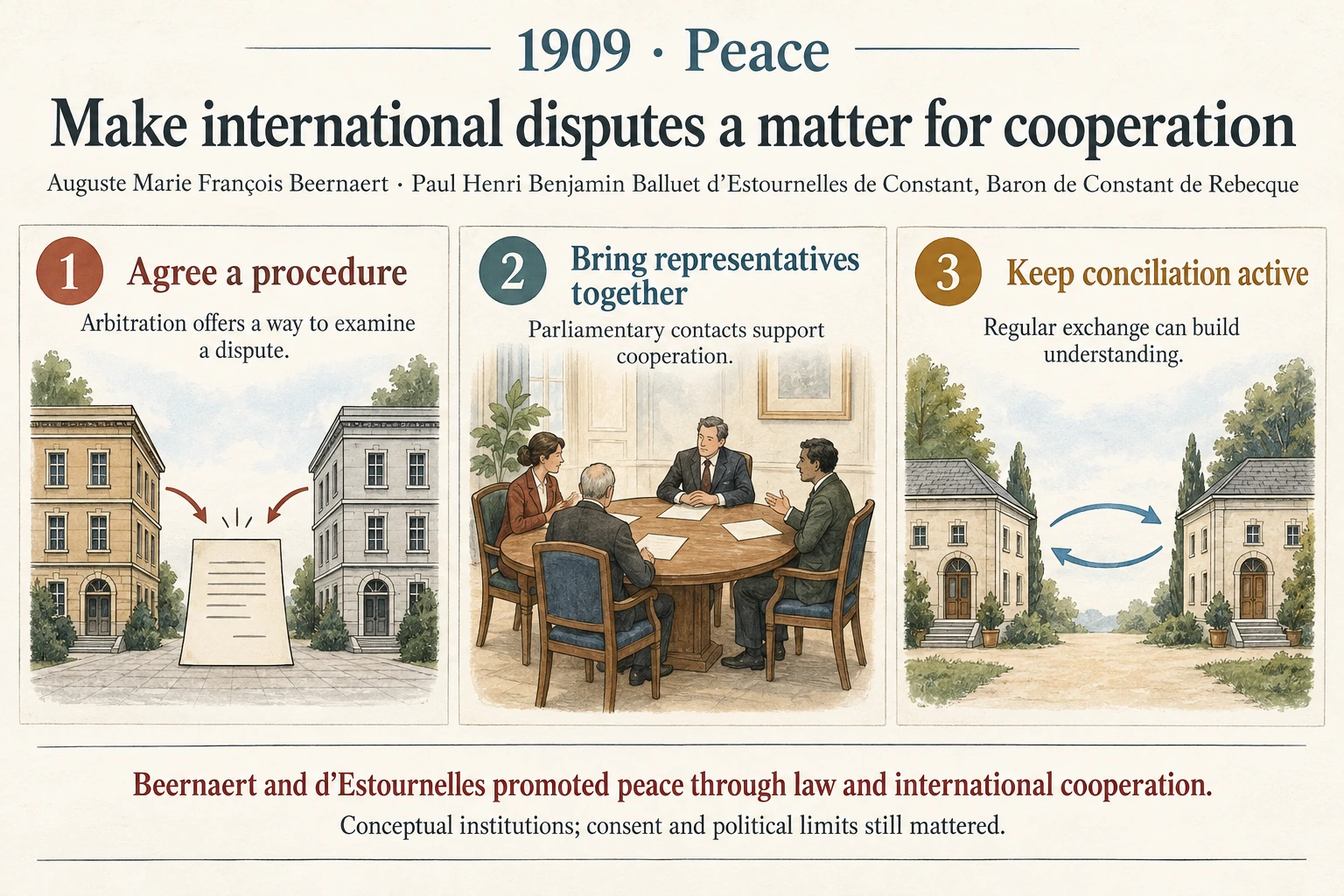
Governments could treat a dispute as a contest of force or agree to examine it through procedures. Beernaert brought legal practice and parliamentary experience to the Hague conferences, arms limitation and the laws of warfare. His advocacy for smaller states and international maritime arrangements formed part of that work. Acting as Mexico’s counsel in the first Hague arbitration case was a legal role, distinct from deciding it as an arbitrator.
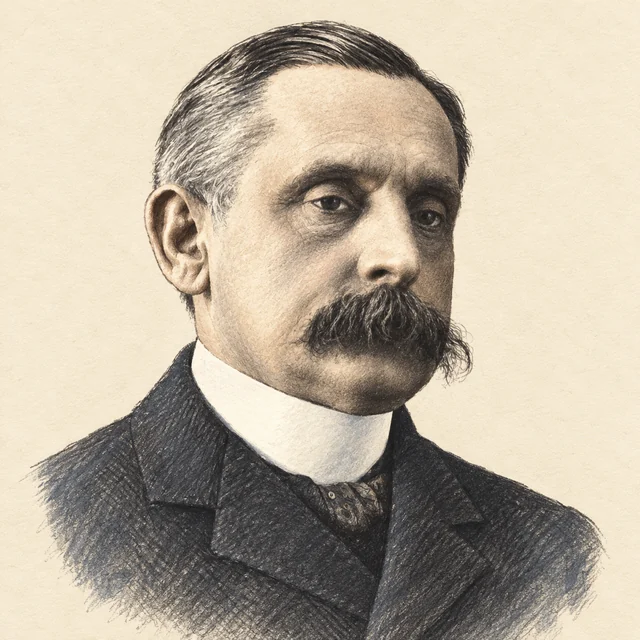
D’Estournelles de Constant promoted arbitration through diplomacy, cross-party parliamentary organisation, reciprocal visits and international conciliation. His experience of crises convinced him that foreign affairs should not be left to a narrow diplomatic circle. Public understanding and regular contact between representatives could support agreements between governments. The two recipients were not joint authors of one peace treaty, and their work did not establish a compulsory world government.
Why it matters
The award recognised sustained efforts to make legal settlement and parliamentary cooperation practical alternatives within international politics. Institutions require both rules and people willing to use them.