c.curionodeThe Nobel Archive

1937 · Physiology or Medicine

Connect chemical changes with life’s energy

Szent-Györgyi investigated biological oxidation, identifying vitamin C and exploring how certain acids helped sustain oxidation in tissues.

Biological oxidationVitamin CFumaric acidCatalytic effects
1937Physiology or Medicine

Visual guide

The prize, pictured

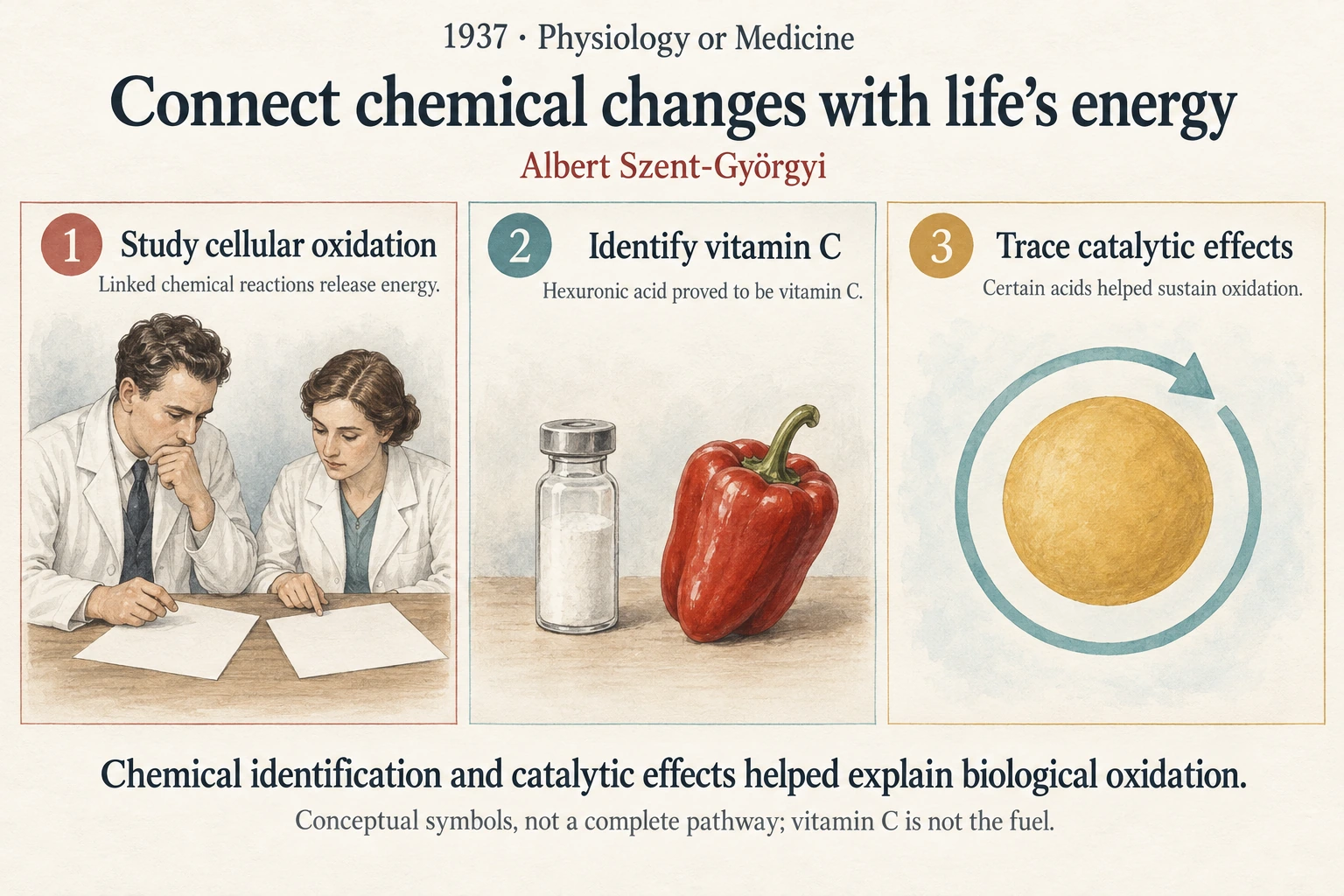
Infographic explaining Connect chemical changes with life’s energy
Original AI-generated infographic. A conceptual overview; the explanations and sources below provide context.
Read the poster text

Chemical identification and catalytic effects helped explain biological oxidation.

  1. Study cellular oxidation

    Linked chemical reactions release energy.

  2. Identify vitamin C

    Hexuronic acid proved to be vitamin C.

  3. Trace catalytic effects

    Certain acids helped sustain oxidation.

Conceptual symbols, not a complete pathway; vitamin C is not the fuel.

01 · The discovery

The idea, in everyday language

Cells release usable energy through organised chemical reactions, not by burning fuel in an ordinary flame. Szent-Györgyi studied oxidation and reduction and the substances involved in those reactions. He isolated a reducing substance called hexuronic acid; in 1932 work with Svirbely established that it had the anti-scurvy activity associated with vitamin C, now called ascorbic acid.

His research was broader than that identification. At Szeged he and colleagues studied how small amounts of four-carbon acids, including fumaric acid, promoted oxidation. Their regeneration within the reacting system helped explain effects that could not be understood simply by treating the added acid as a supply of fuel. This work contributed to understanding linked reactions in metabolism, without constituting the complete modern account of cellular respiration.

Why it matters

The work connected chemical identification with biological function and helped clarify the organisation of oxidation. Vitamin C’s identification made its activity more precisely investigable, while the acid studies widened understanding of metabolic reactions. The Nobel citation includes both; it should not be reduced to discovering a vitamin in a pepper, nor taken to mean that vitamin C itself supplies all cellular energy.
02 · The people

Who brought the idea to life?

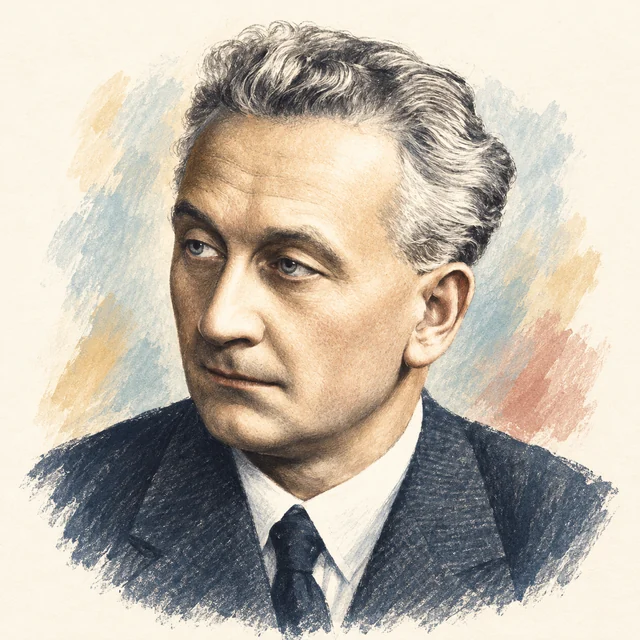
Illustrated portrait of Albert Szent-Györgyi

Albert Szent-Györgyi

Prize share · 1

Szent-Györgyi received the whole Medicine Prize for biological oxidation, particularly vitamin C and the catalytic role associated with fumaric acid. The work connected chemical identification with physiological function and depended on collaborators.

Read the biography ↗

03 · Years in the making

The path here

  1. 1927

    Szent-Györgyi works at Cambridge on reducing substances.

  2. 1930

    He is appointed to the chair at Szeged.

  3. 1931

    He begins working in Szeged after laboratory delays.

  4. 1932

    Work with Svirbely identifies hexuronic acid with vitamin C.

  5. 1933

    The Szeged programme develops studies of catalytic effects in oxidation.

  6. 1937

    The Medicine Prize recognises biological oxidation, vitamin C and fumaric acid.

  7. 1947

    He moves to the United States for later research.

04 · Read further

From the original sources

Original explanations by Curionode, based on the official records below. Biographical details and affiliations refer to the award year.

  1. Official award summary nobelprize.org
  2. Award ceremony speech nobelprize.org
  3. Original paper: Svirbely and Szent-Györgyi, 1932 digirepo.nlm.nih.gov
  4. Szeged University: research and the Nobel Prize edu.ek.szte.hu
  5. Official biography: Albert Szent-Györgyi nobelprize.org

More in Physiology or Medicine

Browse this subject ↗