01 · The discovery
The idea, in everyday language
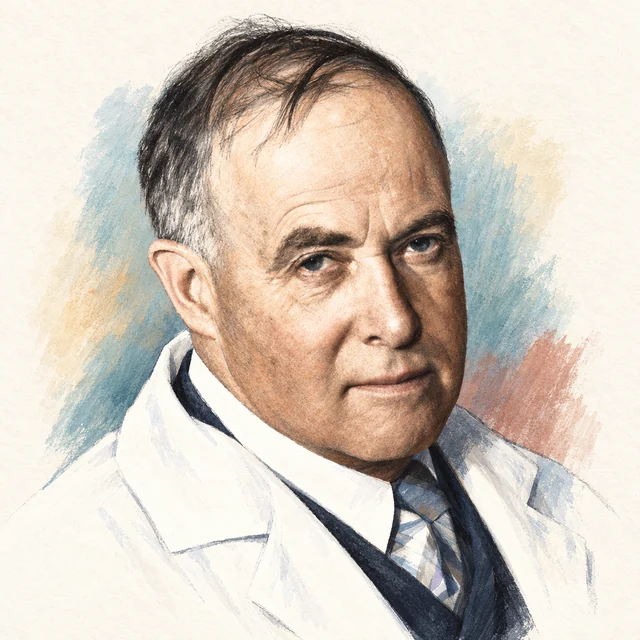
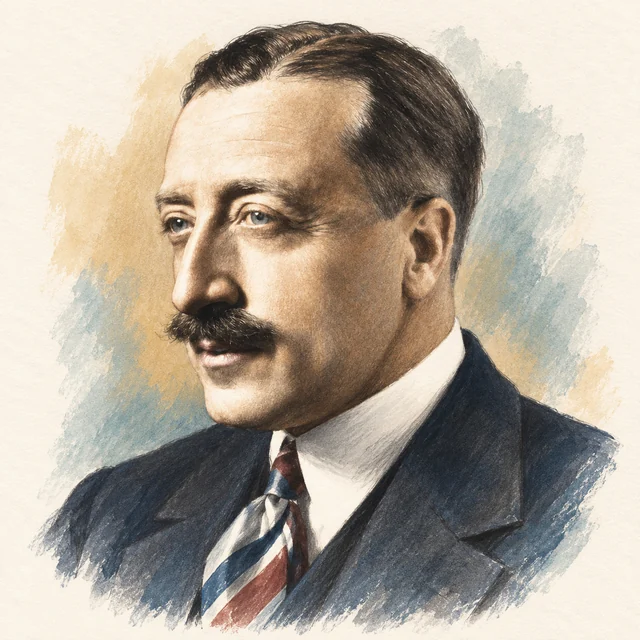
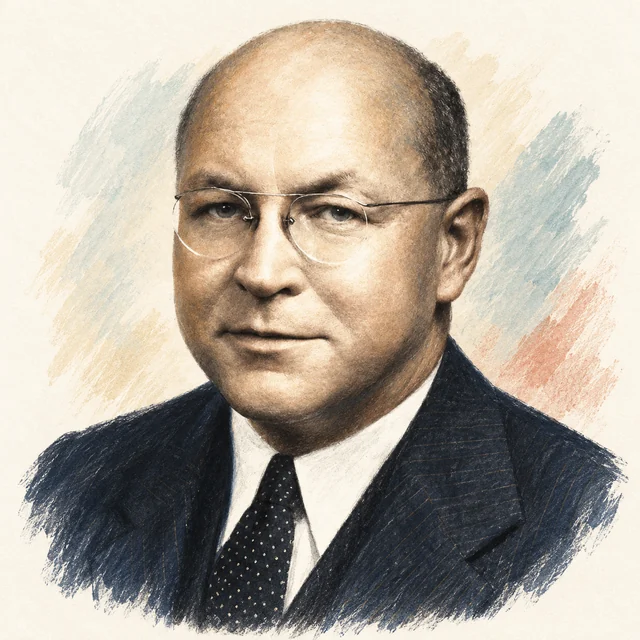
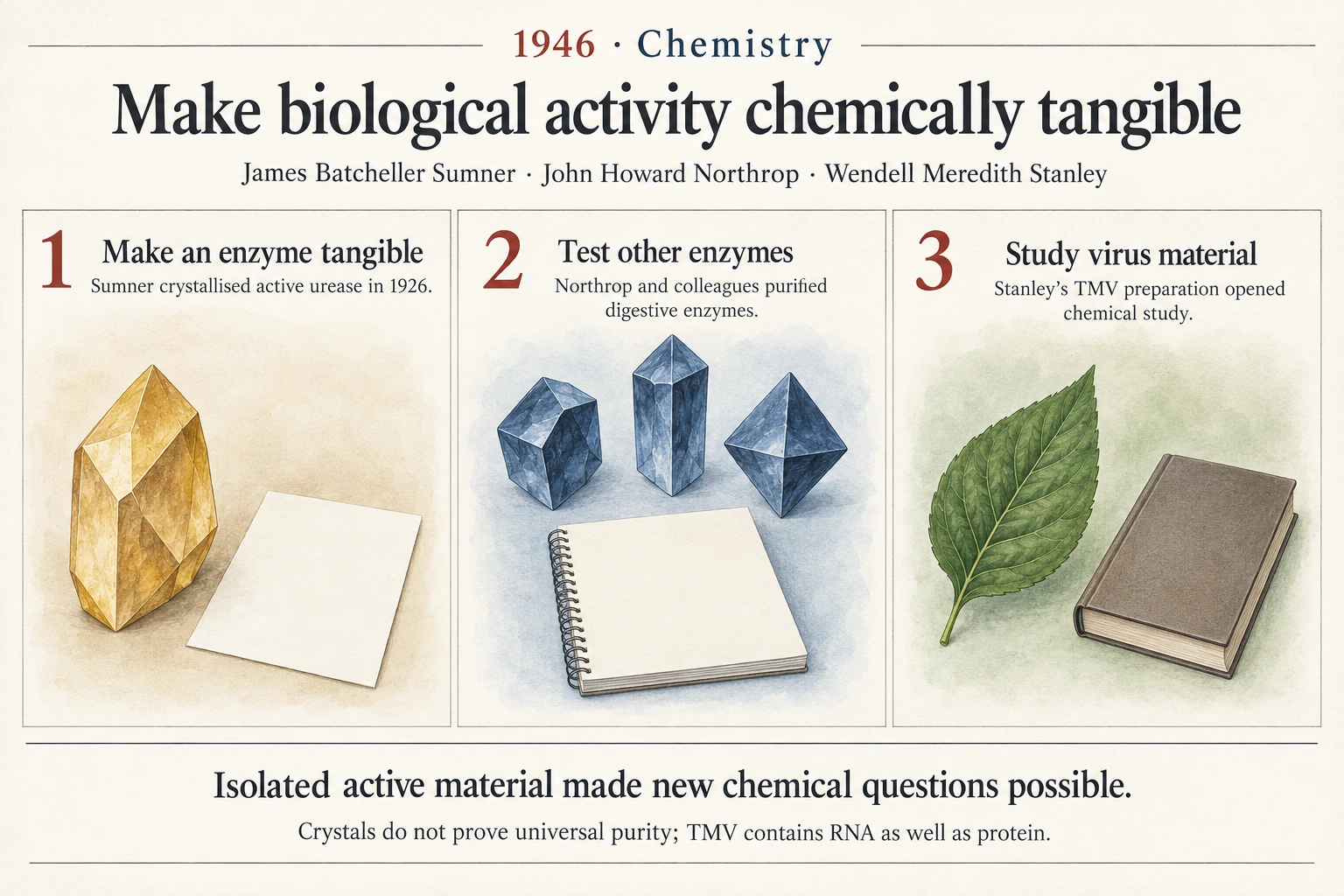
An enzyme can make a reaction happen without being easy to isolate from the mixture in which it works. In 1926 Sumner obtained active urease crystals and argued that the enzyme itself was a protein. Northrop and collaborators, including Kunitz, extended purification and characterisation to digestive enzymes such as pepsin and trypsin.
Stanley reported a crystalline tobacco mosaic virus preparation in 1935, opening virus material to chemical investigation. Its initial interpretation as protein alone changed as nucleic acid was recognised as a component. His Nobel lecture acknowledged Pirie and colleagues’ 1936 report and 1937 nucleoprotein conclusion. Sumner received half of the prize, while Northrop and Stanley each received a quarter.
Why it matters
Isolating active material made biochemical questions more directly accessible: researchers could compare composition, activity and physical properties. Sumner’s and Northrop’s work helped establish the protein nature of the enzymes they studied. Stanley’s preparation made a previously elusive infectious agent tangible, while the later correction showed why isolation and interpretation are different achievements.