c.curionodeThe Nobel Archive

1949 · Literature

Many voices make the past difficult to escape

Faulkner reshaped the modern American novel through shifting perspectives, inner voices and time, exploring memory and the power of inherited histories.

Narrative voicesMemoryYoknapatawphaPrize presented in 1950
1949Literature

Visual guide

The prize, pictured

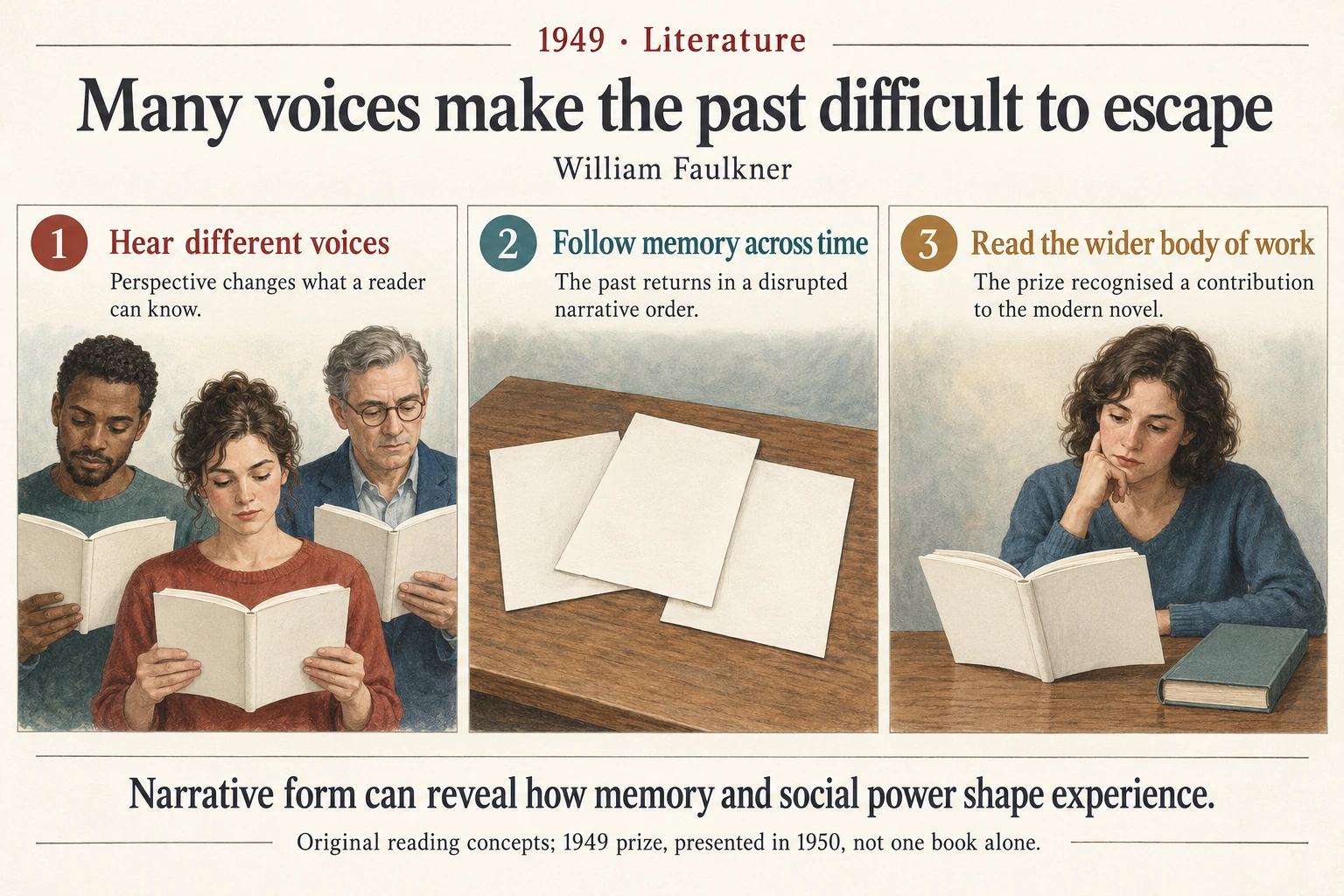
Infographic explaining Many voices make the past difficult to escape
Original AI-generated infographic. A conceptual overview; the explanations and sources below provide context.
Read the poster text

Narrative form can reveal how memory and social power shape experience.

  1. Hear different voices

    Perspective changes what a reader can know.

  2. Follow memory across time

    The past returns in a disrupted narrative order.

  3. Read the wider body of work

    The prize recognised a contribution to the modern novel.

Original reading concepts; 1949 prize, presented in 1950, not one book alone.

01 · The contribution

The idea, in everyday language

How can a novel show that people inhabit different versions of the same past? Faulkner let narrative voices, memories and the order of events unsettle a simple account. Long, densely worked sentences and colloquial speech could sit alongside abrupt changes in perspective. The reader must attend to who is speaking, what they know and what their account leaves out.

His invented Yoknapatawpha County connected families and generations while confronting class, racial domination and the legacies of slavery. The Sound and the Fury and Absalom, Absalom! are important examples, but the prize recognised his contribution to the modern American novel as a body of work, not a single title. It is the 1949 Literature Prize even though it was reserved and presented on 10 December 1950.

Why it matters

The award recognised formal invention joined to sustained attention to human and social experience. Multiple viewpoints and nonlinear time offered ways to show how the past acts within the present. A fictional world can expose power and injustice without every narrator’s statement becoming the author’s own judgement.
02 · The people

Who brought the idea to life?

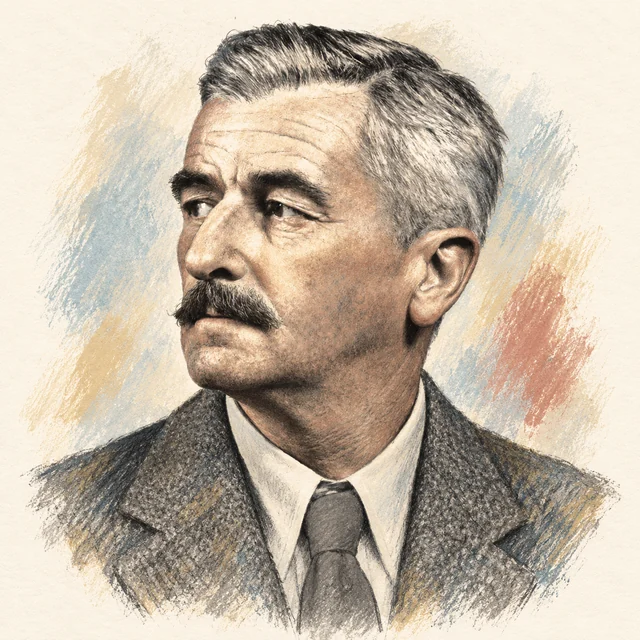
Illustrated portrait of William Faulkner

William Faulkner

Prize share · 1

Faulkner developed innovative narrative voices and structures in modern American fiction, exploring memory, social power and the legacies of racism. He received the full 1949 Literature Prize in 1950.

Read the biography ↗

03 · Years in the making

The path here

  1. 1897

    Faulkner is born in Mississippi.

  2. 1929

    The Sound and the Fury appears.

  3. 1932

    Light in August appears.

  4. 1936

    Absalom, Absalom! appears.

  5. 1948

    Intruder in the Dust appears.

  6. 1949

    The Literature Prize is reserved for later presentation.

  7. 1950

    Faulkner receives the 1949 prize on 10 December, separately from Russell’s 1950 award.

04 · Read further

From the original sources

Original explanations by Curionode, based on the official records below. Biographical details and affiliations refer to the award year.

  1. Official award summary nobelprize.org
  2. Award ceremony speech nobelprize.org
  3. University of Mississippi: the wartime myth egrove.olemiss.edu
  4. Official biography: William Faulkner nobelprize.org

More in Literature

Browse this subject ↗