01 · The contribution
The idea, in everyday language
Years after the war, some refugees remained in camps with little prospect of building a new life. Older people and those unable to work faced particular exclusion. Material aid alone could not replace personal connection, security and a place within a community.
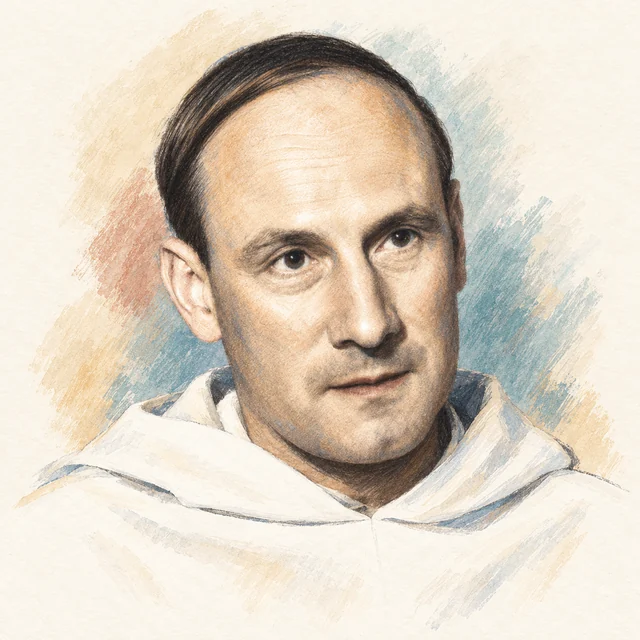
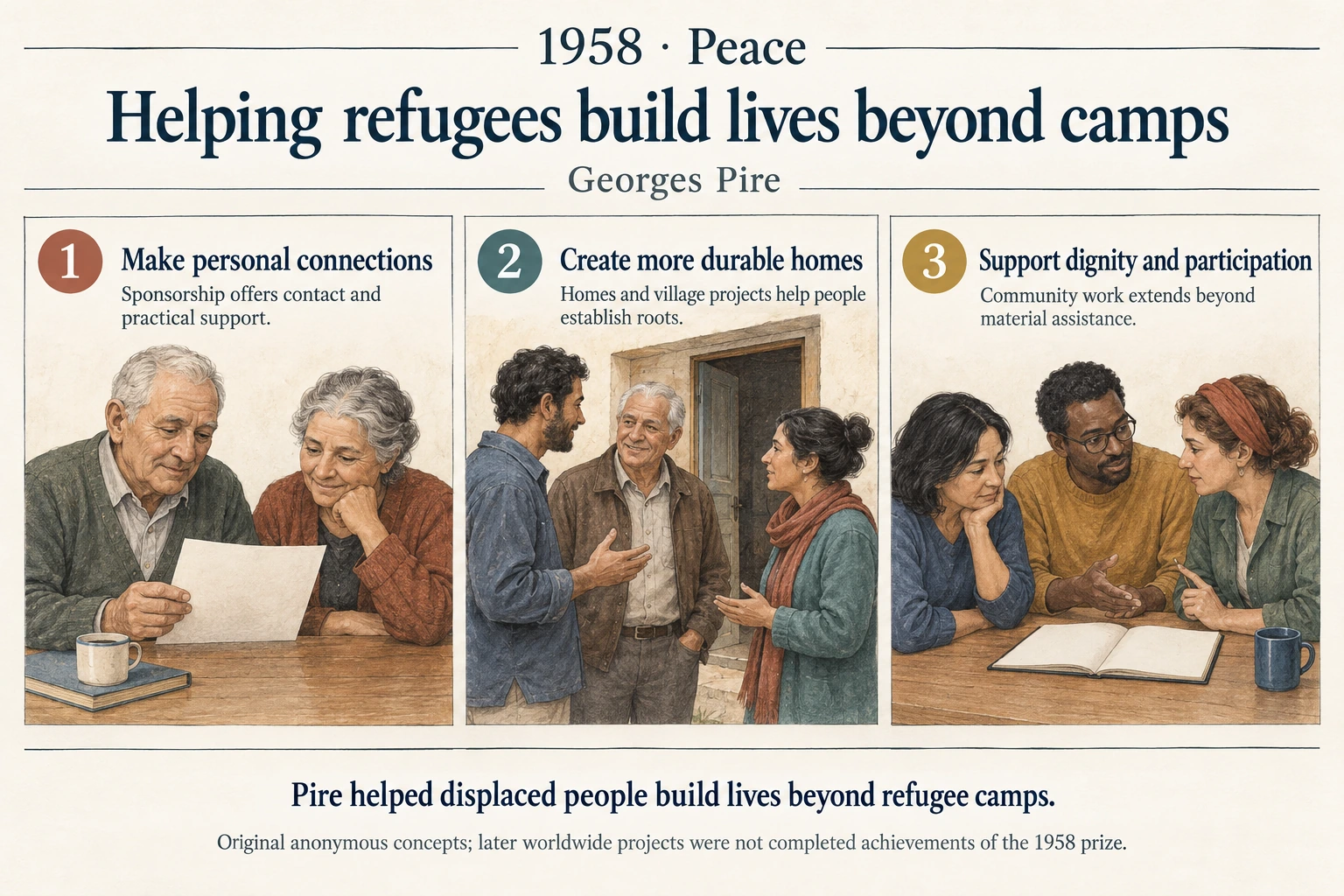
From 1949 Pire developed work with displaced people through sponsorship, homes for older refugees and European Villages. Sponsors offered letters and practical support; homes provided ongoing care; village projects sought a setting in which people could gradually establish roots. These efforts depended on voluntary donations, organisers and the refugees themselves.
Why it matters
The full 1958 prize recognised Pire’s efforts to help refugees leave camps and return to lives with freedom and dignity. His individual award drew attention to practical solidarity across national and religious divisions, within a much larger field of refugee assistance. Later projects, including the University of Peace in 1960 and Islands of Peace from 1962, developed after the prize.